

You Want the Oil but Refuse the Cleansing: Become a Vessel YAHUAH Can Use
YAHUAH will not pour more into what we refuse to cleanse. Learn how tashubah, obedience, and set-apartness prepare us as vessels for righteous service.
Many want the oil, but few want the cleansing.
They want to be used. They want spiritual authority, discernment, influence, gifts, and visible fruit. They ask YAHUAH to enlarge their reach while resisting His command to purify their private life. They want fresh oil poured over old compromise. They want public power without private surrender.
But YAHUAH does not prepare His vessels by feeding their ambition. He prepares them through truth, correction, tashubah, obedience, and set-apartness.
This is the question before us: Are we asking YAHUAH to use what we refuse to let Him cleanse?
The issue is not whether a person is impressive, gifted, educated, or visible. The issue is whether the vessel has been made ready for the Master's use. A beautiful vessel can still be contaminated. A plain vessel can be clean, surrendered, and useful. Heaven is not moved by the polish of the outside while corruption remains protected within.
YAHUAH Is Looking for Vessels of Honor
Sha’ul wrote:
“Nevertheless the foundation of Aluah standeth sure, having this seal, YAHUAH knoweth them that are his. And, Let every one that nameth the name of YAHUSHA Ha’Mashiach depart from iniquity. But in a great house there are not only vessels of gold and of silver, but also of wood and of earth; and some to honour, and some to dishonour. If a man therefore purge himself from these, he shall be a vessel unto honour, sanctified, and meet for the master's use, and prepared unto every good work.”
2 Timothy 2:19–21
Notice the order: depart, purge, be sanctified, become prepared, then be useful.
We often reverse that order. We want to be used first and cleansed later. We believe activity will excuse impurity. We assume that because a gift operates, YAHUAH approves everything surrounding it. But gift does not equal approval. Activity does not equal cleansing. Visibility does not equal set-apartness.
Sha’ul continues:
“Flee also youthful lusts: but follow righteousness, faith, love, peace, with them that call on YAHUAH out of a pure heart.”
2 Timothy 2:22
The vessel is not told merely to rebuke what is unclean. The vessel is told to flee it. Then the vessel must pursue what is righteous.
This is where many remain stuck. They palal for deliverance while keeping the contact, application, hidden account, corrupt entertainment, dishonest agreement, or secret provision that keeps bondage within reach. They ask for cleansing but negotiate with the contamination.
You cannot ask for more oil while protecting the very thing YAHUAH told you to remove.
Oil Does Not Make Filth Set Apart
Oil poured into a contaminated vessel does not make the contamination clean. It spreads it.
In the same way, greater influence does not cure a corrupt heart. It exposes and multiplies what is already there. More attention can enlarge pride. More resources can enlarge greed. More authority can enlarge control. More access can enlarge lust. More admiration can deepen the addiction to approval.
This is why cleansing is not a punishment to escape. It is mercy. YAHUAH cleanses what He intends to make useful.
The call to set-apartness is not reserved for teachers or leaders. Every person bearing the name of YAHUSHA Ha’Mashiach is called to depart from iniquity. There is no private exemption for the gifted, no secret allowance for the wounded, and no special permission for those who have served a long time.
Pain may explain why a door was opened, but pain does not make the door righteous. Trauma may explain a defense, but it cannot be enthroned as master. A wound deserves truth, care, patience, and healing; it must not become a covenant with bitterness, manipulation, isolation, or sin.
The Ruach Ha’Qudash does not expose contamination to humiliate you. He exposes it so it can be removed.
Clean Hands and a Pure Heart
Dawid asked:
“Who shall ascend into the hill of YAHUAH? or who shall stand in his set-apart place? He that hath clean hands, and a pure heart; who hath not lifted up his being unto vanity, nor sworn deceitfully.”
Psalm 24:3–4
Clean hands speak of what we do. A pure heart speaks of why we do it. YAHUAH requires both.
It is possible to perform a righteous action from an impure motive. A person can give to be praised, serve to control, teach to be admired, confront to punish, remain silent to manipulate, or palal publicly while neglecting obedience privately. The hand may appear clean while the heart is seeking its own throne.
YAHUAH does not cleanse only our outward conduct. He searches motives, agreements, appetites, resentments, loyalties, and hidden desires.
“Having therefore these promises, dearly beloved, let us cleanse ourselves from all filthiness of the flesh and spirit, perfecting set-apartness in the fear of Aluah.”
2 Corinthians 7:1
Some filthiness is visible in the flesh. Some hides in the spirit—in pride, envy, hatred, rivalry, unforgiveness, false humility, self-exaltation, and the desire to dominate. Both defile the vessel. Both must be brought into the light.
Wisdom Will Not Dwell Where Sin Is Protected
The Wisdom of Solomon gives this Apocrypha witness:
“For into a malicious soul wisdom shall not enter; nor dwell in the body that is subject unto sin.”
Wisdom of Solomon 1:4
We cannot demand discernment while refusing integrity. We cannot ask for wisdom while protecting malice. We cannot expect clear spiritual judgment while our appetites, relationships, and loyalties remain governed by rebellion.
Sirach speaks just as directly:
“My son, hast thou sinned? do so no more, but ask pardon for thy former sins. Flee from sin as from the face of a serpent: for if thou comest too near it, it will bite thee.”
Sirach 21:1–2
True tashubah does not merely grieve what happened. It changes direction. It does not pet the serpent, study how close it can stand, or boast that it is strong enough to resist the bite. It flees.
The Testament of Naphtali, a Pseudepigrapha witness, uses the image of a prepared vessel:
“For as the potter knoweth the vessel, how much it is to contain, and bringeth clay accordingly...”
Testament of Naphtali 2:2
The vessel does not decide its own capacity or purpose. The Potter does. Our responsibility is not to manufacture a calling, seize a platform, or compare our vessel with another. Our responsibility is to remain yielded in the Potter’s hands.
Watch the Teaching
Watch Vessels For Worship from the official Natsarym of YAHUSHA channel. This teaching strengthens the call to give YAHUAH an undivided heart, a clean vessel, and a surrendered life.
Cleansing Requires More Than a Feeling
Conviction is not cleansing by itself. Tears are not tashubah by themselves. Confession without changed access, changed conduct, and changed allegiance leaves the vessel exposed to the same contamination.
Cleansing becomes visible when truth produces action.
If the contamination is dishonest gain, cleansing may require repayment and truthful accounting. If it is lust, cleansing may require removing access, ending secrecy, and accepting accountable oversight. If it is bitterness, cleansing may require releasing vengeance while maintaining righteous boundaries. If it is pride, cleansing may require receiving correction without defending your image. If it is corrupt fellowship, cleansing may require leaving the table that continually feeds rebellion. If it is disorder in the home, cleansing may require apology, restitution, consistent leadership, and a new pattern of family palal.
Do not make a ceremony out of what requires obedience. Burning an object while keeping the appetite is not freedom. Pouring oil around a room while refusing tashubah is not cleansing. Declaring victory while maintaining secret access is not deliverance. YAHUAH is not asking for theater. He is asking for truth in the inward parts.
“Depart ye, depart ye, go ye out from thence, touch no unclean thing; go ye out of the midst of her; be ye clean, that bear the vessels of YAHUAH.”
Isaiah 52:11
There are moments when cleansing means departure. You cannot remain immersed in what defiles you and call your refusal to leave “strength.” Sometimes the righteous action is to go out, cut off access, stop returning, and remain separate.
Cleansing Is Not Condemnation
Some resist this message because correction has been weaponized against them. They were shamed publicly, controlled by false authority, or taught that every weakness made them worthless. That is not the cleansing of YAHUAH.
Condemnation says, “Hide because you are beyond restoration.” Conviction says, “Come into the light because YAHUSHA Ha’Mashiach has made restoration possible.” Condemnation pushes the wounded away from truth. The Ruach Ha’Qudash draws the willing into truth and produces obedient change.
Cleansing is also not sinless perfection achieved by human effort. It is a surrendered life that agrees with YAHUAH, responds when corrected, makes tashubah when it falls, and refuses to build a home for what YAHUSHA delivered it from.
A clean vessel is not a person who has never been stained. It is a person who no longer calls the stain an identity, an entitlement, or a protected secret.
Do not confuse a season of preparation with rejection. If YAHUAH is restricting your movement, exposing your motives, pruning relationships, or slowing your public activity, He may be saving you from carrying more than your inward life can sustain. The hidden season is not empty when the Potter is working.
Examine the Vessel
Come before YAHUAH without performance. Let these questions search you:
What am I asking YAHUAH to increase while refusing His correction in private?
Which relationship, appetite, possession, habit, or ambition do I keep defending after truth has exposed it?
Do I want the appearance of spiritual power more than the discipline of set-apartness?
Have I mistaken gifting, attention, or opportunity for YAHUAH’s approval?
Where have I confessed repeatedly without removing access or making restitution?
Do my hands look clean while envy, bitterness, lust, deceit, or control remains in my heart?
Am I willing to become useful in obscurity, or do I only feel valuable when people can see me?
What act of obedience have I delayed while asking YAHUAH for another instruction?
Do not rush past the answer. Name what YAHUAH reveals. Do not rename bondage as personality, rebellion as independence, fear as discernment, or avoidance as peace.
Then act.
Remove what must be removed. Confess what must be confessed. Repay what must be repaid. End what must be ended. Restore order where disorder has been protected. Seek accountable support where secrecy has strengthened bondage. Return to daily Scripture, palal, fasting, righteous fellowship, and obedient work.
Do not merely empty the vessel. Fill your life with what is righteous.
Prepared Unto Every Righteous Work
YAHUAH does not cleanse His people so they can become decorative vessels sitting safely on a shelf. He cleanses them for righteous use.
The purpose of set-apartness is not spiritual vanity. It is availability. A prepared vessel can carry truth without corrupting it, authority without worshiping it, resources without hoarding them, correction without cruelty, compassion without compromise, and influence without becoming intoxicated by attention.
Stop asking only, “When will YAHUAH use me?” Ask, “What must be cleansed so I can be trusted with what I am requesting?”
Do not despise the washing. Do not resist the scraping. Do not flee the Potter’s hands because the shaping is uncomfortable. The oil is precious. The assignment is weighty. The vessel must be ready.
Present yourself to YAHUAH—not polished for people, but purified in truth; not ambitious for visibility, but surrendered for service; not demanding oil, but willing to be cleansed.
Then when YAHUAH pours, what He pours will not be mixed with what you refused to surrender.
Closing Palal
YAHUAH, search me and expose every place where I desire Your oil but resist Your cleansing. Remove pride, lust, bitterness, deceit, envy, fear, control, hidden rebellion, and every agreement that contaminates the vessel. Give me courage to make complete tashubah and to obey without delay. Clean my hands, purify my heart, renew my mind, and order my private life. Deliver me from the hunger to be seen, praised, or used before I am prepared. Teach me to value set-apartness more than visibility and truth more than reputation. Fill every place I surrender with Your Ruach Ha’Qudash, and make me a vessel of honor, ready for every righteous work. I ask this in the name and authority of YAHUSHA Ha’Mashiach, Aman,

Your Offering Cannot Hide Your Heart: What Qaynah Teaches About Worship Without Tashubah
Many people want YAHUAH to receive the offering while leaving the heart unexamined. YAHUAH sees the worshiper and the offering together.

Many people want YAHUAH to receive the offering while leaving the heart unexamined.
They will give money, sing praise, fast, serve, teach, post Scripture, help the needy, and speak the Name of YAHUAH—but become angry when He touches the envy, dishonesty, pride, hatred, or disobedience underneath the activity. They want the altar to testify for them while their private conduct testifies against them.
But YAHUAH cannot be bribed by religious activity. He does not become blind because the gift is expensive, the song is emotional, the fast is long, or the ministry is visible. He sees the worshiper and the offering together.
That is what the account of Qaynah and Heḇel reveals.
YAHUAH Looked at the Man and the Offering
Genesis 4:3–7 — “And in process of time it came to pass, that Qaynah brought of the fruit of the ground an offering unto YAHUAH. And Heḇel, he also brought of the firstlings of his flock and of the fat thereof. And YAHUAH had respect unto Heḇel and to his offering: but unto Qaynah and to his offering He had not respect. And Qaynah was very wroth, and his countenance fell. And YAHUAH said unto Qaynah, Why art thou wroth? and why is thy countenance fallen? If thou doest well, shalt thou not be accepted? and if thou doest not well, sin lieth at the door. And unto thee shall be his desire, and thou shalt rule over him.”
The text does not separate the person from the gift. YAHUAH had respect unto Heḇel and his offering. He did not have respect unto Qaynah and his offering.
The issue was deeper than what each brother placed before Him. The Canon interprets the matter plainly:
Hebrews 11:4 — “By faith Heḇel offered unto Aluah a more excellent sacrifice than Qaynah, by which he obtained witness that he was righteous, Aluah testifying of his gifts: and by it he being dead yet speaketh.”
1 Yahuchanun 3:12 — “Not as Qaynah, who was of that wicked one, and slew his brother. And wherefore slew he him? Because his own works were evil, and his brother’s righteous.”
Heḇel brought his offering by faith. His righteous offering flowed from a righteous posture. Qaynah’s problem was not that every fruit of the ground was unclean; YAHUAH later commanded grain offerings and firstfruits. His problem was revealed in his works, his anger, his resistance to correction, and the hatred he allowed to grow against his brother.
YAHUAH did not leave Qaynah without instruction. He confronted him before the murder. He asked him why he was angry. He told him that doing well would lead to acceptance. He warned him that sin was lying at the door.
The rejected offering was therefore also a mercy. It exposed what Qaynah needed to confront before the hidden thing became bloodshed.
What Correction Reveals After the Offering Is Rejected
Qaynah could have made tashubah. He could have humbled himself, corrected what was wrong, and returned in faith. Instead, he compared himself to his brother.
This is where many hearts are still exposed.
When YAHUAH corrects them, they do not examine themselves; they study the person whose obedience revealed their compromise. They become irritated with the disciplined, suspicious of the fruitful, and hostile toward the one whose life received what their performance could not obtain.
Envy says, “If I cannot be accepted while remaining unchanged, I will attack the one whose righteousness exposes me.”
That spirit can enter a household, an assembly, a friendship, a marriage, or a ministry. A person may smile publicly while privately resenting another person’s favor, discipline, family, gift, progress, healing, or credibility. They may still bring an offering. They may still speak spiritual language. But the countenance has fallen, and sin is waiting at the door.
Do not decorate what YAHUAH is commanding you to confront.
Watch the Teaching
Watch The Rejected Offering: Why YAHUAH Looked Past Qayin’s Gift — Chapter 77 from the official Natsarym of YAHUSHA channel. This teaching strengthens the warning that the outward gift cannot conceal the inward condition of the giver.
Praise Cannot Replace Obedience
YAHUAH has always rejected worship used as a covering for rebellion.
Yashayahu 1:15–17 — “And when ye spread forth your hands, I will hide Mine eyes from you: yea, when ye make many prayers, I will not hear: your hands are full of blood. Wash you, make you clean; put away the evil of your doings from before Mine eyes; cease to do evil; learn to do well; seek judgment, relieve the oppressed, judge the fatherless, plead for the widow.”
The people were still gathering. They were still lifting their hands. They were still making many prayers. But YAHUAH demanded cleansing, justice, and visible change.
Worship is not a payment that purchases permission to remain disobedient. Giving does not cleanse dishonest gain. Fasting does not sanctify cruelty. Teaching does not cancel secret corruption. Singing does not repair the person you deliberately wounded. Public service does not replace private tashubah.
YAHUSHA Ha’Mashiach carried this truth directly to the altar:
Mattithyahu 5:23–24 — “Therefore if thou bring thy gift to the altar, and there rememberest that thy brother hath ought against thee; leave there thy gift before the altar, and go thy way; first be reconciled to thy brother, and then come and offer thy gift.”
YAHUSHA did not say the gift was unimportant. He taught that an unresolved wrong could not be hidden beneath the act of giving.
Reconciliation does not require returning to abuse, removing righteous boundaries, or pretending trust has already been restored. It does require truth. If you sinned, name it. If you stole, restore. If you lied, correct the record. If you slandered, repair what your mouth damaged. If the other person is unsafe, do what righteousness requires without placing yourself back under destruction. But do not use religious activity to avoid the part that belongs to you.
The Apocrypha Confirms the Same Measure
Sirach speaks with uncomfortable plainness about gifts offered from an unrighteous life:
Sirach 34:18–19 — “He that sacrificeth of a thing wrongfully gotten, his offering is ridiculous; and the gifts of unjust men are not accepted. The Most High is not pleased with the offerings of the wicked; neither is He pacified for sin by the multitude of sacrifices.”
An offering taken from the poor, gained through deceit, withheld from a worker, manipulated from the vulnerable, or produced through oppression does not become clean because part of it is given away. A person cannot exploit people all week and then ask a public gift to testify that they are righteous.
Sirach also shows what an acceptable offering looks like:
Sirach 35:1–3 — “He that keepeth the law bringeth offerings enough: he that taketh heed to the commandment offereth a peace offering. He that requiteth a good turn offereth fine flour; and he that giveth alms sacrificeth praise. To depart from wickedness is a thing pleasing to YAHUAH; and to forsake unrighteousness is a propitiation.”
Obedience is not separate from worship. Departing from wickedness is worship. Returning kindness is worship. Caring for the needy is worship. Keeping the commandment is worship. The altar is not merely where something leaves your hand; it is where self-will must also die.
Envy Will Corrupt More Than the Offering
The Testament of Simeon, a Pseudepigrapha witness, warns:
Testament of Simeon 3 — “Envy ruleth over the whole mind of a man… it ever suggesteth to him to destroy him that he envieth.”
That is the road Qaynah walked. Rejection became anger. Anger became comparison. Comparison became envy. Envy became murder.
Most people will never shed physical blood, yet the same progression appears through slander, sabotage, false accusation, exclusion, humiliation, and secret pleasure when another person falls. Some kill a reputation because they cannot control the person. Some divide a family because they resent the one who told the truth. Some undermine a ministry because another person’s fruit makes their own emptiness harder to ignore.
Do not call it discernment when it is envy. Do not call it correction when it is revenge. Do not call it protection when you are searching for permission to injure the person you resent.
If another person’s righteous fruit provokes you, do not watch them more closely. Bring your own heart before YAHUAH.
Before You Bring Another Offering
Come out of performance. Sit before YAHUAH without defending your record. Ask Him to expose the obedience you keep postponing and the person you keep blaming for what His light revealed.
Name envy without softening it. If you resent someone’s favor, appearance, marriage, family, discipline, gift, platform, healing, or progress, confess the agreement before it grows teeth. Stop feeding it through gossip, private monitoring, comparison, and imagined accusations.
Clean the source of what you bring. Do not give from stolen time, manipulated money, unpaid debt, dishonest business, neglected household responsibilities, or resources gained by exploiting another person. First establish order.
Repair what can be repaired. Tell the truth. Make restitution. Correct the lie. Seek reconciliation where it is righteous and safe. Accept that real tashubah may cost money, access, reputation, comfort, or the right to control how others respond.
Then bring YAHUAH your first and best in faith—not to purchase acceptance, but because a surrendered heart desires to honor Him.
Examine the Heart Behind the Gift
Am I using giving, fasting, service, praise, or ministry activity to avoid a specific act of obedience?
Have I become angry with the person whose righteousness exposed my compromise?
Is any part of what I offer connected to dishonesty, exploitation, unpaid obligation, or neglected household order?
Do I secretly rejoice when someone I envy suffers or loses favor?
Have I called resentment discernment because I did not want to confess jealousy?
Is there someone I harmed while continuing to appear righteous before others?
What did YAHUAH already tell me to correct before I bring another gift?
If sin is lying at my door, what access must I close today?
Do not rush through these questions. Qaynah’s warning came before the field. YAHUAH is merciful enough to confront the door before the thing behind it rules the house.
Bring the Heart With the Offering
YAHUAH is not seeking flawless people who never require correction. He is seeking truth in the inward parts—people who will humble themselves when exposed, turn when warned, and obey when the cost becomes personal.
The answer to a rejected offering is not rage, comparison, or shame. It is tashubah.
If the Ruach Ha’Qudash is exposing your motive, do not hide behind the good thing you did. If He is naming envy, do not point to your service. If He is requiring restitution, do not offer another song. If He is calling you to reconcile, do not increase your public giving while withholding the truth.
Bring the heart with the offering.
Let your gift rise from faith, obedience, clean hands, righteous gain, brotherly love, and a life that has stopped arguing with the One who sees everything.
Closing Palal
YAHUAH, my Aluah, search me and reveal the heart behind everything I bring before You. Strip away performance, pride, comparison, and every attempt to use religious activity as a covering for disobedience.
Where my works have been evil, lead me into complete tashubah. Where envy has entered, expose it before it becomes hatred, slander, sabotage, or violence. Deliver me from resenting those whose obedience reveals where I have compromised. Teach me to rejoice in righteous fruit without comparing, competing, or secretly desiring another person’s fall.
Show me whether anything I offer has come through dishonesty, manipulation, neglect, oppression, or failure to make restitution. Give me courage to correct the record, repay what I owe, repair what I damaged, and seek reconciliation where it is righteous and safe.
By Your Ruach Ha’Qudash, guard the door of my heart. Do not allow anger to rule me, wounded pride to instruct me, or shame to drive me into hiding. Make me quick to hear, honest in confession, and steadfast in obedience.
Teach me to bring You my first and best with faith. Let my praise agree with my conduct, my giving agree with justice, my fasting agree with mercy, and my public service agree with private set-apartness.
Receive not only what is in my hand, but the surrendered life from which it comes. I ask this in the name and authority of YAHUSHA Ha’Mashiach, Aman,

Take Every Thought Captive: Win the Hidden Battle for Your Mind
Expose fear, lust, suspicion, and self-rejection, take every thought captive, and renew your mind through YAHUAH’s truth, obedience, and set-apartness.

Not every battle begins at the door of your house. Some battles begin in the private room of your mind.
Before the angry word is spoken, a thought has been entertained. Before lust becomes an action, an image has been rehearsed. Before fear controls a decision, a frightening conclusion has been repeated until it feels like prophecy. Before bitterness becomes a stronghold, an offense has been revisited, enlarged, and defended in the heart.
Many people palal for deliverance while allowing every thought to sit down, speak freely, and establish agreement within them.
That cannot continue.
2 Corinthians 10:3–5 — “For though we walk in the flesh, we do not war after the flesh: for the weapons of our warfare are not carnal, but mighty through YAHUAH to the pulling down of strong holds; casting down imaginations, and every high thing that exalteth itself against the knowledge of YAHUAH, and bringing into captivity every thought to the obedience of YAHUSHA Ha’Mashiach.”
Scripture does not tell us to admire every thought, fear every thought, obey every thought, or identify with every thought. It commands us to bring every thought into captivity.
A thought may knock without your permission. Agreement opens the door.
Not Every Thought Is Your Voice
Some thoughts arise from the desires of the flesh. Some have been planted by years of abuse, rejection, humiliation, or fear. Some are suggestions of the adversary. Some are memories that have not been healed. Some are conclusions formed when you were too young to understand what was happening. Some are warnings from a conscience that has been ignored. Others are convictions from the Ruach Ha’Qudash calling you to tashubah.
The presence of a thought does not prove its source, and it does not make the thought true.
This matters because people often say, “This is just who I am,” when they are describing a lie they have repeated for years:
“Everyone will eventually leave me.”
“I must control everything or I will never be safe.”
“Because I was violated, I will always be defiled.”
“Because I fell again, deliverance is impossible.”
“If someone corrects me, they must hate me.”
“If I feel afraid, danger must be present.”
“If I desire it, I am entitled to have it.”
These are not harmless inner sentences. When believed, they become instructions. They teach the body when to panic, the mouth when to attack, the heart when to close, and the feet where to go.
You must learn to ask: Who taught me to think this way, what fruit has it produced, and does it agree with YAHUAH?
Strongholds Are Fortified Agreements
A stronghold is not merely a difficult feeling. It is a fortified place from which resistance is organized. In the mind, strongholds are often built from repeated agreements with lies.
One thought says, “You are unwanted.”
The wounded heart answers, “That is true.”
Another thought says, “Protect yourself before anyone can hurt you.”
The person begins to withdraw, accuse, manipulate, or leave before being left. Every reaction appears to confirm the original lie. The walls grow higher.
This is why spiritual warfare requires truth. You cannot cast down an imagination while secretly protecting the conclusion that gives it power. You cannot rebuke fear and then spend the entire day feeding it. You cannot bind lust while preserving the private images that keep it alive. You cannot ask YAHUAH to heal rejection while measuring your worth by who calls, approves, follows, or stays.
Strongholds fall when lies are exposed, agreements are broken, truth is received, and obedience begins.
Taking a Thought Captive Is Not Pretending
Taking thoughts captive does not mean denying grief, ignoring danger, burying trauma, or forcing yourself to smile while your heart is breaking.
YAHUAH does not require the wounded to call evil good. He does not command an abused person to pretend the abuse never happened. He does not tell us to ignore evidence, silence righteous discernment, or remain in unsafe access so other people can feel comfortable.
The Psalms are filled with honest sorrow, questions, fear, anger, and cries for deliverance. Yet the writers bring those things before YAHUAH instead of enthroning them as final truth.
Taking a thought captive means the wound may speak, but it will not become the ruler. The memory may surface, but it will not be permitted to define your identity. The fear may be felt, but it will be examined before it is obeyed.
You can say, “What happened to me was evil,” without concluding, “Therefore I am ruined.”
You can say, “This situation requires wisdom,” without declaring, “Everything will end in destruction.”
You can say, “I am angry,” without granting anger authority to accuse, threaten, or destroy.
Truth does not erase pain. Truth prevents pain from becoming your master.
Fear Rehearsed Becomes False Prophecy
Fear often speaks in the language of certainty.
“This will fail.”
“Your child will never return.”
“You will lose everything.”
“You will always be alone.”
“The sickness will destroy you.”
The mind then rehearses scenes that have not happened and suffers them as though they already have. Sleep is lost over tomorrow. Relationships are punished for offenses that exist only in imagination. Obedient steps are delayed because fear has presented itself as discernment.
2 Timothy 1:7 — “For YAHUAH hath not given us the spirit of fear; but of power, and of love, and of a sound mind.”
A sound mind does not mean a life without pressure. It means fear is not allowed to interpret everything without examination.
When fear speaks, ask: What do I actually know? What am I assuming? What has YAHUAH commanded? What obedient action belongs to today?
YAHUSHA taught us not to carry tomorrow’s trouble before its time. Fear drags imagined tomorrows into today and demands that you bow to them. A renewed mind returns to the present instruction.
Lust Builds an Inner Chamber Before It Becomes an Outer Act
Lust is not only a problem of the body. It is fed in the imagination.
Ya’aqub 1:14–15 — “Every man is tempted, when he is drawn away of his own lust, and enticed. Then when lust hath conceived, it bringeth forth sin: and sin, when it is finished, bringeth forth death.”
Conception happens before birth. Sin is often conceived in a private inner chamber where fantasy is protected from accountability.
A person may never touch another body and still train the mind to consume people. The eyes collect images. The imagination edits them. The heart returns to them. Secrecy gives them room. Then the person wonders why palal feels weak and covenant affection feels dull.
Do not wait until the outward act to confront the agreement. Shut the door when the thought asks to be rehearsed. Remove the account, conversation, image, application, or access that keeps feeding it. Bring the hidden pattern into truthful accountability.
The goal is not to become terrified of temptation. The goal is to stop providing it with a furnished room.
Suspicion Is Not Discernment
A wounded mind can become skilled at scanning for betrayal. It notices tone, pauses, facial expressions, unanswered messages, and changes in behavior. Sometimes there is real danger. Sometimes past pain is interpreting the present before truth has been established.
Discernment examines fruit and remains submitted to truth. Suspicion begins with a verdict and then searches for evidence.
Discernment can say, “I do not yet know.” Suspicion cannot tolerate uncertainty.
Discernment seeks protection and righteous action. Suspicion seeks confirmation of fear.
Discernment can be corrected. Suspicion treats correction as further proof of conspiracy.
Do not call every trauma response the voice of the Ruach Ha’Qudash. Do not call every uncomfortable feeling a warning from YAHUAH. Test the matter. Seek witnesses when witnesses are required. Examine fruit over time. Refuse gossip. Refuse to assign motives you cannot prove.
If danger is present, act wisely. If sin is exposed, address it. But if the evidence is not established, do not use spiritual language to sanctify accusation.
The Mind Must Be Renewed, Not Merely Restrained
It is not enough to keep saying, “Do not think that.” An empty mind will return to the patterns it knows. What is cast down must be replaced with what is true.
Romans 12:2 — “Be not conformed to this world: but be ye transformed by the renewing of your mind, that ye may prove what is that good, and acceptable, and perfect will of YAHUAH.”
Renewal is not a moment of inspiration. It is the repeated work of placing the mind before truth until old agreements lose their authority.
Fill the mind with Scripture before corruption fills it with noise. Stop allowing endless entertainment, outrage, sexual imagery, gossip, and fear-driven content to preach to you for hours while Scripture receives five distracted minutes.
What you repeatedly behold trains what you quickly believe.
Philippians 4:8 — “Whatsoever things are true, whatsoever things are honest, whatsoever things are just, whatsoever things are pure, whatsoever things are lovely, whatsoever things are of good report… think on these things.”
This is not shallow positive thinking. Paul does not tell us to imagine whatever feels comforting. He commands the mind toward what is true, righteous, pure, and worthy of praise.
The renewed mind does not replace a dark lie with a pleasant lie. It replaces every lie with truth.
Watch the Teaching
Watch Spiritual Warfare Scriptures and Prayer With The Name of YAHUAH & YAHUSHA from the official Natsarym of YAHUSHA channel. This Scripture-filled teaching strengthens the work of resisting spiritual attack and bringing the mind back under the authority of YAHUAH and YAHUSHA.
The Apocrypha Calls the Heart to Order
The Wisdom of Solomon connects corrupt thoughts with separation from YAHUAH:
Wisdom of Solomon 1:3 — “For froward thoughts separate from YAHUAH: and His power, when it is tried, reproveth the unwise.”
Sirach gives a direct command for the heart in seasons of pressure:
Sirach 2:2 — “Set thy heart aright, and constantly endure, and make not haste in time of trouble.”
Trouble creates urgency. A frightened mind wants to react immediately, send the message, make the accusation, abandon the assignment, return to the addiction, or choose relief over obedience.
But Scripture calls us to set the heart aright and endure. Not every urgent feeling carries a righteous instruction. Some decisions must wait until fear, rage, lust, and pride are no longer holding the pen.
Break the Agreement, Then Walk Differently
Tashubah in the mind is not complete when you identify a lie. You must stop living as though the lie were true.
If you believed, “I must control people to be safe,” then renewal will require you to release manipulation and practice truthful boundaries.
If you believed, “I am worthless,” then renewal will require you to stop returning to people and places that profit from your self-hatred.
If you believed, “I cannot resist lust,” then renewal will require you to remove access, accept accountability, and stop preparing provision for the flesh.
If you believed, “Everyone is against me,” then renewal will require you to test evidence, receive correction, and repair relationships damaged by accusation.
If you believed, “Nothing will ever change,” then renewal will require the next act of obedience even while your emotions are still catching up.
Do not wait to feel completely different before you obey. Obedience helps teach the mind that the old ruler has lost authority.
Establish a Daily Watch Over Your Mind
Begin the day before the noise begins. Place Scripture before your eyes. Palal before fear begins narrating the day. Ask the Ruach Ha’Qudash to expose any thought you have mistaken for identity, discernment, or truth.
When a destructive thought appears, do not merely wrestle with it in silence. Name it plainly:
“This is fear speaking as certainty.”
“This is rejection interpreting correction.”
“This is lust asking for rehearsal.”
“This is bitterness building another argument.”
“This is shame trying to become my identity.”
Then test it against Scripture. Reject what is false. Replace it with what YAHUAH has spoken. Take the obedient action that agrees with truth.
Guard what enters through the eyes and ears. Your gates cannot remain open to corruption while you palal for a guarded mind. Reduce the voices that profit from keeping you angry, afraid, aroused, offended, or addicted. Choose counsel that leads toward truth, responsibility, healing, and set-apartness.
And when the battle exposes a deep wound, do not hide behind religious language. Bring it before YAHUAH. Seek trustworthy, righteous support. Healing is not weakness. Honest confession is not defeat. The stronghold wants secrecy because secrecy prevents examination.
Examine the Agreements in Your Mind
What thought returns whenever you are corrected, delayed, rejected, or afraid?
What conclusion about yourself did you form during abuse, abandonment, or humiliation?
Do you treat feelings as evidence even when facts have not been established?
Are you rehearsing lust privately while presenting set-apartness publicly?
Do you repeatedly imagine disaster and then call the anxiety discernment?
Have you allowed an offense to become the lens through which you judge everyone?
What content continually feeds fear, rage, comparison, or impurity in your mind?
What lie do your habits prove you still believe?
What act of obedience would demonstrate that the lie no longer governs you?
Do not answer these questions for appearance. Let the Ruach Ha’Qudash search the hidden agreements beneath your reactions.
Bring the Inner Room Under Authority
YAHUAH is not only concerned with the life other people can see. He is Aluah over the inner room.
He sees the argument you keep repeating after the conversation has ended. He sees the fantasy you revisit when no one is watching. He sees the imagined disaster that has become more believable than His faithfulness. He sees the accusation you have never tested and the sentence of shame you continue to speak over yourself.
The adversary wants your mind to become an unguarded meeting place for lies. The flesh wants every desire to be treated as identity. The world wants to disciple your imagination through repetition.
But you are not powerless.
YAHUSHA Ha’Mashiach has given us truth, authority, and access to the Father. The Ruach Ha’Qudash leads into truth. Scripture exposes the lie. Tashubah breaks agreement. Obedience establishes a new path.
Bring the inner room under authority.
Let fear lose its seat.
Let lust lose its screen.
Let rejection lose its name.
Let suspicion lose its verdict.
Let shame lose its identity.
Let truth govern what is welcomed, rehearsed, believed, and obeyed.
You cannot stop every thought from knocking, but you can decide which thoughts receive agreement, authority, and residence.
Closing Palal
YAHUAH, our Aluah, search my mind and expose every lie I have welcomed as truth. Reveal the thoughts formed through fear, lust, rejection, bitterness, abuse, pride, and unbelief. Show me where I have mistaken trauma for identity, suspicion for discernment, fantasy for comfort, and anxiety for prophecy.
By Your Ruach Ha’Qudash, teach me to recognize what does not come from You. Give me strength to cast down imaginations that exalt themselves against Your truth. Break every agreement I have made with defeat, self-hatred, impurity, accusation, hopelessness, and control.
Renew my mind through Your Word. Bring my thoughts into obedience to YAHUSHA Ha’Mashiach. Guard my eyes, ears, memory, imagination, and inner speech. Heal what was wounded without allowing the wound to become my ruler. Correct me where I have used pain to excuse sin, and comfort me where shame has tried to bury Your work in me.
Give me a sound mind, righteous discernment, and courage for the next act of obedience. Let truth govern my private thoughts, my public words, my relationships, and my household. Make my inner life clean before You, and teach me to remain watchful without fear.
I ask this in the name and authority of YAHUSHA Ha’Mashiach, Aman,

Your Mouth Is a Gate: Stop Speaking Death Over Your House
Your words can wound, divide, or restore. Bring gossip, anger, murmuring, self-cursing, and empty decrees under YAHUAH’s righteous order at home today.
Some people are asking YAHUAH to cleanse their homes while their own mouths keep defiling the atmosphere.
They palal for peace, then release anger over the children. They ask for unity, then repeat gossip about their spouse. They speak decrees in the morning, then murmur, accuse, mock, curse, and tear down by evening. They rebuke spiritual attacks but refuse to bring their speech under the authority of YAHUSHA Ha’Mashiach.
This is not a small matter.
Your mouth is not merely a tool for making sound. It is a gate through which truth or corruption, healing or injury, confession or accusation, thanksgiving or murmuring enters the life of your household.
Proverbs 18:21 — “Death and life are in the power of the tongue: and they that love it shall eat the fruit thereof.”
The tongue produces fruit. Words do not disappear when the sound fades. They enter hearts, shape expectations, establish patterns, reveal agreements, influence choices, and remain in the memory of those who heard them.
You may forget what you said in anger. Your child may remember it for thirty years.
You may call it venting. Your spouse may experience it as repeated rejection.
You may call it honesty. YAHUAH may call it cruelty, talebearing, murmuring, accusation, or corrupt communication.
Set-apartness must reach the mouth.
Your Words Reveal What Is Governing Your Heart
YAHUSHA did not treat speech as a surface problem. He traced it back to the heart.
Matthew 12:34–35 — “Out of the abundance of the heart the mouth speaketh. A good man out of the good treasure of the heart bringeth forth good things: and an evil man out of the evil treasure bringeth forth evil things.”
The mouth eventually tells the truth about what the heart has been storing.
If bitterness is stored, bitterness will speak.
If envy is stored, comparison will speak.
If rejection is stored, suspicion will speak.
If pride is stored, contempt will speak.
If fear is stored, panic will speak.
If Scripture is stored, truth will speak.
This is why merely learning positive phrases cannot cleanse a corrupt heart. A person can memorize declarations and still use words to control, shame, flatter, deceive, and injure. The issue is not whether you know how to say something powerful. The issue is whether the Ruach Ha’Qudash governs the treasury from which your words come.
Your tongue does not make you sovereign. Your tongue reveals who is reigning within you.
The Tongue Can Set a Whole House on Fire
James compares the tongue to a small fire capable of burning something much larger than itself.
Ya’aqub 3:5–6 — “Behold, how great a matter a little fire kindleth! And the tongue is a fire, a world of iniquity… and it defileth the whole body, and setteth on fire the course of nature.”
A family can build for years and be scorched by a few repeated patterns of speech:
a father calling his son stupid whenever he makes a mistake;
a mother telling her daughter she will never become anything;
a husband humiliating his wife, then calling it headship;
a wife speaking contempt about her husband in front of the children;
siblings trained to insult one another for entertainment;
relatives carrying stories from one room to another;
assembly members using private information as social currency;
people pronouncing permanent failure over themselves whenever they fall.
Words can become the normal temperature of a house. When sarcasm, yelling, accusation, and ridicule are repeated, everyone learns to brace before entering the room. Children become silent, aggressive, deceptive, or desperate to escape. Spouses stop sharing what is truly in their hearts. Trust is replaced by self-protection.
Then the same household wonders why there is no peace.
Peace cannot remain where the tongue is permitted to commit violence every day.
Stop Calling Verbal Violence “Just How I Am”
Some people excuse destructive speech by saying, “I have always been blunt,” “That is just my personality,” or “They know I do not mean it.”
But the command is not to make other people grow thick enough skin to tolerate your lack of restraint. The command is for you to bring your members under righteousness.
Ephesians 4:29 — “Let no corrupt communication proceed out of your mouth, but that which is good to the use of edifying, that it may minister favor unto the hearers.”
Corrupt communication is speech that is rotten and destructive. It includes lies, sexual filth, ridicule, malicious gossip, false accusation, manipulation, threats, degrading names, and words chosen to wound rather than correct.
Correction is necessary in a righteous home. Discipline is necessary. Hard truth is necessary. But cruelty is not truth, rage is not authority, and humiliation is not discipline.
YAHUSHA spoke hard words when hard words were righteous. Yet He never sinned with His mouth. He did not use truth to satisfy uncontrolled emotion. His speech served the will of the Father.
If you only tell the truth when you are angry, you may not love truth. You may love the weapon anger makes of it.
Murmuring Is Not Harmless Venting
Israel left Egypt physically, but the speech of bondage remained in their mouths. They complained about water, food, leadership, danger, and the path YAHUAH chose. Their murmuring was not merely an emotional release; it revealed unbelief and rebellion.
Numbers 14:27–28 — “How long shall I bear with this evil congregation, which murmur against me? I have heard the murmurings… Say unto them, As truly as I live, saith YAHUAH, as ye have spoken in mine ears, so will I do to you.”
The people kept speaking as though Egypt had been better, YAHUAH had abandoned them, and death was certain. Their mouths agreed with fear even while His presence was among them.
Murmuring magnifies the wilderness until it appears greater than YAHUAH. It rehearses lack until provision becomes invisible. It spreads discouragement from one person to another until a whole congregation becomes ready to retreat.
This does not mean we must hide grief, pain, confusion, or injustice. The Psalms show us how to cry before YAHUAH honestly. Lament speaks pain toward Him in trust. Murmuring spreads unbelief about Him among the people.
Lament says, “YAHUAH, I am hurting; help me.”
Murmuring says, “YAHUAH will not help us, and we should turn back.”
One seeks His face. The other poisons the camp.
Gossip Makes You a Carrier of Another Person’s Wound
Gossip is not made righteous because the information is true. If the story is not yours to carry, if sharing it does not protect the vulnerable or serve correction, and if you are spreading it because it makes you feel informed, important, or justified, your mouth has become a passageway for harm.
Proverbs 16:28 — “A froward man soweth strife: and a whisperer separateth chief friends.”
The whisperer rarely enters a room announcing destruction. The whisperer says, “I am only telling you because I trust you,” “We need to palal for them,” or “I thought you should know.” Spiritual language becomes a covering for talebearing.
But what happens after the story is released? Suspicion spreads. Honor falls. People choose sides. Private pain becomes public entertainment. Reconciliation becomes harder because the offense now lives in minds that were never part of the original matter.
If there is abuse, danger, exploitation, or serious sin that must be brought into the light, silence is not righteousness. Tell the truth to those who can protect, judge, correct, or intervene. That is not gossip.
But do not confuse reporting for protection with spreading for pleasure.
Before you repeat a matter, ask: Am I carrying this toward righteous action, or am I carrying it toward another audience?
The Accuser Wants Your Mouth
Revelation 12:10 identifies the adversary as the accuser of the brethren. Accusation is part of his work. When believers live in constant suspicion, repeat unproven claims, assign evil motives, and define people forever by their worst moment, they allow their mouths to echo the work of the accuser.
Discernment examines fruit. Accusation assigns guilt without righteous evidence.
Discernment seeks truth and proper action. Accusation seeks an object to condemn.
Discernment can be corrected. Accusation is addicted to being right.
This is especially dangerous in spiritual warfare. Not every disagreement is witchcraft. Not every boundary is rejection. Not every correction is jealousy. Not every person who leaves was sent by the adversary. If you give demonic names to every human conflict, you can slander people while feeling spiritually mature.
Test the matter. Establish truth. Guard confidentiality. Refuse exaggeration. Make tashubah when you have spoken falsely.
Self-Cursing Must End
Many people would never speak hatred over another person, yet they speak death over themselves every day.
“I am so stupid.”
“I ruin everything.”
“Nobody will ever love me.”
“I will always be sick.”
“I can never change.”
“My children are doomed because of me.”
Some of these words grow from deep wounds. They may have been planted by abuse, rejection, failure, or years of hearing another person’s cruelty. YAHUAH is not shaming the wounded. He is calling the wounded out of agreement with lies.
Humility does not require you to hate yourself. Confession says, “I sinned, and I must make tashubah.” Condemnation says, “Sin is all I am, and change is impossible.”
YAHUSHA came to deliver us from both sin and the false identity built around it. You are responsible for your choices, but you are not required to keep repeating the sentence the enemy, an abuser, or your past pronounced over you.
Speak with sobriety: “I fell, but I will rise and obey.” “I need healing, but this wound is not my name.” “My house has been disordered, but I will begin restoring order today.”
Truth does not deny the battle. Truth refuses to enthrone it.
Decrees Without Obedience Are Noise
There is power in agreeing with the Word of YAHUAH. Scripture should fill our mouths. We should confess truth, praise YAHUAH, proclaim His works, and reject lies.
But declarations are not incantations. Repeating a sentence does not make disobedience disappear. You cannot decree financial order while refusing to stop reckless spending. You cannot speak peace over your marriage while continuing adultery, secrecy, or contempt. You cannot declare deliverance while preserving access to the bondage. You cannot announce that your children are protected while your home gives corruption unrestricted entrance.
Luke 6:46 — “And why call ye me, Master, Master, and do not the things which I say?”
The authority of our confession is not found in volume, repetition, music, or emotion. It is found in agreement with YAHUAH that reaches both speech and conduct.
Do not use decrees to avoid tashubah.
Do not shout over what YAHUAH told you to remove.
Do not speak promises while rejecting their instructions.
Let your words and your walk testify together.
The Apocrypha Warns About the Spark in Your Mouth
Sirach describes the mouth as capable of either feeding or extinguishing a fire:
Sirach 28:12 — “If thou blow the spark, it shall burn: if thou spit upon it, it shall be quenched: and both these come out of thy mouth.”
The same mouth can intensify conflict or end it.
You can repeat the insult, enlarge the offense, add your own suspicion, and blow on the spark until the household burns.
Or you can refuse the rumor, lower your voice, speak truth without venom, acknowledge your own wrong, and stop feeding the fire.
Not every spark deserves your breath.
Some arguments survive only because someone keeps supplying oxygen.
Dan Warns That Anger Blinds the Speaker
The pseudepigraphal Testament of Dan joins angry speech with deception. Dan confesses how jealousy toward Yoseph corrupted his perception and then warns his children:
“There is blindness in anger, my children, and no wrathful man regardeth any person with truth.”
Anger does not merely raise the voice. It alters what a person believes he sees. A wrathful person interprets everything as disrespect, attack, betrayal, or proof of guilt. Then the mouth speaks from a distorted picture while insisting, “I know exactly what happened.”
This is why righteous restraint is not weakness. Silence for a moment may prevent a lie, a threat, or an accusation that cannot be taken back.
Do not trust every conclusion formed while your body is burning with anger. Step away without abandoning responsibility. Palal. Breathe. Write down what actually happened rather than what you assumed. Return to the conversation when truth can be heard.
Watch the Teaching
Watch 🔥 THE SECRET THEY HID FROM YOU: AS A MAN SPEAKS, SO IS HE 🔥 38 Decrees! from the official Natsarym of YAHUSHA channel. This teaching strengthens the call to bring our speech into agreement with Scripture and stop rehearsing words of defeat.
Bring Your Mouth Through Tashubah
Tashubah of the mouth begins with more than saying, “I am sorry you were offended.” That phrase protects pride. True confession names the sin.
“I lied about you.”
“I humiliated you in front of the children.”
“I repeated something that was not mine to share.”
“I called you a degrading name.”
“I spoke as though your failure was your identity.”
“I used Scripture to frighten and control you.”
Then repair what your words damaged. Correct the lie with every person who heard it. Ask forgiveness without demanding immediate trust. Stop telling the injured person how quickly they must recover. Accept that repeated verbal injury may require time, accountability, and visible change before safety is restored.
If you have trained your household to fear your voice, one apology is a beginning—not proof that the work is complete.
Establish a Watch Over Your Mouth
David understood that the mouth must be guarded.
Psalm 141:3 — “Set a watch, O YAHUAH, before my mouth; keep the door of my lips.”
Make this your daily palal, then cooperate with it.
Before speaking, slow down long enough to ask whether the words are true, necessary, properly timed, and governed by love. Refuse to discuss someone’s private failure with people who cannot help resolve it. Do not discipline children while rage is controlling your body. Do not send the message while your purpose is to wound. Do not turn family conflict into public content. Do not use “I was only joking” to escape responsibility for contempt.
Replace the old pattern with deliberate righteous speech:
thank YAHUAH aloud instead of rehearsing constant lack;
speak correction without attacking identity;
tell children what obedience looks like, not only what they did wrong;
honor your spouse in public and address private matters privately;
speak Scripture over fear while taking the obedient action Scripture requires;
bless those who curse you without returning yourself to unsafe access;
use silence when speaking would feed confusion, and use truth when silence would protect wickedness.
A guarded mouth is not a mute mouth. It is a governed mouth.
Examine the Fruit of Your Speech
Do people in your home feel safe telling you the truth, or do they hide because of how you react?
Do your children hear more correction than affection, instruction, and affirmation?
When you are angry, do you exaggerate, threaten, curse, name-call, interrupt, or rewrite what happened?
Have you ever used something confessed in vulnerability as a weapon during a later argument?
Do you disguise gossip as concern or palal?
Do you continually speak sickness, failure, poverty, rejection, and defeat over yourself?
Do your public words sound set apart while your private words injure those nearest to you?
Is there anyone whose reputation you damaged with information you never verified?
Are your declarations accompanied by obedience?
Do you know how to say, without excuses, “I was wrong; please forgive me; I will correct what I did”?
Do not rush through these questions. Let the Ruach Ha’Qudash search the hidden habits of your speech.
Consecrate the Gate
YAHUAH does not only want your songs, public prayers, and spoken decrees. He wants the mouth that speaks after the gathering ends. He wants the tongue used in the kitchen, the car, the bedroom, the group chat, the private message, and the argument no one else hears.
The mouth that praises YAHUAH must not remain a weapon against people made in His image.
Ya’aqub 3:9–10 — “Therewith bless we YAHUAH, even the Father; and therewith curse we men… Out of the same mouth proceedeth barakah and cursing. My brethren, these things ought not so to be.”
Consecrate the gate.
Let lying lose its passage.
Let gossip lose its passage.
Let murmuring lose its passage.
Let rage lose its passage.
Let self-cursing lose its passage.
Let truth, confession, thanksgiving, correction, wisdom, and barakah come through.
YAHUSHA bore our sin upon the stake, and He is able to cleanse what sin corrupted. But deliverance must be guarded through obedience. If your mouth has helped establish disorder, let your mouth now confess, repair, bless, and proclaim the truth while your life walks in agreement with it.
Your house does not need louder declarations from an ungoverned tongue. It needs a cleansed heart, a guarded mouth, and words that agree with an obedient life.
Closing Palal
YAHUAH, our Aluah, set a watch before my mouth and keep the door of my lips. Search the treasury of my heart and expose bitterness, fear, envy, pride, rejection, anger, and unbelief before they become words that injure others.
Forgive me for every lie, accusation, cruel name, threat, rumor, complaint, and word of defeat I have released. Show me whom I must approach, what I must correct, and where I must make restitution. Deliver me from using Scripture to control people and from using spiritual language to conceal gossip.
By Your Ruach Ha’Qudash, teach me when to speak, when to remain silent, how to correct without cruelty, and how to tell the truth without fear. Cleanse the speech of our homes and assemblies. Heal the hearts of children, spouses, families, and brethren wounded by words. Break every agreement with self-hatred, defeat, and condemnation.
Let my mouth proclaim Your works, confess truth, release barakah, defend the vulnerable, and call my household into obedience and set-apartness. Bring my words and my walk into one testimony before You.
I ask this in the name and authority of YAHUSHA Ha’Mashiach, Aman,

Rejection Is Not Your Name: Break Agreement With Abandonment and False Identity
Rejection is not your identity. Break agreement with abandonment, receive your place in YAHUSHA, and stop begging people to confirm what YAHUAH declared.
Rejection can wound you, but it does not have the authority to name you.
Some people have lived under rejection for so long that they no longer recognize it as a wound. It has become the voice behind their decisions. It tells them whom to chase, what mistreatment to tolerate, when to remain silent, how hard to perform, and why they should expect every good relationship to end.
They do not merely remember being rejected. They begin living as though rejection is who they are.
That agreement must be broken.
YAHUAH did not create you to spend your life begging people to confirm what He has already declared. YAHUSHA Ha’Mashiach did not shed His blood on the stake so that the opinions of family, friends, former partners, leaders, or strangers could become the final judgment over your worth.
You may have been abandoned. You may have been overlooked. You may have been betrayed by people who promised to remain. You may have been treated as disposable by the very people who should have protected you.
What happened was real. But what happened is not your name.
Rejection Becomes Bondage When You Agree With It
There is a difference between experiencing rejection and entering agreement with rejection.
Rejection says, “They left you.” Agreement answers, “Everyone will leave me.”
Rejection says, “They did not value you.” Agreement answers, “I have no value.”
Rejection says, “You were not chosen by them.” Agreement answers, “I will never be chosen.”
Once that agreement settles into the heart, it begins producing fruit. Some people become people-pleasers because approval feels like survival. Some remain in corrupt relationships because even painful attention feels better than abandonment. Some become controlling because they believe control can prevent loss. Some reject others first so they will never have to feel rejected again. Others hide behind false independence and declare that they need no one, while their naphash is still bleeding from everyone who left.
The wound becomes a government.
That is why healing requires more than saying, “I am over it.” You must examine the conclusions you accepted because of what happened. The event may be in the past while the agreement continues ruling the present.
“Keep thy heart with all diligence; for out of it are the issues of life.”
— Mashaly (Proverbs) 4:23
If rejection entered the heart and began directing the issues of life, then truth must enter that same place and overthrow it.
YAHUSHA Was Rejected, but Rejection Did Not Define Him
YAHUSHA understands rejection without being ruled by it.
“He is despised and rejected of men; a man of sorrows, and acquainted with grief.”
— Yashayahu (Isaiah) 53:3
He was rejected by His own people, misunderstood by His family, opposed by religious authorities, betrayed by a close companion, abandoned by disciples, mocked by crowds, and condemned by men He came to save.
Yet rejection never changed His identity, corrupted His mission, or caused Him to beg corrupt people for acceptance.
“He came unto his own, and his own received him not. But as many as received him, to them gave he power to become the sons of Aluah, even to them that believe on his name.”
— Yahuchanun (John) 1:11–12
His own did not receive Him, but their refusal did not cancel who He was.
This must become established in you: another person’s inability to recognize what YAHUAH placed in you does not remove it. Their departure does not erase your calling. Their contempt does not overturn the verdict of YAHUAH. Their betrayal may reveal their condition, but it does not have permission to create your identity.
Do not make an altar out of the place where people refused you.
Stop Begging at Doors YAHUAH Allowed to Close
Rejection often creates an appetite to prove yourself.
You want the person who dismissed you to return and admit your worth. You want the parent who withheld affection to finally speak the words you needed as a child. You want the leader who overlooked you to recognize your gift. You want the former partner who betrayed you to see what was lost.
But sometimes your demand for an apology, explanation, invitation, or acknowledgment becomes another chain tying you to the person who wounded you.
You call it closure, but your peace still depends on their cooperation.
There are doors YAHUAH may restore, and there are doors He permitted to close because remaining there would have continued destroying you. Discern the difference. Do not force reconciliation where there is no truth, accountability, safety, or tashubah. Do not return to abuse merely to prove that you have forgiven. Do not keep presenting your heart to someone committed to mishandling it.
YAHUSHA taught His emissaries that not every rejected message required endless pursuit.
“And whosoever shall not receive you, nor hear your words, when ye depart out of that house or city, shake off the dust of your feet.”
— MattithYahu (Matthew) 10:14
There is a time to speak, a time to wait, and a time to shake off the dust.
Shaking off the dust is not hatred. It is refusing to carry rejection from one place into every place that follows.
You Were Received Before People Approved You
The deepest answer to rejection is not human applause. It is spiritual adoption.
“For ye have not received the spirit of bondage again to fear; but ye have received the Ruach of adoption, whereby we cry, Abba, Father.”
— Romaiym (Romans) 8:15
Bondage says you must perform to remain. Adoption teaches you to obey from belonging.
Bondage keeps you watching faces, tones, invitations, messages, and silences for evidence that you are about to be discarded. Adoption anchors the heart in the covenant faithfulness of YAHUAH.
This does not produce pride. It produces stability.
When your identity is rooted in YAHUAH through YAHUSHA Ha’Mashiach, you can receive correction without collapsing. You can hear “no” without interpreting it as hatred. You can allow a relationship to end without declaring your life worthless. You can apologize without believing one failure has erased your place. You can love people without making them your source.
“When my father and my mother forsake me, then YAHUAH will take me up.”
— Tehilliym (Psalm) 27:10
The Scripture does not pretend that parental rejection is painless. It declares that even when the most foundational human relationships fail, the care of YAHUAH remains.
You were not created to be emotionally ruled by every person who failed to hold you correctly.
Watch the Teaching
The official ministry teaching PRAYER AGAINST REJECTION | Break Abandonment, Self-Hatred & False Identity in YAHUSHA strengthens this message by confronting the agreements that allow abandonment and rejection to become a false identity.
Correction Is Not Rejection
An unhealed rejection wound can make righteous correction feel like abandonment.
The moment someone confronts your behavior, you hear, “You are unwanted.” When a boundary is established, you hear, “You are being discarded.” When you are not given the position you desired, you hear, “You have no value.”
This makes growth nearly impossible.
If everyone must affirm you in order to remain safe in your eyes, then no one can correct you. If every disagreement becomes betrayal, then every relationship will eventually become an enemy. If every boundary becomes rejection, you will punish people for refusing to participate in disorder.
“Faithful are the wounds of a friend; but the kisses of an enemy are deceitful.”
— Mashaly (Proverbs) 27:6
Not everyone who corrects you is rejecting you. Sometimes correction is evidence that someone refuses to watch you destroy yourself.
Ask the Ruach Ha’Qudash to help you distinguish contempt from correction, abandonment from boundaries, and cruelty from truth spoken in love. Healing does not make you impossible to offend. Healing makes you able to judge a matter without allowing an old wound to decide what everything means.
Stop Rejecting Yourself on Behalf of Other People
Some people no longer need an enemy to accuse them because they have learned to do it themselves.
They enter the room already apologizing for being present. They silence their own righteous voice before anyone objects. They sabotage opportunities because failure feels more familiar than being seen. They neglect their bodies, abandon their assignments, and accept crumbs because rejection taught them not to expect care.
This is self-rejection.
Self-hatred may feel humble, but it is not humility. Humility agrees with YAHUAH. If YAHUAH says you are His workmanship, humility does not answer, “I am worthless.” If He commands you to love your neighbor as yourself, you cannot call hatred of yourself a spiritual virtue.
“For we are his workmanship, created in YAHUSHA Ha’Mashiach unto good works, which YAHUAH hath before ordained that we should walk in them.”
— Ephesious (Ephesians) 2:10
You are not permitted to destroy what belongs to YAHUAH—not even when the thing being destroyed is you.
Make tashubah for agreeing with self-hatred. Make tashubah for using the cruelty of others as evidence against the craftsmanship of YAHUAH. Make tashubah for repeatedly returning to places that confirm the lie you already believe.
The answer is not vanity. The answer is agreement with truth.
The Apocrypha Witness: Remember Those Who Trusted YAHUAH
Sirach calls the wounded heart to examine the record of the faithfulness of YAHUAH:
“Look at the generations of old, and see; did ever any trust in YAHUAH, and was confounded? or did any abide in his fear, and was forsaken? or whom did he ever despise, that called upon him? For YAHUAH is full of compassion and mercy, longsuffering, and very pitiful, and forgiveth sins, and saveth in time of affliction.”
— Sirach 2:10–11 (Apocrypha)
People may forsake. YAHUAH remains faithful.
That truth does not erase grief, but it prevents grief from becoming your master. You can mourn what should have been without worshiping what was lost. You can admit that rejection hurt without building your future around the wound.
Examine the Agreement Beneath the Pain
Bring these questions before YAHUAH slowly. Do not answer from religious habit. Let the Ruach Ha’Qudash search the hidden conclusion beneath the visible behavior.
Whose approval do I still believe I need before I can walk in what YAHUAH told me to do?
What mistreatment have I tolerated because abandonment felt more frightening than bondage?
Do I interpret correction, boundaries, or disagreement as proof that I am unwanted?
Have I been rejecting healthy people because I expect them to leave?
Do I repeatedly return to people who confirm my worst beliefs about myself?
What false statement about my identity was formed during childhood, betrayal, divorce, abuse, exclusion, or public humiliation?
Have I asked YAHUAH to heal the wound while continuing to rehearse the accusation?
Am I willing to release the demand that the person who wounded me must become the person who heals me?
Do not merely identify the pain. Identify the agreement.
Then answer the lie with Scripture.
When rejection says, “You are forgotten,” answer with Yashayahu 49:15–16.
When abandonment says, “You have no Father,” answer with Romaiym 8:15.
When shame says, “You are disqualified,” answer with Ephesious 2:10.
When people-pleasing says, “Their approval is your life,” answer with Galatiym 1:10.
When isolation says, “No one can be trusted,” ask YAHUAH for wise, accountable fellowship instead of hiding behind fear.
Walk as One Who Has Been Received
Healing from rejection must become visible in how you live.
Stop chasing the person who has repeatedly shown contempt for truth. Stop explaining your worth to people committed to misunderstanding you. Stop entering corrupt covenants merely to avoid being alone. Stop performing until exhaustion so no one can accuse you of being insufficient. Stop testing faithful people to see whether they will leave.
Tell the truth about what happened. Grieve without shame. Forgive without calling evil acceptable. Establish boundaries without vengeance. Receive correction without collapsing. Allow trustworthy people to love you without forcing them to pay for what others did.
Most of all, remain near YAHUAH.
“To whom coming, as unto a living stone, disallowed indeed of men, but chosen of Aluah, and precious, ye also, as lively stones, are built up a spiritual house.”
— 1 Kepha (1 Peter) 2:4–5
YAHUSHA was disallowed by men and chosen by Aluah. Those who come to Him are built into something men did not have the authority to prevent.
Rejection is an experience. It is not a covenant name.
Abandonment is a wound. It is not your inheritance.
Self-hatred is an agreement. It is not humility.
You do not have to keep begging at the doors of people who taught you to despise yourself. Turn toward YAHUAH. Receive the identity established through YAHUSHA Ha’Mashiach. Let truth reach the place where rejection first spoke.
You were wounded, but you are not abandoned.
You were refused, but you are not worthless.
You were overlooked, but you are not forgotten.
Rejection is not your name.
Closing Palal
YAHUAH, search the places in us where rejection, abandonment, betrayal, and humiliation became agreements against the truth You have spoken.
Expose every lie that says we are unwanted, forgotten, worthless, unlovable, or destined to be left. Forgive us for allowing the failures of people to speak more loudly than Your Word. Forgive us for chasing approval, tolerating corruption, rejecting ourselves, and punishing faithful people for wounds they did not create.
By the Ruach Ha’Qudash, reach the child within the adult who still expects abandonment. Heal the memory without allowing the memory to rule. Teach us to grieve honestly, forgive truthfully, establish righteous boundaries, receive correction, and walk without begging corrupt doors to open.
Root our identity in YAHUSHA Ha’Mashiach. Deliver us from people-pleasing, self-hatred, isolation, false independence, fear of correction, and every relationship built upon desperation. Bring trustworthy people into the lives of those who have been alone, and give them discernment to recognize clean love when it appears.
Let every false name fall. Teach us to live as those received, chosen, corrected, cleansed, and made useful for Your purpose. We surrender the wound, the agreement, and the demand that people must repair what only Your truth can restore, in the name and authority of YAHUSHA Ha’Mashiach, Aman.

Deliverance Is Not Permission to Return: Guard the Freedom YAHUSHA Gave You
Deliverance is not the end of the journey. Learn how obedience, renewed thinking, and guarded doors keep former bondage from reclaiming your life.
Many people want the chain broken, but they do not want the door closed.
They want relief from torment, but they still protect the relationship that feeds it. They want freedom from addiction, but they keep the number, the bottle, the account, the secret device, or the hidden provision. They want their minds cleansed, but they continue consuming the same corrupt images and conversations. They want YAHUAH to remove the bondage while refusing to remove the agreement.
That is not how freedom is guarded.
Deliverance is not permission to return to the place from which YAHUAH brought you out. Freedom through YAHUSHA Ha’Mashiach is real, but freedom must be occupied by obedience, protected by truth, and maintained through a life that remains submitted to YAHUAH.
If the old door remains available, the old pattern will continue knocking.
Deliverance Is an Exit, Not the End of the Journey
YAHUSHA does not merely make bondage more manageable. He makes people free.
“If the Son therefore shall make you free, ye shall be free indeed.”
— Yahuchanun (John) 8:36
Freedom is not imaginary. It is not religious language placed over an unchanged life. When YAHUSHA breaks a chain, the authority of that bondage is confronted. Yet the person who has been delivered must now learn to walk as one who is free.
Yashar’Al came out of Mitsrayim in one night, but Mitsrayim did not come out of their thinking in one night. Their bodies crossed the sea, yet their appetites, fears, complaints, and slave-minded attachments repeatedly pulled their hearts backward.
“And wherefore have ye made us to come up out of Mitsrayim, to bring us in unto this evil place? it is no place of seed, or of figs, or of vines, or of pomegranates; neither is there any water to drink.”
— Bemidbar (Numbers) 20:5
They remembered what bondage fed them while forgetting what bondage did to them.
That same deception still operates. Once the pain of captivity becomes distant, the flesh edits the memory. It remembers the pleasure but removes the torment. It remembers the attention but removes the manipulation. It remembers the intoxication but removes the shame. It remembers the temporary escape but removes the years that were stolen.
Do not let nostalgia rewrite the testimony of your deliverance.
An Empty House Is Still Vulnerable
YAHUSHA gave a severe warning about freedom that is not filled.
“When the unclean spirit is gone out of a man, he walketh through dry places, seeking rest; and finding none, he saith, I will return unto my house whence I came out. And when he cometh, he findeth it swept and garnished. Then goeth he, and taketh to him seven other spirits more wicked than himself; and they enter in, and dwell there: and the last state of that man is worse than the first.”
— Luqas (Luke) 11:24–26
The house was swept, but it was unoccupied. Something had left, but righteous government had not taken its place.
This is where many people become vulnerable. They stop using the substance but do not heal the wound beneath the craving. They end the corrupt relationship but never confront the fear of being alone. They remove forbidden objects but continue entertaining rebellion. They stop one outward behavior while leaving the imagination, appetite, resentment, and agreement untouched.
The unclean thing must leave, but the house must also be filled.
Fill the house with the Word. Fill it with palal. Fill it with truth spoken aloud. Fill it with righteous labor, clean relationships, accountability, order, sleep, nourishment, service, and worship. Let the Ruach Ha’Qudash govern the spaces that confusion once occupied.
Deliverance without discipleship leaves a swept house waiting for another occupant.
Watch the Teaching
The official ministry teaching Spiritual Warfare Scriptures and Prayer With The Name of YAHUAH & YAHUSHA strengthens this message by placing the Word and the authority of YAHUSHA at the center of spiritual resistance.
Stop Calling an Open Door a Struggle
There is a difference between being tempted and making provision.
Temptation can knock without your permission. Provision sets a place at the table.
If you know a person repeatedly pulls you into sin, why is private access still available? If a certain app becomes the road back to sexual corruption, rage, covetousness, or endless distraction, why is it still protected? If money in your hand becomes gambling, intoxication, or secret spending, why are there no boundaries around it? If loneliness repeatedly sends you back to an abusive relationship, why have you refused wise accountability?
Some doors remain open because part of the naphash still wants what YAHUAH commanded it to leave.
This is where tashubah must become practical. Tashubah does not merely say, “I am sorry.” Tashubah turns, removes, confesses, restores, blocks, deletes, ends, returns, and obeys.
“Let not sin therefore reign in your mortal body, that ye should obey it in the lusts thereof. Neither yield ye your members as instruments of unrighteousness unto sin: but yield yourselves unto YAHUAH, as those that are alive from the dead, and your members as instruments of righteousness unto YAHUAH. For sin shall not have dominion over you.”
— Romaiym (Romans) 6:12–14
Freedom does not mean temptation will never speak again. Freedom means temptation no longer has the right to rule—and you no longer have to yield.
The Door Must Be Closed in the Mind
External boundaries matter, but bondage also builds pathways in the mind. A person can leave a room while continuing to rehearse it inwardly. The body may be absent while the imagination keeps returning.
That is why renewed thinking is part of deliverance.
“That ye put off concerning the former conversation the old man, which is corrupt according to the deceitful lusts; and be renewed in the spirit of your mind; and that ye put on the new man, which after YAHUAH is created in righteousness and true set-apartness.”
— Ephesious (Ephesians) 4:22–24
Notice the order: put off, be renewed, and put on.
You cannot only put off the old. You must put on what is righteous. Replace corrupt meditation with Scripture. Replace secret fantasy with truth. Replace isolation with accountable fellowship. Replace idle hours with work that carries purpose. Replace self-hatred with the identity YAHUAH establishes through YAHUSHA Ha’Mashiach.
The old mind says, “This is who I have always been.”
The renewed mind answers, “Sin is no longer my master.”
The old mind says, “I need this to survive.”
The renewed mind answers, “YAHUAH is my provision, and He has given me a way of escape.”
The old mind says, “One more time will not matter.”
The renewed mind remembers that every return strengthens the path back to captivity.
The Apocrypha Witness: Do Not Stand Near What Bites
Sirach speaks with the same urgency:
“Flee from sin as from the face of a serpent: for if thou comest too near it, it will bite thee: the teeth thereof are as the teeth of a lion, slaying the souls of men.”
— Sirach 21:2 (Apocrypha)
The instruction is not to study how close you can stand. It is to flee.
Set-apartness does not negotiate with the serpent. It does not keep sin close enough to revisit while claiming victory over it. Wisdom creates distance because wisdom understands appetite, weakness, timing, and consequence.
If it bites every time you draw near, stop calling nearness maturity.
Spiritual Warfare Requires Submission
Some people try to rebuke what they continue feeding. They palal loudly against a bondage while privately sustaining the agreement that gives it access.
The Canon gives the order plainly:
“Submit yourselves therefore to YAHUAH. Resist the devil, and he will flee from you. Draw nigh to YAHUAH, and he will draw nigh to you. Cleanse your hands, ye sinners; and purify your hearts, ye double minded.”
— Ya’aqub (James) 4:7–8
Submission comes before resistance.
You cannot resist your way around obedience. You cannot shout your way around confession. You cannot fast your way around ending the relationship YAHUAH told you to leave. You cannot palal your way around removing access. You cannot demand deliverance while defending double-mindedness.
The adversary is resisted when agreement with him is broken and submission to YAHUAH becomes visible.
If You Fell, Do Not Build a House in the Mud
This teaching is direct, but it is not written to crush the person who stumbled.
A fall is serious, but it does not have to become a permanent return. The enemy wants shame to turn one failure into renewed captivity. He whispers, “You already ruined everything, so you may as well remain here.” That is a lie.
Make tashubah quickly. Tell the truth. Remove the renewed access. Call the person who holds you accountable. Return to palal. Return to the Word. Return to righteous order. Do not spend seven days hiding what must be brought into the light today.
“For a just man falleth seven times, and riseth up again: but the wicked shall fall into mischief.”
— Mashaly (Proverbs) 24:16
Rising is not pretending the fall did not happen. Rising is allowing the fall to expose what remained unguarded, then strengthening that place through truth and obedience.
The mercy of YAHUAH is not permission to become careless. His mercy gives space to make tashubah and walk uprightly again.
Examine What You Have Left Unguarded
Do not examine another person while avoiding your own door. Ask yourself before YAHUAH:
What did YAHUAH deliver me from that I have begun romanticizing?
Which person, place, device, account, substance, conversation, or habit still gives the old bondage access?
Have I confused feeling better with being spiritually established?
What righteous practice should be occupying the space that bondage once filled?
Who knows the truth about my vulnerable places and has permission to correct me?
When temptation comes, do I flee immediately or begin negotiating?
Have I been using shame as an excuse to hide instead of making tashubah?
Sit with the answers. Do not rush past conviction. The Ruach Ha’Qudash exposes to restore, not to entertain.
Guard Your Freedom Every Day
Freedom is guarded in ordinary decisions long before a public crisis appears.
Guard the first thought. Guard the private conversation. Guard the late-night hour. Guard what enters the Bayt. Guard the phone. Guard access to money. Guard the atmosphere around your children. Guard the wound that still seeks false comfort. Guard the company that laughs at what YAHUAH calls sin.
Then fill your life with what is righteous.
Begin the day with submission before distraction. Keep Scripture near enough to use, not merely display. Palal before pressure rises. Eat, sleep, work, and rest with order. Maintain clean fellowship. Serve someone. Confess quickly. Forgive without reopening unsafe doors. Make no secret provision for the former life.
“Stand fast therefore in the liberty wherewith YAHUSHA Ha’Mashiach hath made us free, and be not entangled again with the yoke of bondage.”
— Galatiym (Galatians) 5:1
You do not have to return.
The door can close. The agreement can break. The mind can be renewed. The Bayt can be filled with the presence and order of YAHUAH. The person who once lived as a captive can learn to stand, walk, work, speak, and choose as one made free through YAHUSHA Ha’Mashiach.
Do not worship the testimony of yesterday while neglecting the obedience required today.
Guard what YAHUAH brought you out to become.
Closing Palal
YAHUAH, search every place in us that still longs for what You commanded us to leave. Expose every hidden agreement, protected access point, corrupt appetite, dishonest memory, and unguarded door.
Forgive us for asking You to break chains that we continued touching. Forgive us for calling provision a struggle, passivity peace, and repeated compromise weakness. Bring us into complete tashubah.
By the Ruach Ha’Qudash, renew our minds, strengthen our boundaries, and fill every empty place with truth, order, purpose, and set-apartness. Teach us to flee what bites, resist what tempts, confess when we fall, and rise without returning to shame.
Place trustworthy people around those who have been isolated. Heal the wounds that made bondage feel like comfort. Restore clear judgment, disciplined appetites, clean homes, and steadfast obedience. Let no former master reclaim what YAHUSHA has made free.
We submit ourselves again to You and ask for strength to guard the freedom You have given us, in the name and authority of YAHUSHA Ha’Mashiach, Aman.

The Name Was the First Mask: What Chapter 1 of The Unmasking of Izabaal Exposes
Izabaal is more than a stereotype. Chapter 1 exposes the ancient name, counterfeit authority, weaponized speech, household infiltration, corrupted perception, and the Achab agreement that gives the pattern room to operate.
Many people know the name commonly rendered as “Jezebel,” but few have examined what was concealed when the ancient name was filtered through foreign languages, religious traditions, and modern assumptions.
That concealment matters because an enemy is easier to tolerate when its operation has been reduced to a stereotype.
Izabaal is often discussed as though the issue were simply a controlling woman, a difficult personality, or a loud leader. That shallow teaching has caused great damage. It has encouraged people to accuse women carelessly while leaving the deeper system untouched: false authority, spiritual intimidation, weaponized speech, household disorder, distorted perception, passive leadership, and the silencing of YAHUAH’s prophetic voice.
Chapter 1 of KhasadYah Zuri’Al’s The Unmasking of Izabaal begins by stripping away that mask. Its title, “The Forensic Linguistics of Izabaal in Ancient Paleo-Hebrew,” takes the reader back to the ancient name and examines the pattern exposed through Alaph, Zayan, Bayt, Ayan, and Lamad.
This is not information for spiritual entertainment. Exposure demands a response. Once a pattern is revealed, we must examine where it has gained access, make tashubah, restore righteous order, and stand in the name and authority of YAHUSHA Ha’Mashiach.
Izabaal Was Never Merely a Difficult Personality
The Canon introduces Izabaal within a covenant crisis. Achab did not merely marry a strong-minded woman. He joined himself to the daughter of Ethbaal, walked into Baal worship, raised an altar, and provoked YAHUAH through organized rebellion.
“And it came to pass, as if it had been a light thing for him to walk in the sins of Yarob’am … that he took to wife Izabaal the daughter of Ethbaal king of the Tsydonym, and went and served Baal, and worshipped him. And he reared up an altar for Baal in the house of Baal, which he had built in Shomeron.”
— Melekiym Ri’shon (1 Kings) 16:31–32
The foundation was covenantal. False worship entered through agreement, leadership surrendered its responsibility, and the house gave legal space to what YAHUAH had forbidden.
Izabaal then used royal influence to cut off the prophets of YAHUAH.
“For it was so, when Izabaal cut off the prophets of YAHUAH, that ObadYahu took an hundred prophets, and hid them by fifty in a cave, and fed them with bread and water.”
— Melekiym Ri’shon (1 Kings) 18:4
The pattern is unmistakable: false worship seeks more than private devotion. It attempts to occupy authority, control the atmosphere, silence correction, and eliminate every voice that refuses to bow.
That is why Chapter 1 refuses to reduce Izabaal to temperament. The issue is not whether someone is outspoken. The issue is whether a system is resisting YAHUAH’s order while demanding submission to a counterfeit authority.
Why the Name Shift Matters
Chapter 1 teaches that the familiar Western rendering hides the older Phoenician form Izabaal, associated with the meanings “Where is the prince or master?” and “spouse of Baal.” The chapter presents the name as a declaration of function: it searches for an abandoned place of authority and establishes counterfeit rule where righteous leadership has become passive, compromised, intimidated, or absent.
This is precisely what happened with Achab. Izabaal’s strength did not operate alone. Achab’s surrender made room for it.
When Naboth refused to surrender his inheritance, Achab went home resentful, lay upon his bed, turned away his face, and would not eat. Izabaal then took his authority, used his seal, arranged false testimony, and caused an innocent man to be killed (Melekiym Ri’shon 21:1–16).
This is the Izabaal–Achab agreement: one party seizes unlawful authority while the other abandons lawful responsibility. One manipulates; the other refuses to stand. One controls openly; the other legalizes the control through passivity.
Do not miss this. We can rebuke control while secretly protecting cowardice. We can condemn manipulation while refusing the difficult obedience that would close its door. But YAHUAH calls both the controller and the passive enabler to tashubah.
Watch the Teaching
The teaching below opens the first part of this message and directly accompanies Chapter 1’s examination of the ancient name and its operational pattern.
Watch: The Unmasking of Izabaal — Chapter 1 Teaching
The Five-Letter Pattern Exposed
Chapter 1 walks through five Ancient Paleo-Hebrew letter concepts to expose how the Izabaal system operates. The symbols themselves are not reproduced here. The focus is the spiritual pattern revealed through the letter meanings and confirmed by the fruit seen in Scripture.
Alaph: Counterfeit Strength
Alaph speaks of strength, leadership, and the primary source. In righteous order, all authority proceeds from YAHUAH. Izabaal corrupts that order by presenting counterfeit strength as though it were supreme.
This counterfeit strength does not serve; it demands. It does not protect; it intimidates. It does not lead people toward YAHUAH; it makes people afraid to question, discern, or obey without permission.
The first attack is often against confidence in what YAHUAH has spoken. If intimidation can make you doubt your calling, fear confrontation, or shrink from obedience, the seed can be attacked before it matures.
But the strength of darkness is not greater than the authority of YAHUSHA Ha’Mashiach.
“Behold, I give unto you power … over all the power of the enemy: and nothing shall by any means hurt you.”
— Luqas (Luke) 10:19
Zayan: The Cutting Weapon
Zayan carries the idea of a tool or weapon that cuts. Under YAHUAH’s order, cutting can describe pruning, discipline, and separation from corruption. Under the Izabaal pattern, the cutting instrument becomes a weaponized tongue.
Gossip cuts. Slander cuts. False accusation cuts. Strategic humiliation cuts. Private information repeated at the right moment can sever relationships, destroy trust, isolate a watchman, and make a person question whether speaking truth is worth the cost.
Izabaal threatened AlYahu after his victory at Mount Karmal. The public victory was followed by a private assault of intimidation.
“So let the mighty ones do to me, and more also, if I make not thy life as the life of one of them by tomorrow about this time.”
— Melekiym Ri’shon (1 Kings) 19:2
The threat was designed to do what the prophets of Baal could not do: drive the servant of YAHUAH away from his position. The weapon was not merely a sword. It was a word sent to produce fear, isolation, and despair.
Some attacks are aimed at your body. Others are aimed at your willingness to continue.
Bayt: Infiltration of the House
Bayt concerns the house, household, dwelling, and covenant space. Izabaal does not remain outside. The pattern seeks entry into homes, marriages, families, and assemblies, because disorder becomes easier to maintain when it is normalized inside the house.
This infiltration can appear as hidden agreements, secret conversations, reversed authority, emotional control, financial manipulation, sexual corruption, forbidden objects, divided parenting, or spiritual passivity.
A house cannot remain set-apart while rebellion is protected for the sake of appearance. Peace is not the absence of confrontation. Peace is the fruit of righteous order.
YAHUSHA warned the assembly at Thyatira because it tolerated the Izabaal pattern inside its own covenant space.
“Notwithstanding I have a few things against thee, because thou sufferest that woman Izabaal, which calleth herself a prophetess, to teach and to seduce my servants to commit fornication, and to eat things sacrificed unto idols.”
— Chazun (Revelation) 2:20
The rebuke was not only against the one teaching corruption. It was against those who suffered, tolerated, and continued making room for it.
Ayan: Corrupted Sight and Perception
Ayan concerns seeing, watching, perception, and vision. The Izabaal distortion attacks how people see.
Control is renamed protection. Manipulation is renamed concern. Fear is renamed wisdom. Flattery is mistaken for covenant love. Obsession is called discernment. Monitoring is called care. A false appearance becomes more believable than righteous fruit.
When perception is corrupted, people defend what is devouring them and suspect those who are trying to tell the truth.
This is why we need the Ruach Ha’Qudash to expose appearances and reveal fruit. Discernment cannot be built upon charm, titles, tears, dreams, clothing, or spiritual language. It must be tested by Scripture, character, order, truth, and obedience.
Lamad: Usurped Authority
Lamad carries the idea of the shepherd’s staff, direction, teaching, and authority. Under YAHUSHA, authority protects, corrects, feeds, and leads people toward YAHUAH. Under the Izabaal pattern, authority becomes domination.
It demands loyalty to a person instead of fidelity to truth. It micromanages decisions, punishes boundaries, manufactures dependence, and treats correction as rebellion. Rather than equipping people to obey YAHUAH, it trains them to fear the controller.
YAHUSHA described righteous authority plainly:
“Ye know that the princes of the Gentiles exercise dominion over them … But it shall not be so among you: but whosoever will be great among you, let him be your minister.”
— MattithYahu (Matthew) 20:25–26
Authority that cannot be corrected, questioned, or tested is not reflecting the government of YAHUSHA Ha’Mashiach.
The Ancient Paths Are Not an Academic Hobby
Chapter 1 also confronts the assumption that recovering ancient language is merely an intellectual exercise. Language carries memory. Names preserve testimony. Translation choices can clarify a function or conceal it.
YAHUAH called His people to examine the paths beneath their feet:
“Stand ye in the ways, and see, and ask for the old paths, where is the good way, and walk therein, and ye shall find rest for your naphash.”
— YaramYahu (Jeremiah) 6:16
The command was not merely to admire the old path. It was to walk in it.
Yubhalym preserves a supporting witness concerning the recovery of the ancient tongue after Babel:
“And I opened his mouth and his ears and his lips, and I began to speak with him in Hebrew in the tongue of the creation. And he took the books of his fathers, and these were written in Hebrew, and he transcribed them.”
— Yubhalym (Jubilees) 12:26–27
Restoration of language must lead to restoration of obedience. If we can explain every letter but still gossip, manipulate, control, tolerate disorder, or refuse correction, we have gathered information without receiving deliverance.
Knowledge can expose the mask. Only truth obeyed can close the door.
Knowing the Pattern Is Not the Same as Being Free
There is a danger in learning spiritual-warfare language without allowing YAHUAH to search us.
Some people will read about Izabaal and immediately build a list of everyone else who fits the description. They will diagnose a spouse, parent, leader, former friend, or woman who refused to be controlled. They will use the teaching as a weapon while refusing to examine their own fruit.
That is not deliverance. That is accusation wearing religious clothing.
The question is not only, Who has operated against me? The question is also:
Where have I used fear, silence, anger, tears, flattery, money, intimacy, withdrawal, or spiritual language to control another person?
Where have I become passive because obedience would require confrontation, boundaries, confession, or loss?
Has my tongue been used to cut down a person whom YAHUAH was raising?
Have I tolerated corruption in my house because exposing it would disturb a false peace?
Have I demanded that people depend upon my voice instead of teaching them to obey YAHUAH?
The Izabaal system is broken when agreement is broken. That means the controlling pattern must be renounced, and the Achab pattern of passivity must also be renounced.
There must be tashubah on both sides of the gate.
Language Exposes, but YAHUSHA Delivers
Chapter 1 restores the name and traces the pattern, but the book does not present pronunciation as a substitute for authority. We are not delivered because we mastered terminology. We are delivered through the victory, name, and authority of YAHUSHA Ha’Mashiach.
The ancient name helps us identify the structure. Scripture shows us its fruit. The Ruach Ha’Qudash reveals where agreement remains. Tashubah closes the legal door. Obedience restores order. YAHUSHA gives the authority to stand.
This keeps the teaching from becoming superstition.
We do not fear Izabaal. We do not become obsessed with darkness. We expose the work, remove the agreement, restore what was abandoned, and return the throne to YAHUAH.
“For the weapons of our warfare are not carnal, but mighty through YAHUAH to the pulling down of strong holds; casting down imaginations, and every high thing that exalteth itself against the knowledge of YAHUAH.”
— 2 Corinthians 10:4–5
Continue the Teaching in The Unmasking of Izabaal
Chapter 1 establishes the linguistic and spiritual foundation. The chapters that follow trace the fallen Watcher blueprint, the Izabaal–Achab matrix, bloodline and assembly manifestations, deliverance, restored authority, self-examination, and the recovery of the prophetic voice.
Purchase The Unmasking of Izabaal by KhasadYah Zuri’Al on Amazon
Do not read merely to identify darkness in someone else. Read with your own heart open before YAHUAH. Let every chapter become an invitation to truth, tashubah, deliverance, order, and restored authority through YAHUSHA Ha’Mashiach.
Closing Palal
YAHUAH, search our hearts, our homes, and our assemblies. Expose every place where counterfeit authority, manipulation, intimidation, passivity, false worship, or corrupted perception has gained agreement.
Forgive us where we have controlled others, weaponized our words, violated righteous boundaries, or demanded loyalty that belongs to You. Forgive us where we have become passive, abandoned our responsibility, tolerated corruption, or called cowardice peace.
By the Ruach Ha’Qudash, restore clear sight. Purify our speech. Reestablish righteous order in the Bayt. Heal those whose confidence and calling have been cut by accusation, fear, betrayal, or spiritual abuse. Teach us to walk in authority without domination, humility without passivity, and discernment without accusation.
We renounce every agreement with the Izabaal–Achab system. We return every throne to You. Strengthen us to obey what You reveal and to stand without fear in the victory You have given through YAHUSHA Ha’Mashiach.
We ask this in the name and authority of YAHUSHA Ha’Mashiach, Aman.

You Removed the Statue but Kept the Idol: Hidden Idolatry Among Set-Apart People
Idolatry is not limited to statues. Expose how money, family, ministry, knowledge, approval, and self-will can quietly replace YAHUAH in the heart today.
Many people believe they are free from idolatry because there is no carved image in their house.
They do not bow before a statue. They do not burn incense to an image. They have rejected false religious symbols and learned to call upon the name of YAHUAH. Yet an idol can be removed from the wall while remaining enthroned in the heart.
An idol is not only something made of wood, stone, silver, or gold. An idol is anything that receives the fear, trust, devotion, obedience, identity, or sacrifice that belongs to YAHUAH.
Money can become an idol. Marriage can become an idol. Children can become idols. Ministry can become an idol. Knowledge can become an idol. Ancestry can become an idol. Approval, beauty, comfort, control, pain, and even the desire to be needed can sit in the place reserved for YAHUAH.
The most dangerous idols are often not the things we hate. They are the things we love without order.
This is why outward cleansing is not enough. We can remove false objects and still protect false devotion. We can speak against pagan worship while living as servants of reputation, family, appetite, money, or self-will.
YAHUAH is not only examining what is displayed in our homes. He is examining what governs our hearts.
Idols Can Be Established Inside the Heart
YAHUAH showed Ezekiel that the elders who appeared before him had hidden idols within:
“Son of man, these men have set up their idols in their heart, and put the stumblingblock of their iniquity before their face: should I be enquired of at all by them?”
— Ezekiel 14:3
These men came seeking an answer while already devoted to another authority. Their bodies were present before the prophet, but their hearts had built private altars.
This is the condition of the divided heart. It wants guidance from YAHUAH without surrendering the thing it has already decided to obey. It asks for confirmation, but only the answer that protects its idol will be accepted.
When the idol is a relationship, every warning is called jealousy. When the idol is money, every compromise is called provision. When the idol is ministry, every correction is called an attack. When the idol is knowledge, humility is treated like ignorance. When the idol is self, obedience is accepted only when it agrees with personal desire.
The heart does not need a statue to bow. It bows whenever it says, I know what YAHUAH requires, but I cannot release this.
Whatever You Cannot Surrender Has Begun to Rule You
YAHUSHA Ha’Mashiach did not teach hatred toward family. He taught proper order:
“He that loveth father or mother more than me is not worthy of me: and he that loveth son or daughter more than me is not worthy of me.”
— MattithYahu (Matthew) 10:37
Family is a gift, but a gift becomes an idol when obedience to the Giver is sacrificed to preserve it.
A mother can know her child is walking in destruction and still defend every action because admitting the truth feels like betrayal. A spouse can remain joined to corruption because loneliness feels more frightening than disobedience. A family can protect an abusive relative, silence the wounded, and call it unity because reputation has become more valuable than righteousness.
Love without truth is not covenant love. It is attachment without order.
If keeping a person requires you to disobey YAHUAH, lie, conceal harm, reject correction, or violate righteous boundaries, that relationship is no longer resting in its proper place. It has become a throne.
YAHUAH does not ask us to stop loving people. He commands us to love them without placing them above Him. When He remains first, we can love without worshiping, serve without enabling, forgive without returning to bondage, and establish boundaries without hatred.
Ministry Can Become the Idol of the Minister
It is possible to do work in the name of YAHUSHA while becoming devoted to the work more than to YAHUSHA.
Ministry becomes an idol when the platform cannot be surrendered, the title cannot be questioned, the image cannot be corrected, and people are treated as fuel for a personal vision. It happens when a leader cares more about appearing powerful than remaining clean. It happens when success is measured by attention, income, invitations, followers, or praise instead of obedience and righteous fruit.
YAHUSHA warned that spiritual activity alone does not prove intimacy with Him. Some would point to prophecy, deliverance, and mighty works, yet He would expose them as workers of lawlessness (MattithYahu 7:22–23).
A gift can draw attention while character remains unsubmitted. A person can teach truth publicly while refusing truth privately. They can help others break chains while protecting chains in their own house.
Do not mistake usefulness for approval.
If losing the platform would make you feel that you have lost your identity, the platform may have become your altar. If correction feels like death because reputation must be preserved, the ministry may no longer belong to YAHUAH in your heart.
The work is His. The people are His. The gift is His. The increase is His. We are servants, not owners.
Knowledge Can Become a Throne
Truth is precious, but knowledge can be corrupted by pride.
“Knowledge puffeth up, but charity edifieth.”
— 1 Corinthians 8:1
Some people collect names, dates, language, history, genealogies, calendar arguments, and doctrinal distinctions while becoming increasingly harsh, unteachable, and without mercy. They can identify error in everyone else but cannot recognize pride in themselves.
Knowledge becomes an idol when being correct matters more than being righteous. It becomes an idol when study produces superiority instead of humility, endless debate instead of obedience, and contempt instead of patient instruction.
The purpose of learning truth is not to build a higher seat from which to despise others. Truth should bring us lower before YAHUAH. The more we understand, the more accountable we become for how we live, speak, serve, forgive, and receive correction.
If your knowledge has made you impossible to teach, it has stopped functioning as light. If it has made you cruel, it is not producing the fruit of the Ruach Ha’Qudash. If you can explain set-apartness but cannot practice humility, knowledge has become a veil covering the heart.
Money, Security, and the Idol of Control
YAHUSHA spoke plainly:
“No man can serve two masters: for either he will hate the one, and love the other; or else he will hold to the one, and despise the other. Ye cannot serve YAHUAH and mammon.”
— MattithYahu (Matthew) 6:24, ministry terminology
Money is a tool, but mammon demands service. It promises safety, influence, comfort, and control. It teaches people to measure worth by possessions and decisions by profit.
Money has become an idol when generosity feels like loss, honesty is sacrificed for increase, debt is hidden to preserve appearance, and fear determines every act of obedience. Security becomes an idol when we refuse any assignment that cannot be controlled.
Some will not obey until every risk has been removed. They call it wisdom, but beneath the language is the demand to remain sovereign over the outcome.
YAHUAH calls His people to stewardship, not recklessness. Preparation, saving, work, and household order are righteous. But preparation becomes an idol when stored resources replace trust. A plan becomes an idol when we would rather disobey YAHUAH than allow Him to interrupt it.
The question is not merely, “What do I own?” The deeper question is, “What owns me?”
Pain Can Become an Identity You Refuse to Release
Pain is real. Betrayal changes how the body responds, how the mind anticipates danger, and how the heart approaches trust. YAHUAH does not shame the wounded for needing time, safety, truth, and healing.
But pain must not become a throne.
A wound becomes an idol when every decision must honor the wound more than YAHUAH. It becomes an idol when bitterness is protected because releasing it feels like losing the only evidence that wrong occurred. It becomes an idol when the wounded identity receives more devotion than the restored identity offered through YAHUSHA Ha’Mashiach.
Healing does not require pretending the harm was small. Forgiveness does not erase accountability. Wise boundaries may remain. But we must not allow the person who harmed us to continue governing our lives through permanent rage, fear, or obsession.
YAHUAH can heal without denying what happened. He can restore without returning us to unsafe hands. He can teach us to remember with wisdom rather than relive with bondage.
You are not betraying your former self by healing. You are refusing to let the wound become your master.
Stubbornness Is Idolatry Because Self Has Taken the Throne
Shemu’Al told Sha’ul:
“For rebellion is as the sin of witchcraft, and stubbornness is as iniquity and idolatry.”
— 1 Shemu’Al (Samuel) 15:23
Stubbornness is not always loud. Sometimes it appears calm, educated, wounded, or spiritual. It says, I hear the command, but I will decide whether it applies to me.
This is self-worship. The person has made personal reasoning the final authority.
Sha’ul did not completely ignore the instruction. He partially obeyed and preserved what seemed valuable to him. Partial obedience allowed him to appear faithful while self-will remained in control.
How many times have we done the same?
We obey the portion that costs little and call the matter complete. We remove the visible evidence but keep the private agreement. We end one contact while preserving another route back. We apologize without accepting responsibility. We release the object but retain the desire to return.
YAHUAH is not asking for negotiated surrender. He is calling for the throne.
An Apocrypha Witness: Idolatry Corrupts Life
The Wisdom of Solomon identifies the destructive root of idolatry:
“For the devising of idols was the beginning of spiritual fornication, and the invention of them the corruption of life.”
— Wisdom of Solomon 14:12, Apocrypha
Idolatry is described as spiritual unfaithfulness because devotion that belongs to YAHUAH has been given elsewhere. It does not remain confined to private thoughts. It corrupts life.
Whatever sits on the throne begins ordering the house.
If approval is the idol, truth will be sacrificed. If money is the idol, people will be used. If family is the idol, sin will be concealed. If knowledge is the idol, humility will be rejected. If ministry is the idol, wounded people will be silenced to protect the platform. If self is the idol, every command will be rewritten around personal desire.
The fruit reveals the altar.
Examine What Receives Your Deepest Devotion
Do not rush through this examination. Palal and allow the Ruach Ha’Qudash to expose what you have defended.
What loss do you fear more than separation from YAHUAH?
Whose approval can make you compromise what you know is true?
What subject makes you angry the moment correction touches it?
What do you believe you cannot live without?
What consumes your thoughts, money, time, and emotional strength while obedience receives what remains?
What have you repeatedly asked YAHUAH to approve after Scripture has already exposed it?
If He required the platform, title, relationship, possession, plan, or public image, would you still call Him faithful?
The idol is often revealed at the point of threatened surrender.
This examination is not an invitation to condemn every enjoyment or relationship. YAHUAH gives good gifts. The issue is order. A gift is safe when it remains beneath the Giver. It becomes dangerous when we need it to tell us who we are, whether we are secure, and whether life is worth obeying.
Tear Down the Inner Altar Through Tashubah
Hidden idols are not removed by emotional words alone. Tashubah must become visible.
Name the idol honestly. Stop calling it love, responsibility, calling, wisdom, or survival if it has required disobedience. Confess the specific way it has governed you.
Then remove its power to command.
If approval rules you, obey truth when applause is absent. If money rules you, restore honesty and practice righteous generosity. If a relationship rules you, establish the boundary obedience requires. If knowledge rules you, become teachable and serve someone who cannot advance your reputation. If ministry rules you, surrender the platform and allow your private life to be examined. If control rules you, obey the clear command without demanding certainty about every outcome.
Do not perform dramatic destruction while preserving the inward agreement. The goal is not spectacle. The goal is freedom.
Some idols must be removed from the home. Some contacts must be ended. Some accounts must be closed. Some titles must be released. Some secrets must be confessed. Some relationships must be reordered. Some plans must be placed back into the hands of YAHUAH.
Whatever tashubah requires, do it completely.
Keep Yourselves From Idols
Yahuchanun ended his first letter with a simple command:
“Little children, keep yourselves from idols. Aman.”
— 1 Yahuchanun (John) 5:21, ministry terminology
We must keep watch because the heart can build a new altar around almost anything. Yesterday’s obedience does not remove today’s need for vigilance.
Remain close to Scripture. Invite righteous correction. Examine the fruit of your attachments. Notice what produces panic when threatened. Watch what receives your first attention, strongest defense, and deepest sacrifice.
Above all, return your whole heart to YAHUAH.
He alone is the source of identity, provision, wisdom, protection, purpose, and life. People can be loved without being worshiped. Money can be stewarded without being served. Knowledge can be pursued without becoming pride. Ministry can be carried without becoming identity. Pain can be honored without becoming master.
The throne belongs to YAHUAH.
Do not settle for a house without statues while the heart remains full of idols. Let the Ruach Ha’Qudash search the hidden chambers. Let truth expose every rival. Let tashubah remove every throne built for another.
Then love YAHUAH with an undivided heart.
Closing Palal
YAHUAH, search us and reveal every hidden idol within our hearts. Expose every relationship, possession, wound, desire, title, ministry, identity, and plan that we have placed above obedience to You. Forgive us for removing visible images while protecting inward thrones.
Deliver us from the fear of losing what You never commanded us to worship. Break our agreement with approval, mammon, control, pride, stubbornness, bitterness, and self-will. Teach us to receive Your gifts with gratitude while keeping every gift beneath the Giver.
Where family has become an idol, restore righteous order. Where ministry has become an idol, return us to servanthood. Where knowledge has produced pride, make us humble and teachable. Where pain has become identity, heal us without erasing truth. Where money has governed our obedience, teach us faithful stewardship and trust.
By the Ruach Ha’Qudash, give us courage to make complete tashubah. Show us what must be confessed, removed, released, reordered, or surrendered. Let no rival remain upon the throne of our hearts. Make us a people who love You above every person, possession, platform, and promise. We ask this in the name and authority of YAHUSHA Ha’Mashiach, Aman.

Born Again Is Not a Slogan: The Evidence of a Transformed Life
Being born again is more than confession. Examine the fruit of true tashubah, obedience, cleansing, and a transformed life through YAHUSHA Ha’Mashiach.
There is a difference between learning the language of the covenant and being changed by the power of YAHUAH.
A person can learn to say YAHUAH. They can speak the name of YAHUSHA Ha’Mashiach, wear fringes, study ancient history, quote commandments, attend gatherings, fast, palal, and still protect the same pride, lust, bitterness, dishonesty, rebellion, envy, and secret compromise that ruled them before.
New vocabulary is not a new heart. Religious activity is not regeneration. Public zeal is not proof of private surrender.
YAHUSHA did not tell Naqdymun that he needed a stronger religious identity. He told him that he had to be born again.
“Verily, verily, I say unto thee, Except a man be born again, he cannot see the kingdom of YAHUAH. . . . Except a man be born of water and of the Ruach, he cannot enter into the kingdom of YAHUAH. That which is born of the flesh is flesh; and that which is born of the Ruach is ruach.”
— Yahuchanun (John) 3:3, 5–6, ministry name forms
This is not a suggestion for the unusually wicked. It is the entrance requirement for every person who desires the reign of YAHUAH.
YAHUAH Does Not Decorate the Old Heart
Human beings try to manage the old nature. We hide it, rename it, excuse it, dress it in religious language, or compare it with somebody whose sin appears worse. YAHUAH does not offer the old heart a religious decoration. He promises cleansing, removal, and renewal.
“Then will I sprinkle clean water upon you, and ye shall be clean: from all your filthiness, and from all your idols, will I cleanse you. A new heart also will I give you, and a new ruach will I put within you: and I will take away the stony heart out of your flesh, and I will give you an heart of flesh. And I will put my Ruach within you, and cause you to walk in my statutes, and ye shall keep my judgments, and do them.”
— Ezekiel 36:25–27, ministry terminology
Notice the order. YAHUAH cleanses. YAHUAH gives a new heart. YAHUAH places His Ruach within His people. Then they walk in His statutes and keep His judgments.
The new heart does not despise obedience. The Ruach Ha’Qudash does not lead a person away from the commands of YAHUAH. Regeneration produces a growing desire to obey the One who rescued us.
This does not mean a newly born person never stumbles. It means sin is no longer the home they defend. When they fall, conviction troubles them. They confess. They make tashubah. They stop calling darkness light. They do not build a doctrine to protect what YAHUAH told them to forsake.
A New Birth Must Produce a New Direction
Sha’ul asked a question that still exposes false assurance:
“What shall we say then? Shall we continue in sin, that favor may abound? Far be it. How shall we, that are dead to sin, live any longer therein? . . . Therefore we are buried with him by immersion into death: that like as Mashiach was raised up from the dead by the esteem of the Father, even so we also should walk in newness of life.”
— Romans 6:1–4, ministry terminology
YAHUSHA did not bear the stake so that we could become comfortable servants of the sins that were destroying us. He came to break the claim of sin, reconcile us to YAHUAH, and bring us into newness of life.
The evidence of new birth is not sinless performance. The evidence is a changed allegiance and a new direction.
Before renewal, correction feels like an enemy because the old nature wants to remain in control. After renewal, correction may still hurt, but the heart learns to receive it because truth is more valuable than pride.
Before renewal, secrecy protects the appetite. After renewal, light becomes more desirable than concealment.
Before renewal, commandments feel like interference. After renewal, obedience becomes a response of love.
Before renewal, a person asks, “How much can I keep and still be accepted?” After renewal, the cry becomes, “What must leave so that I may walk closely with YAHUAH?”
Obedience Does Not Purchase New Life—It Reveals It
We are not cleansed because we performed enough righteous acts to rescue ourselves. Deliverance comes through YAHUSHA Ha’Mashiach. Yet Scripture never separates knowing Him from walking as He walked.
“And hereby we do know that we know him, if we keep his commandments. He that saith, I know him, and keepeth not his commandments, is a liar, and the truth is not in him. But whoso keepeth his word, in him verily is the love of YAHUAH perfected: hereby know we that we are in him. He that saith he abideth in him ought himself also so to walk, even as he walked.”
— 1 Yahuchanun (1 John) 2:3–6, ministry name forms
Obedience is not a payment offered to YAHUAH. It is fruit growing from a life surrendered to Him.
An apple tree does not bear apples to become an apple tree. It bears apples because of the life within it. In the same way, righteous fruit does not purchase sonship. It reveals which life is working within us.
This is why fruit matters. A person may have a powerful testimony, a respected title, a large audience, or a deep knowledge of history. But YAHUSHA said that a tree is known by its fruit. If the continuing fruit is manipulation, uncleanness, greed, cruelty, lying, disorder, pride, and refusal to make tashubah, we must stop being impressed by leaves.
What New Birth Is Not
New birth is not crying during palal while refusing to obey after the tears dry.
It is not surviving a deliverance session and then returning to the same doors, conversations, websites, substances, relationships, and entertainment that fed the bondage.
It is not changing clothing while the inner life remains ruled by hatred and lust.
It is not quoting Scripture to correct everybody else while rejecting correction at home.
It is not calling isolation “set-apartness” when pride is the real reason no one can speak into your life.
It is not replacing one form of self-righteousness with another. Some leave worldly pride only to become proud of what they now know. Knowledge without humility merely gives the old heart another garment.
The renewed life becomes teachable. It makes restitution where possible. It seeks reconciliation without returning to abuse. It stops demanding trust while refusing accountability. It learns to love truth even when truth exposes what must die.
The Ruach Ha’Qudash Produces Fruit, Not Performance
Religious performance depends on who is watching. Fruit remains when no audience is present.
The flesh can imitate a spiritual appearance for a season, but it cannot produce the character of the Ruach Ha’Qudash. Love, joy, shalum, patience, gentleness, goodness, amunah, meekness, and self-control are not decorations for ministry language. They are evidence that another rule is operating within the heart.
This fruit must first be seen where we are least celebrated: in the home, in conflict, under correction, around money, in private browsing, in disappointment, and when obedience costs us something.
Ask yourself: Does my family encounter the same person that the assembly sees? Do I speak with set-apartness when I am angry? Do I remain honest when deception would benefit me? Can I be corrected without punishing the person who told me the truth? Do I serve when no one recognizes me?
These questions do not condemn the sincere person who is growing. They expose the false refuge of appearance.
An Apocrypha Witness: Return and Offend Less
Sirach gives a plain call to those who have wandered:
“But unto them that repent, he granted them return, and comforted those that failed in patience. Return unto YAHUAH, and forsake thy sins, make thy palal before his face, and offend less. Turn again to the most High, and turn away from iniquity: for he will lead thee out of darkness into the light of health, and hate thou abomination vehemently.”
— Sirach 17:24–26, Apocrypha witness with ministry name forms
The call is not to admire repentance. It is to return, forsake sin, palal, offend less, and turn away from iniquity. True tashubah becomes visible.
Do Not Confuse Conviction With Rejection
Some will read a message like this and immediately conclude that YAHUAH no longer wants them because they have struggled, fallen, or failed. That is not the message.
Conviction is not proof that YAHUAH has abandoned you. Conviction is often evidence that He is refusing to let you become comfortable in what is killing you.
The hardened heart says, “I have done nothing wrong.” The awakened heart says, “Search me, expose me, cleanse me, and teach me to walk uprightly.”
Do not run from YAHUAH because your condition has been exposed. Run toward Him in honest tashubah. YAHUSHA receives those who come into the light. Confess without performance. Stop bargaining. Stop announcing what you intend to do someday. Obey the instruction already placed before you.
The righteous may fall, but they rise again. The difference is not that they never touch the ground. The difference is that they will not make the ground their dwelling place.
Examine the Evidence
Set aside the titles, garments, vocabulary, followers, and years of study. Stand before YAHUAH without decoration and ask:
• What sin am I still defending, renaming, or hiding?
• Where has my speech changed while my conduct has remained the same?
• What instruction from YAHUAH have I delayed because obedience will cost me comfort?
• Who is being wounded by fruit I keep refusing to confront?
• When corrected, do I make tashubah or build a case against the correction?
• What access point keeps feeding the appetite I claim to want delivered from?
• Is my private life moving closer to the walk of YAHUSHA Ha’Mashiach?
Do not answer quickly. Palal. Sit in silence. Let the Ruach Ha’Qudash bring names, habits, memories, accounts, conversations, and hidden agreements to the surface.
Then respond with action.
Confess specifically. Remove access completely. End the hidden agreement. Return what was taken. Tell the truth that pride concealed. Seek accountable support. Restore order in the home. Return to daily Scripture. Fast when led—not to impress YAHUAH, but to humble the flesh and strengthen obedience. Make the apology without demanding immediate trust. Accept the consequence without calling it persecution.
Do not try to repair everything through emotion in one night. Begin with the next clear act of obedience and remain faithful after the feeling passes.
The Call Is Newness of Life
YAHUAH is not calling His people to become better actors. He is calling us to die to the old rule and walk in newness of life through YAHUSHA Ha’Mashiach.
The hour requires more than people who can identify deception in the world. We must allow YAHUAH to destroy deception within us. The assembly does not need louder claims with weaker fruit. It needs men and women whose homes, speech, appetites, money, relationships, and service testify that YAHUSHA has truly interrupted their old life.
Do not settle for the appearance of awakening. Do not mistake information for transformation. Do not call yourself born again while protecting the life that should have been buried.
Come into the light. Make tashubah. Receive the cleansing of YAHUAH. Yield to the Ruach Ha’Qudash. Abide in YAHUSHA Ha’Mashiach. Then rise and walk as one who has been made new.
Closing Palal
YAHUAH, we come before You without excuses and without religious performance. Search us and reveal every place where our words have changed but our hearts have resisted You. Cleanse us from hidden sin, false assurance, pride, rebellion, bitterness, lust, dishonesty, and every agreement with darkness.
Give us hearts of flesh. Place within us a steadfast ruach that loves truth and receives correction. Teach us to walk in Your statutes, honor Your judgments, and bear fruit worthy of tashubah. Where we have fallen, strengthen us to rise. Where we have delayed obedience, give us courage to act. Where we have wounded others, teach us to confess, repair, and submit to righteous accountability.
Let the life of YAHUSHA Ha’Mashiach be seen in our homes, our speech, our private choices, our relationships, and our service. Deliver us from empty claims and make us a people who walk in newness of life by the power of the Ruach Ha’Qudash. We ask this in the name and authority of YAHUSHA Ha’Mashiach, Aman.

Raise Them Before the World Trains Them: Restore Scriptural Order in the Home
The world is not waiting for permission to train our children. If truth is not planted deliberately inside the home, another seed is already taking root.
The world is not waiting for permission to train our children.
It is teaching them what to desire, how to speak, what to celebrate, whom to imitate, and what to reject. It is discipling them through music, entertainment, friendships, classrooms, screens, and the quiet pressure to fit in. If truth is not being planted deliberately inside the home, another seed is already taking root.
Too many parents are waiting until a child is rebellious before they begin teaching obedience. They wait until confusion has entered before teaching identity. They wait until lust has awakened before teaching purity. They wait until the child no longer wants Scripture before trying to establish family study.
Then they call the assembly to repair in one meeting what the household neglected for years.
YAHUAH never assigned the raising of children to the world. He did not command parents to provide clothing, food, devices, and activities while strangers shape the heart. He gave the first responsibility to the home.
Our children do not merely need protection from darkness. They need formation in truth. They need to see what obedience looks like before they hear what obedience requires. They need a house where the Name of YAHUAH is honored, the authority of YAHUSHA Ha’Mashiach is lived, correction is righteous, palal is normal, and tashubah is visible.
If we do not raise them in the ancient path, the world will gladly train them in another way.
The First Classroom Is the Heart of the Parent
Before YAHUAH commanded Yashar’Al to teach the children, He addressed what must be living inside the adults.
“And these words, which I command thee this day, shall be in thine heart: and thou shalt teach them diligently unto thy children, and shalt talk of them when thou sittest in thine house, and when thou walkest by the way, and when thou liest down, and when thou risest up.”
—Deuteronomy 6:6–7
The order is searching.
The Word must first be in your heart. Then you teach it diligently.
Parents cannot give children a truth they refuse to live. A father cannot teach self-government while ruling through rage. A mother cannot teach purity while entertaining corruption. Parents cannot teach honesty while the children hear them lie. They cannot teach respect while tearing one another down. They cannot teach trust in YAHUAH while every inconvenience produces panic, murmuring, and compromise.
Children hear our words, but they also study our patterns. They notice what receives our time. They know what controls our emotions. They can tell whether Scripture is our life or merely a language we use when correcting them.
The first lesson is not what you say at the table. The first lesson is what they see in you.
This is why the restoration of family order begins with adult tashubah. Before asking, “Why is my child behaving this way?” we must be willing to ask, “What have I modeled, tolerated, neglected, or excused?”
Teach Them Diligently, Not Occasionally
Deuteronomy 6 does not describe a weekly religious appointment. It describes a way of life.
Teach when you sit in the house. Speak when you walk by the way. Reinforce truth when you lie down. Return to it when you rise.
This is diligent teaching: truth woven into ordinary life.
When conflict rises between siblings, teach justice, confession, forgiveness, and restitution. When money enters the home, teach stewardship and generosity. When someone is mistreated, teach courage and compassion. When the family sees corruption, teach discernment without filling the children with fear. When a child asks a difficult question, do not silence the question—open Scripture and search together.
The home must become a place where truth is explained, practiced, corrected, and remembered.
“And thou shalt write them upon the posts of thy house, and on thy gates.”
—Deuteronomy 6:9
This is more than decorating a wall with verses. The command reveals that YAHUAH’s instruction should mark the boundaries, habits, and identity of the household. The Word should govern what enters through the gate and what is permitted to remain inside.
A framed commandment cannot correct a home that refuses the command. The words on the wall must also be present in the conduct.
Silence Is Teaching Something Too
Some parents say, “I do not want to force my beliefs on my children. I want them to choose for themselves.” Yet they permit the world to speak without restraint.
That is not neutrality. It is surrendering the classroom.
Every child is being formed. The question is not whether your child will be influenced. The question is who will receive the greatest access to the heart.
If parents are silent about set-apartness, the world will define freedom. If parents are silent about marriage, the world will define love. If parents are silent about identity, the world will define worth. If parents are silent about modesty, the world will train the eye. If parents are silent about the difference between male and female, rebellion will present confusion as compassion.
Children need room to ask, learn, wrestle, and mature. But giving them room to grow does not mean refusing to give them roots.
YAHUAH did not command parents to hide truth until children request it. He commanded us to teach diligently.
The Assembly Must Support the Home, Not Replace It
The assembly has a responsibility to teach truth, protect the vulnerable, strengthen families, and help train the next generation. But no teacher, elder, youth leader, video, workbook, or weekly gathering can replace daily discipleship in the home.
A child may spend one or two hours receiving Scriptural teaching and many more hours receiving the formation of the world. If truth exists only at the gathering, it will appear to the child as an event rather than a way of life.
Parents must stop outsourcing what YAHUAH assigned to them.
The assembly should reinforce what is being lived at home. The home should prepare children to participate in the assembly with understanding, respect, and service. These responsibilities strengthen one another, but they are not interchangeable.
If you are a single parent, a grandparent raising grandchildren, or a guardian carrying more than one person should have to carry, this is not written to condemn you. YAHUAH sees the weight. Ask the trustworthy members of the assembly to stand with you—not to take your place, but to strengthen your hands. Righteous community is meant to help bear burdens without removing the authority and responsibility of the home.
Fathers, Lead Without Provoking
The command to fathers is direct:
“And, ye fathers, provoke not your children to wrath: but bring them up in the nurture and admonition of YAHUAH.”
—Ephesians 6:4
Fathers are not told merely to pay bills and punish wrongdoing. They are commanded to bring children up in nurture and instruction. A father should be heard opening Scripture, leading palal, confessing when he is wrong, establishing boundaries, and protecting the atmosphere of the home.
But authority without self-government becomes oppression.
Do not provoke children through humiliation, impossible expectations, favoritism, unpredictable rage, public embarrassment, or correction driven by wounded pride. Do not demand that children control emotions you refuse to govern in yourself. Do not call fear “respect.”
Righteous authority is firm, but it is not cruel. It corrects to restore, not to release anger. It gives clear instruction before consequence. It does not threaten what it will not enforce. It does not punish a child for exposing the parent’s inconsistency.
A father’s strength should make the home safer for truth, not more dangerous for honesty.
Mothers, Build the House With Wisdom
Scripture honors the weight of a mother’s instruction.
“My son, hear the instruction of thy father, and forsake not the law of thy mother.”
—Proverbs 1:8
A mother shapes the atmosphere of the home through her words, priorities, discernment, correction, and example. Her instruction should not compete with righteous headship, and righteous headship should never silence the wisdom YAHUAH has placed within her.
Mothers must guard against using children as emotional companions in adult conflict. Do not train a child to distrust the father through private complaints. Do not make children carry information they are not mature enough to hold. Do not excuse rebellion because discipline feels uncomfortable. Compassion without order becomes permission.
Build with wisdom. Speak truth without manipulation. Correct without shaming. Teach daughters that modesty is strength, not erasure. Teach sons that tenderness and responsibility are not weakness. Let the children see a woman whose covered head is not a costume, whose submission is not silence before abuse, and whose devotion to YAHUAH produces courage, order, and life.
Discipline Is Love Governed by Truth
The wisdom of Scripture rejects both neglect and cruelty.
“Train up a child in the way he should go: and when he is old, he will not depart from it.”
—Proverbs 22:6
Training involves repetition, boundaries, correction, practice, and consequence. It is not accomplished through occasional speeches after disorder has already ruled the day.
Children should know what is expected. Responsibilities should fit their age. Consequences should connect to conduct. Correction should be consistent enough that a child does not have to guess which version of the parent will appear.
Discipline is not abuse. Scripture never authorizes parents to injure, terrorize, degrade, choke, strike in rage, deprive children of necessities, or use authority to satisfy cruelty. A parent who is out of control must step away, become calm, and seek help before correcting a child.
Neither is love the removal of every consequence. Protecting children from the fruit of every wrong choice can train entitlement rather than wisdom. Love tells the truth, establishes a boundary, and remains present while the child learns.
Apocrypha Witness: Teaching Produces Future Joy
Sirach speaks plainly about the responsibility to correct and instruct children:
“He that loveth his son causeth him oft to feel the rod, that he may have joy of him in the end. He that chastiseth his son shall have joy in him, and shall rejoice of him among his acquaintance. He that teacheth his son grieveth the enemy: and before his friends he shall rejoice of him.”
—Sirach 30:1–3, Apocrypha
The emphasis is not uncontrolled punishment. It is love that refuses neglect, instruction that produces maturity, and correction aimed at future joy.
Parents who refuse every uncomfortable moment are not preserving peace. They are postponing conflict until the appetite is stronger, the habit is deeper, and the cost is higher.
Correct early. Correct calmly. Correct consistently. Then restore closeness so the child understands that correction did not remove love.
Your Children Need Identity Before the World Assigns One
Children who do not know who they are will search for identity in whatever community gives them attention.
Our Black Abary children must not be trained to despise their skin, hair, features, ancestry, or covenant calling. They must know that Black Americans are the people of the Book. They must learn that their identity is not built upon imitation, social approval, entertainment, or rebellion. Their identity must be rooted in YAHUAH and ordered through YAHUSHA Ha’Mashiach.
But identity cannot become pride without obedience. Knowing a lineage while rejecting the commands produces no righteous fruit. Teach the history, but also teach the covenant. Teach what was taken, but also teach what must be restored. Teach children to recognize deception, but do not build their identity entirely around what others have done to us.
Our children must know who they are, whom they serve, how they are commanded to live, and why set-apartness matters.
Hypocrisy Makes Rebellion Look Reasonable
Some children are not rejecting Scripture itself. They are reacting to a false version of it lived before them.
They saw adults speak of order while hiding chaos. They heard teaching about purity while discovering secret sin. They were commanded to apologize by parents who never apologized. They were punished for disrespect while watching adults dishonor one another.
This does not excuse a child’s rebellion. Every person must answer to YAHUAH. But parents must not use that truth to avoid their own examination.
If you have wounded your children through hypocrisy, make tashubah in front of them. Do not give a vague speech about mistakes. Name what you did without forcing them to comfort you.
Say, “I was wrong when I spoke to you in rage. That was not righteous authority. I am asking your forgiveness, and I am changing how correction will happen in this home.”
Visible tashubah does not weaken parental authority. It removes the lie that authority means never admitting wrong.
Teach the Next Generation to Teach the Next
The goal is larger than raising children who behave well in public.
“For he established a testimony in Ya’aqub, and appointed a law in Yashar’Al, which he commanded our fathers, that they should make them known to their children: that the generation to come might know them, even the children which should be born; who should arise and declare them to their children: that they might set their hope in Aluah, and not forget the works of Aluah, but keep his commandments.”
—Psalm 78:5–7
The vision is generational.
Teach children who will one day teach children. Establish truth that will outlive you. Give them more than memories of rules; give them understanding of the ways of YAHUAH. Tell them what He delivered you from. Let them hear the testimony without glorifying the bondage. Show them that YAHUSHA Ha’Mashiach is not an addition to life—He is the authority over it.
We are not merely preparing children to survive childhood. We are preparing future husbands, wives, fathers, mothers, servants, teachers, and defenders of truth.
Begin Restoring Order in the Home
Do not wait for a perfect schedule. Begin with what is in your hands.
Gather the household and acknowledge where Scriptural order has been neglected. Parents should make tashubah first. Explain that the home is changing because the family belongs to YAHUAH, not because the adults are trying to create a temporary burst of control.
Establish a daily time to read Scripture aloud. Keep it age-appropriate, but do not assume children are unable to understand weighty truth. Explain the passage. Invite questions. Ask each person how the Word should change conduct that day.
Restore morning and evening palal. Let children hear more than emergency requests. Teach gratitude, confession, intercession, and submission. Keep hands open before YAHUAH rather than turning palal into performance.
Remove the rival voices that have been discipling the household. This may require changing entertainment, limiting devices, ending private access, examining friendships, and refusing content that mocks purity or covenant order. Do not remove darkness without filling the space with truth, service, skill, conversation, work, and righteous joy.
Give children meaningful responsibility. A child who belongs to a household should learn how to serve it. Chores, care for younger siblings, stewardship of possessions, preparation for gatherings, and helping those in need all teach that life is not centered on personal appetite.
Maintain the order after the emotional beginning passes. Children trust what remains consistent.
Questions for Honest Self-Examination
Is the Word of YAHUAH living in me, or am I demanding from my children what I refuse to practice?
Who currently has the greatest daily influence over my child’s desires, language, identity, and imagination?
Have I confused providing possessions with providing spiritual formation?
Do my children see me palal, make tashubah, obey, serve, and receive correction?
Is discipline in this home consistent and restorative, or driven by anger, shame, fear, and inconvenience?
Have I surrendered my responsibility to an assembly, school, screen, relative, or program?
Does my child know our identity and covenant calling without being trained in pride or hatred?
What must be removed from this house, and what righteous practice must take its place?
If my children repeated my present habits, would I call their walk faithful?
Do not answer quickly. Let the Ruach Ha’Qudash expose the difference between what you intended to build and what your household is actually becoming.
Then change it.
Raise Them While Their Hearts Are Still in Your Hands
Childhood does not remain open forever. There is a season when children naturally look to parents for language, meaning, safety, correction, and truth. That season must not be wasted.
You cannot control every future decision your children will make. You cannot force covenant belief into another heart. Each child must eventually choose obedience before YAHUAH.
But you can make sure rebellion is not the only path they were shown clearly.
You can build a home where Scripture is understood, questions are answered, sin is confronted, mercy is practiced, work is honored, identity is restored, and YAHUSHA Ha’Mashiach is obeyed.
Do not wait until the world has trained their appetite and then wonder why truth feels foreign to them.
Raise them now.
Closing Palal
YAHUAH, forgive us for every place where we surrendered the training of our children to the world. Expose our hypocrisy, neglect, fear, inconsistency, and disorder. Place Your Word deeply within our hearts so that what we teach is also what we live.
Restore righteous fathers who lead without provoking, wise mothers who build without manipulation, and households where truth and mercy dwell together. Give single parents, grandparents, and guardians strength, trustworthy support, and wisdom for the burden they carry. Heal the children who have been wounded by false authority, and teach us to correct without cruelty and love without permitting rebellion.
Help us teach our children who they are, whom they serve, and how to walk in set-apartness. Remove every rival voice that has gained unlawful influence in our homes. Establish daily Scripture, open-handed palal, visible tashubah, honest work, righteous discipline, and lasting order.
May our children arise and teach their children to set their hope in You, remember Your works, and keep Your commands, in the name and authority of YAHUSHA Ha’Mashiach, Aman,

Stop Calling It Spiritual Warfare: Some Battles End When You Obey YAHUAH
Stop blaming spiritual warfare for what disobedience keeps producing. Expose hidden sin, make tashubah, submit to YAHUAH, and resist the adversary now.
There are battles that require fasting. There are attacks that require steadfast palal. There are seasons when the adversary presses against a household because it is standing in truth.
But there are also troubles that continue because somebody will not obey YAHUAH.
Everything painful is not spiritual warfare. Every closed door is not an attack. Every broken relationship is not witchcraft. Every financial crisis is not the work of the enemy. Sometimes the harvest is growing from seed we planted. Sometimes the confusion is the fruit of disorder we protected. Sometimes the bondage remains because we are asking YAHUAH to break what we still refuse to release.
This truth is not comfortable, but it is merciful. If every problem were caused by an enemy outside of us, we would remain powerless while searching for someone to blame. But when the Ruach Ha’Qudash exposes disobedience, He is showing us where real tashubah can begin.
You cannot resist your way around submission. You cannot rebuke what you keep inviting. You cannot palal for deliverance while defending the agreement that keeps the door open.
When Joshua Fell Down, YAHUAH Told Him to Get Up
Yashar’Al had just witnessed the walls of Jericho fall. Then came Ai—a smaller battle that should have been an easy victory. Instead, the people were defeated, and Joshua fell on his face in grief.
YAHUAH did not tell Joshua to remain there pleading. He identified the breach.
“And YAHUAH said unto Joshua, Get thee up; wherefore liest thou thus upon thy face? Yashar’Al hath sinned, and they have also transgressed my covenant which I commanded them: for they have even taken of the accursed thing, and have also stolen, and dissembled also, and they have put it even among their own stuff. Therefore the children of Yashar’Al could not stand before their enemies.”
—Joshua 7:10–12
Joshua was on his face, but the answer was not more religious activity. The answer was exposure, removal, and restored order.
Achan had taken what YAHUAH had forbidden. He hid it beneath his tent. The concealed thing was out of human sight, but its consequence was moving through the whole camp. Men were being sent into battle while the source of defeat was buried at home.
How many households are doing the same thing now?
They are rebuking confusion while permitting deception. They are palal for financial release while hiding purchases, refusing honest work, or withholding what they owe. They are asking for peace while feeding on corrupt entertainment. They are calling for family restoration while maintaining a secret relationship. They are demanding respect while ruling through anger. They are asking YAHUAH to deliver a child from rebellion while the adults refuse to establish righteous order.
The answer is not louder warfare language. The hidden thing must come out of the tent.
Submission Comes Before Resistance
Many people quote only half of Ya’aqob’s instruction. They want to resist the adversary, but they pass over the command that comes first.
“Submit yourselves therefore to Aluah. Resist the adversary, and he will flee from you. Draw nigh to Aluah, and he will draw nigh to you. Cleanse your hands, ye sinners; and purify your hearts, ye double minded.”
—Ya’aqob (James) 4:7–8
The order matters.
First submit. Then resist.
First draw near. Then cleanse your hands.
First purify the divided heart. Then stand against the adversary from a place of covenant agreement.
Submission is not a dramatic feeling during palal. It is bringing the will under the command of YAHUAH. It is obeying when the instruction exposes pride, desire, appetite, relationships, money, habits, and private conduct. It is saying, “Your way is right, even where it costs me.”
The adversary is real. Spiritual warfare is real. But rebellion is also real, and calling rebellion “warfare” does not make it obedience.
Stop Offering Sacrifice Where Obedience Is Required
Sha’ul was given a clear command. He partially carried it out, preserved what pleased him, and then wrapped his disobedience in religious language. He claimed that the animals had been spared for sacrifice.
Shemu’Al answered him plainly:
“Hath YAHUAH as great delight in burnt offerings and sacrifices, as in obeying the voice of YAHUAH? Behold, to obey is better than sacrifice, and to hearken than the fat of rams. For rebellion is as the sin of witchcraft, and stubbornness is as iniquity and idolatry.”
—1 Shemu’Al (Samuel) 15:22–23
Partial obedience is disobedience wearing respectable clothing.
Sha’ul did something, but not what YAHUAH commanded. He kept what he wanted, blamed the people, and offered worship as a covering. Yet no amount of sacrifice could transform rebellion into faithfulness.
We do the same when we substitute ministry activity for personal obedience. We sing, teach, post, fast, give, attend, and speak set-apart words—while refusing the one instruction that has been pressing upon our conscience.
YAHUSHA Ha’Mashiach asked:
“And why call ye me, Master, Master, and do not the things which I say?”
—Luke 6:46
The question still searches the heart. What is the value of confession without submission? What is the value of declaring His authority while rejecting His instruction?
Attack, Testing, and Consequence Are Not the Same
Discernment requires us to stop placing every hardship into one category.
An attack is opposition from the adversary against truth, obedience, covenant order, or the work YAHUAH has commanded. Kepha warned that the adversary walks about seeking whom he may devour, and he told the assembly to resist him steadfast in belief (1 Kepha 5:8–9).
A testing is a proving season in which obedience is refined. Iyob suffered without the secret rebellion his friends insisted must be present. YAHUSHA Ha’Mashiach was without sin, yet He was tested and opposed. Therefore, we must never accuse every suffering person of causing the suffering. That is cruelty disguised as discernment.
A consequence is fruit connected to our own choices. Scripture says that whatsoever a man sows, that shall he also reap (Galatians 6:7). If we sow lies, disorder, sexual sin, reckless spending, rage, neglect, or divided loyalty, we must not call the harvest an unexplained spiritual attack.
These realities can overlap. Disobedience may create vulnerability that the adversary exploits. A test may expose what was already hidden in the heart. An attack may come even after we have done everything right. This is why we need the Ruach Ha’Qudash—not slogans—to reveal what kind of battle we are facing.
The humble question is not merely, “Who is attacking me?” It is also, “YAHUAH, is there anything in me that must be corrected?”
The Prophets Said, “Consider Your Ways”
In the days of Haggai, the people were frustrated. They worked, but never seemed to have enough. They earned wages, but it was as though the money went into a bag with holes. YAHUAH did not describe their condition as mysterious warfare. His house was neglected while everyone pursued his own house.
“Now therefore thus saith YAHUAH of hosts; Consider your ways. Ye have sown much, and bring in little; ye eat, but ye have not enough; ye drink, but ye are not filled with drink; ye clothe you, but there is none warm; and he that earneth wages earneth wages to put it into a bag with holes.”
—Haggai 1:5–6
Then the instruction came again:
“Thus saith YAHUAH of hosts; Consider your ways.”
—Haggai 1:7
Before blaming opposition, they had to examine priority. Before demanding increase, they had to restore order. The shortage was speaking. The frustration was uncovering misalignment.
This does not mean every financial hardship is punishment. It means we must allow YAHUAH to search our stewardship. Have we ignored wisdom? Have we spent to impress? Have we refused discipline? Have we neglected what He told us to build? Have we made emotional desire our master and then called the result an attack?
“Consider your ways” is not condemnation. It is an invitation to come out of confusion.
Apocrypha Witness: Do Not Delay Your Turning
The wisdom preserved in Sirach speaks with the same urgency:
“Flee from sin as from the face of a serpent: for if thou comest too near it, it will bite thee: the teeth thereof are as the teeth of a lion, slaying the souls of men.”
—Sirach 21:2, Apocrypha
Sin is not a pet to manage. It is not safe because it is hidden. It is not harmless because nobody has confronted it yet. If you keep drawing near to what YAHUAH told you to flee, do not be surprised when it bites.
Sirach also warns against delayed tashubah:
“Make no tarrying to turn to YAHUAH, and put not off from day to day: for suddenly shall the wrath of YAHUAH come forth, and in thy security thou shalt be destroyed.”
—Sirach 5:7, Apocrypha
Delayed obedience strengthens deception. Every time we say “later,” the heart learns to resist conviction. What once troubled us becomes normal. What once felt dangerous becomes familiar. Then we ask why the voice of warning seems quieter.
Do not mistake YAHUAH’s patience for His approval.
Close the Door You Keep Rebuking
Some doors do not close through declaration alone. They close through decisions.
If the issue is a sinful relationship, delete the private channel, end the meeting, tell the truth, and stop preserving emotional access.
If the issue is addiction, remove the supply, expose the pattern to trustworthy accountability, and change the environment that serves the appetite.
If the issue is dishonest money, open the statements, confess the deception, return what was taken, establish a truthful plan, and stop creating secret debt.
If the issue is rage in the home, do not call your intimidation “headship.” Make tashubah, receive correction, repair what fear has damaged, and learn to govern your own spirit.
If the issue is corrupt entertainment, stop asking whether you can handle it. Ask why you desire what grieves the Ruach Ha’Qudash.
If the issue is gossip, stop disguising it as concern. End the conversation, correct the falsehood, and make peace where your tongue created division.
Real tashubah becomes visible. It changes access, habits, agreements, schedules, relationships, and restitution. Feeling sorry is not the same as turning around.
What Obedience Does—and Does Not—Promise
Obedience does not purchase a trouble-free life. YAHUSHA Ha’Mashiach obeyed perfectly and still endured rejection, betrayal, suffering, and the stake. The emissaries obeyed and were opposed. Set-apart living often awakens resistance.
So this teaching must never be twisted into blaming the afflicted or promising that righteousness removes every trial.
Obedience does something better: it brings us into agreement with YAHUAH. It clears the conscience. It closes unlawful access. It restores order where disorder was ours to correct. It gives us firm ground from which to resist the adversary without secretly serving the very thing we rebuke.
When you have obeyed and the battle remains, stand. Do not surrender truth because resistance came. Do not interpret pressure as abandonment. Put on the whole armor of Aluah. Continue in palal. Fast when led. Seek wise agreement. Resist steadfastly.
But first, make sure you are not fighting to preserve what YAHUAH told you to surrender.
Let the Ruach Ha’Qudash Search the Matter
Set aside the performance and sit honestly before YAHUAH.
What instruction have I repeatedly delayed?
Am I calling a consequence “warfare” because I do not want to make tashubah?
What hidden thing beneath my “tent” is affecting the peace and strength of my household?
Where have I substituted fasting, giving, teaching, or palal for direct obedience?
Is there a relationship, habit, purchase, conversation, or private access point that must end?
Have I blamed the adversary for disorder that I have authority and responsibility to correct?
If I have already obeyed, am I standing faithfully instead of condemning myself for being tested?
Do not rush through these questions. Write down what is exposed. Name it without softening the language. Then act.
Confess the sin. Remove the object. End the agreement. Tell the truth. Make restitution. Ask forgiveness without controlling the other person’s response. Establish new order. Invite trustworthy accountability. Do the last thing YAHUAH told you to do.
Deliverance is not always a sudden feeling. Sometimes deliverance looks like obedience repeated until the old door has no handle left on your side.
The Battle Changes When Agreement Changes
The adversary wants YAHUAH’s people exhausted by endless warfare against chains they keep fastening back onto themselves. He does not mind religious language when it protects secret rebellion. He does not fear noise without submission.
But there is authority in a life brought under YAHUAH’s order.
When hidden sin is exposed, when pride bows, when the unlawful agreement is broken, when the stolen thing is returned, when the corrupt access is removed, when the mouth stops lying, when the home is brought into righteous order—then resistance is no longer theater. It is the stand of a submitted servant.
Stop calling everything spiritual warfare.
Some battles end when you obey YAHUAH.
Closing Palal
YAHUAH, search me and expose every place where I have blamed the adversary for what my own disobedience has produced. Tear down every excuse, every religious covering, and every agreement with sin. Give me courage to bring the hidden thing into the light, humility to make tashubah, and strength to obey without delay.
Teach me to discern between attack, testing, and consequence. Keep me from condemning the afflicted, and keep me from protecting rebellion in myself. Restore truth to my heart, order to my home, integrity to my stewardship, and set-apartness to my walk. After I have submitted, teach me to resist with clean hands, a pure heart, and steadfast belief.
I surrender what You have told me to release, and I receive the correction that leads to life, in the name and authority of YAHUSHA Ha’Mashiach, Aman,
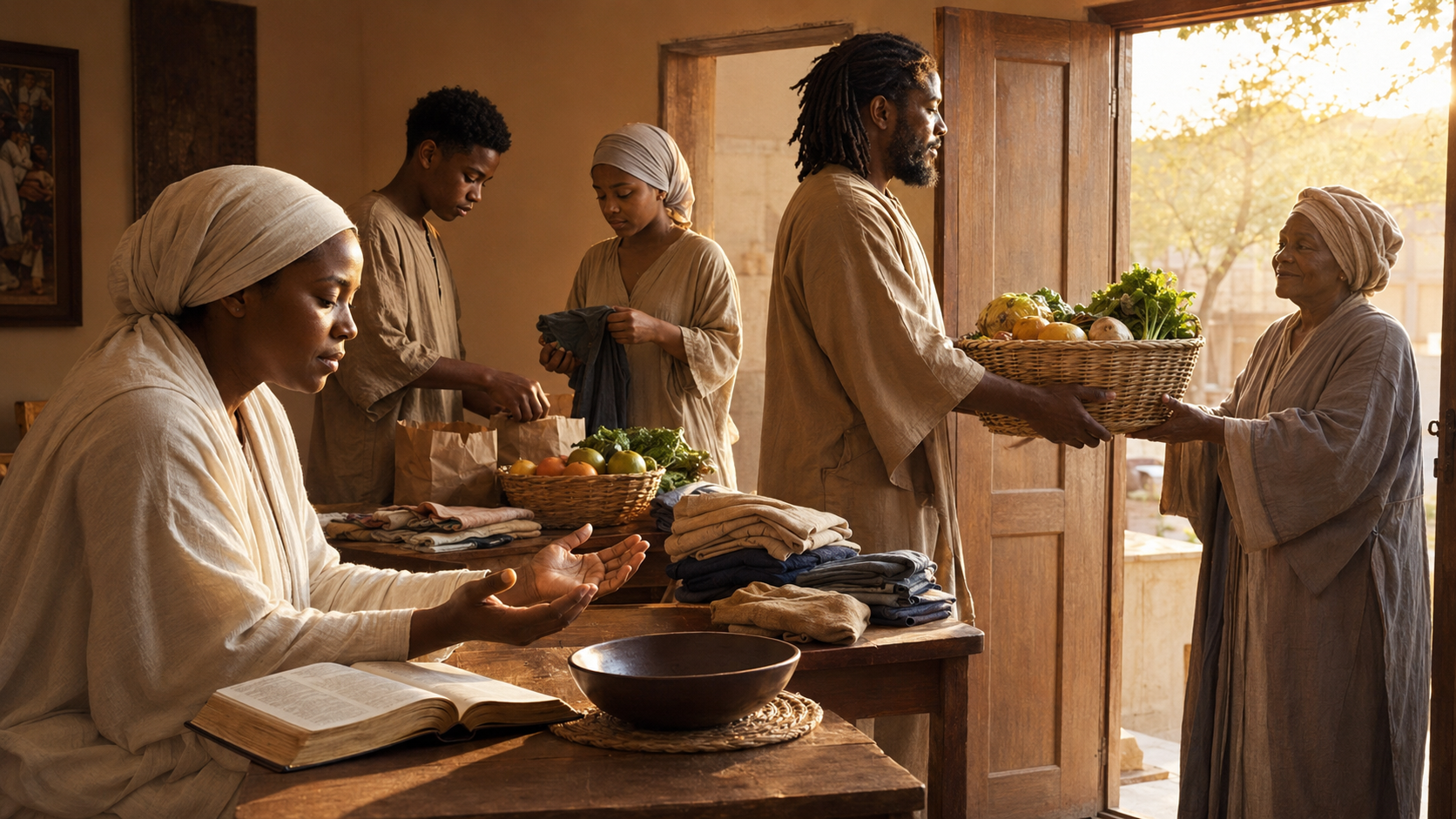
The Fast YAHUAH Chooses: Break Yokes, Feed the Hungry, and Make Tashubah
Fasting is not hunger used to bargain with YAHUAH. The fast He chooses breaks yokes, makes visible tashubah, feeds the hungry, and produces obedience.
You can refuse food and still refuse YAHUAH.
You can weaken the body while strengthening pride. You can miss meals, announce your sacrifice, speak powerful words in palal, and still rise from the fast with the same bitterness, cruelty, lust, dishonesty, rebellion, and disorder you carried into it.
That is not the fast YAHUAH chooses.
Fasting is not a spiritual hunger strike designed to force YAHUAH to answer. It is not punishment for the body, a public badge of righteousness, or a shortcut around obedience. Fasting is a willing humbling of the naphash before YAHUAH. It removes ordinary comfort so that hidden appetites, motives, wounds, and agreements can be brought into the light.
When fasting is joined to sincere palal, truth, mercy, and tashubah, it becomes a weapon against the rule of the flesh. When it is separated from obedience, it becomes religious theater.
The question is not only, “How long did you fast?” The greater question is, “What did you surrender, repair, release, and obey?”
YAHUAH Rejects a Fast That Protects Rebellion
Yashar’Al complained that they had fasted, yet YAHUAH had not responded as they expected. His answer exposed the contradiction between their outward affliction and their inward government.
“Wherefore have we fasted, say they, and thou seest not? Wherefore have we afflicted our naphash, and thou takest no knowledge? Behold, in the day of your fast ye find pleasure, and exact all your labours. Behold, ye fast for strife and debate, and to smite with the fist of wickedness: ye shall not fast as ye do this day, to make your voice to be heard on high.” — Isaiah 58:3–4
They denied themselves food while denying others mercy. They humbled their bodies while using power to oppress. They fasted, but they continued fighting, exploiting, accusing, and striking.
YAHUAH was not impressed by their empty stomachs because their hearts remained full of violence and self-interest.
This word confronts us now. What does it profit to fast while terrorizing your household? What does it profit to abstain from food while feeding on pornography, gossip, rage, envy, and corrupt entertainment? What does it profit to palal for deliverance while keeping the secret contact, hidden substance, dishonest money, or forbidden relationship within reach?
You cannot use fasting to make rebellion appear set apart.
If you fast and remain abusive, the fast has not justified you. If you fast and refuse to repay what you stole, the fast has not repaired the wrong. If you fast and continue manipulating, slandering, threatening, or exploiting others, the fast has not made your voice pure.
YAHUAH does not receive performance in place of tashubah.
The Fast YAHUAH Chose Has Fruit
YAHUAH did not leave His people guessing about the purpose of a righteous fast.
“Is not this the fast that I have chosen? To loose the bands of wickedness, to undo the heavy burdens, and to let the oppressed go free, and that ye break every yoke? Is it not to deal thy bread to the hungry, and that thou bring the poor that are cast out to thy house? When thou seest the naked, that thou cover him; and that thou hide not thyself from thine own flesh?” — Isaiah 58:6–7
The fast YAHUAH chooses moves beyond personal discomfort. It produces freedom, justice, generosity, and restored responsibility.
It loosens wickedness. It does not preserve a private agreement with sin.
It undoes heavy burdens. It does not use religious authority to place unbearable burdens on others.
It lets the oppressed go free. It does not command an abused person to remain silent so that a household, marriage, camp, or assembly can protect its appearance.
It breaks yokes. It does not exchange one bondage for another.
It feeds the hungry, covers the vulnerable, and refuses to look away from family responsibility. The person who fasts before YAHUAH must become more responsive to suffering—not more proud, severe, or detached.
If your fast makes you impatient with everyone around you, examine what is ruling you. Hunger may reveal irritability, control, entitlement, fear, or self-pity that comfort normally conceals. Do not blame the fast for exposing it. Bring it before YAHUAH and make tashubah.
The revelation is part of the work.
Stop Trying to Bargain With YAHUAH
Some people approach fasting as a transaction: “If I go without food for three days, YAHUAH must give me the relationship, money, opportunity, revelation, or answer I want.”
That is not surrender. It is an attempt to control the outcome through sacrifice.
YAHUAH is Aluah. We are not.
Fasting does not place Him in our debt. It brings us low enough to hear what pride, noise, appetite, and fear have been drowning out. Sometimes the answer received during a fast is not permission to obtain what we wanted. Sometimes it is the exposure of why we wanted it. Sometimes YAHUAH reveals that the request itself was born from lust, ambition, loneliness, revenge, comparison, or impatience.
True fasting does not demand that YAHUAH agree with us. It prepares us to agree with Him.
“Therefore also now, saith YAHUAH, turn ye even to me with all your heart, and with fasting, and with weeping, and with mourning: and rend your heart, and not your garments, and turn unto YAHUAH your Aluah.” — Joel 2:12–13
The torn garment could be seen. The torn heart could only be proven by change.
YAHUAH is not seeking a dramatic display. He is seeking the return of the whole person.
Fast in Secret, Not for Spiritual Attention
YAHUSHA Ha’Mashiach confronted fasting performed for human recognition.
“Moreover when ye fast, be not, as the hypocrites, of a sad countenance: for they disfigure their faces, that they may appear unto men to fast… But thou, when thou fastest, anoint thine head, and wash thy face; that thou appear not unto men to fast, but unto thy Father which is in secret.” — Matthew 6:16–18
The hypocrite does not merely fast. The hypocrite needs to be seen fasting.
The sighs become louder. The face becomes heavier. The sacrifice enters every conversation. Spiritual discipline becomes a performance intended to produce admiration, sympathy, or authority.
There may be proper times for an assembly, family, or ministry to call a united fast. A shared fast is not automatically public performance. The issue is the heart: Are we gathering in humility before YAHUAH, or are we competing over who appears most spiritual?
Do not exaggerate the length of your fast. Do not shame another person whose fast differs from yours. Do not treat weakness as proof of failure or duration as proof of righteousness. Do not turn a private act of surrender into a platform for superiority.
The reward of fasting is not that people believe you are deep. The reward is that the hidden life comes under the government of YAHUAH.
A Fast Without Tashubah Is Only Delayed Appetite
Fasting may interrupt a behavior without uprooting the agreement beneath it. A person can stop eating while still fantasizing about returning to the same sin. They count the hours until the fast ends, then immediately reopen every door YAHUAH exposed.
That is not freedom. That is delayed appetite.
Tashubah requires a turn. If the Ruach Ha’Qudash exposes a corrupt relationship, end the secret access. If dishonest gain is exposed, begin restitution. If rage governs the home, confess it without blaming the people you wounded. If your screen is feeding lust, remove the access that keeps becoming a doorway. If unforgiveness is poisoning your palal, surrender revenge without returning yourself to abuse. If spiritual pride is exposed, stop using revelation to dominate others.
Do not finish the fast and immediately rebuild what YAHUAH helped you tear down.
The fast should leave evidence in your halakah.
Fasting Must Be Joined to Palal and the Dabar
Going without food is not automatically spiritual. Without palal, Scripture, listening, and obedience, it can become nothing more than hunger.
The early assembly did not fast as an empty ritual. They ministered to YAHUAH, listened, and obeyed the direction they received.
“As they ministered to YAHUAH, and fasted, the Ruach Ha’Qudash said, Separate me Barnabah and Sha’ul for the work whereunto I have called them. And when they had fasted and palal, and laid their hands on them, they sent them away.” — Acts 13:2–3
Their fast produced clarity and obedient movement. They did not remain in endless spiritual preparation after YAHUAH had spoken. They acted.
Make room during the fast for quiet. Read slowly. Write what Scripture exposes. Palal truthfully instead of repeating impressive phrases. Sit before YAHUAH long enough for your excuses to become uncomfortable.
Fasting removes one kind of consumption so that the inner person may feast on the Dabar.
“Man shall not live by bread alone, but by every word that proceedeth out of the mouth of YAHUAH.” — Matthew 4:4
If the mouth refuses bread but the mind consumes confusion all day, the fast has lost its focus. Endless scrolling, argument, entertainment, and noise can keep the naphash just as distracted as a full table.
Turn down the noise. Let the hunger call you back to palal.
Apocrypha Witnesses
“Prayer is good with fasting and alms and righteousness. A little with righteousness is better than much with unrighteousness. It is better to give alms than to lay up gold.” — Tobit 12:8
“So is it with a man that fasteth for his sins, and goeth again, and doeth the same: who will hear his prayer? Or what doth his humbling profit him?” — Sirach 34:26
These witnesses agree with the Scriptural pattern: fasting belongs beside palal, righteousness, generosity, and a genuine turning away from sin. The purpose is not temporary deprivation followed by immediate return to rebellion.
Do Not Use Fasting to Control Other People
No husband, wife, parent, shepherd, teacher, or ministry leader has permission to use fasting as a tool of coercion.
Do not force a spouse to fast in order to prove submission. Do not deprive children of nourishment to imitate an adult discipline. Do not accuse someone of lacking Amunah because their duration, physical capacity, or form of abstinence differs from yours. Do not command a person in distress to fast while refusing to address the violence, abuse, exhaustion, or deprivation surrounding them.
YAHUAH’s fast breaks yokes. It does not create them.
Fasting must be voluntary, truthful, and governed by wisdom. A person should not imitate another person’s duration or ignore bodily danger to prove spirituality. The point is not to damage the vessel. The point is to humble the naphash, bring the flesh under righteous order, and seek YAHUAH without performance.
Enter the Fast With a Clear Purpose
Before you begin, ask YAHUAH what must be confronted. Do not merely choose a number of days and assume the number itself carries power.
Name the burden plainly. Are you seeking deliverance from a recurring appetite? Direction for your household? Restoration after compromise? Strength to obey what you already know? Intercession for the assembly? Clarity before a serious decision? A deeper life of palal?
Then remove unnecessary noise. Establish the period of fasting with honesty and wisdom. Decide what will be set aside. Prepare time for Scripture and palal rather than filling every empty hour with ordinary distraction.
As you fast:
1. Confess what is exposed. Do not rename pride as discernment, control as leadership, fear as wisdom, or lust as loneliness.
2. Make the turn visible. Delete, return, confess, block, repay, apologize, or establish the boundary obedience requires.
3. Release what you are withholding. Feed someone, help a household, forgive a debt when led, give quietly, or meet a need without announcing yourself.
4. Listen for instruction. Do not spend the entire fast telling YAHUAH what He must do.
5. Obey after the fast ends. The appetite may return, but it must not return to the throne.
The fast is not complete when you eat again. Its fruit is tested when ordinary life resumes.
Examine the Fruit, Not Merely the Duration
Ask yourself:
1. What sin am I asking YAHUAH to remove while I preserve access to it?
2. Have I used fasting to bargain for an answer I want instead of surrendering to His will?
3. Is anyone carrying a heavy burden because of my pride, neglect, control, dishonesty, or violence?
4. Does my fasting produce mercy and generosity, or irritation and spiritual superiority?
5. What appetite becomes loud when comfort is removed?
6. What instruction has YAHUAH already given that I continue delaying?
7. Am I willing to repair the wrong, or do I only want relief from its consequences?
8. What must remain changed after the fast ends?
Do not rush away from the answer. Let conviction finish its work.
Then Shall Your Light Break Forth
YAHUAH attaches a promise to the fast He chooses—not to empty starvation, but to obedience joined with mercy and truth.
“Then shall thy light break forth as the morning, and thine health shall spring forth speedily: and thy righteousness shall go before thee; the esteem of YAHUAH shall be thy rereward. Then shalt thou call, and YAHUAH shall answer; thou shalt cry, and he shall say, Here I am.” — Isaiah 58:8–9
This is the order: the yoke is broken, the oppressed are released, the hungry are fed, the vulnerable are covered, and then light breaks forth.
We cannot demand the promise while rejecting the order.
The fast YAHUAH chooses is not a temporary escape from life. It restores righteous order to life. It teaches the flesh that it is not master. It trains the heart to hear. It exposes what comfort concealed. It joins palal to generosity, confession to repair, and hunger to obedience.
Do not merely fast from food. Fast from the lie. Fast from the secret agreement. Fast from the need to be admired. Fast from retaliation, manipulation, excess, distraction, and every appetite that has demanded the throne.
Then return to food without returning to bondage.
Let the fast end, but let the obedience remain.
Closing Palal
YAHUAH, humble us beneath Your hand and expose every false fast we have offered. Forgive us for withholding food while withholding mercy. Forgive us for seeking spiritual power while protecting secret rebellion. Forgive us for trying to bargain with You instead of surrendering to Your will.
Teach us the fast You have chosen. Loose every band of wickedness, undo every heavy burden, release the oppressed, and break every yoke within our lives and households. Show us whom we have harmed, what we must repair, what we must release, and what we must obey.
Deliver us from pride, performance, manipulation, bitterness, lust, rage, greed, and hidden compromise. Let hunger turn our attention toward Your Dabar instead of toward complaint. Let palal become sincere. Let generosity become quiet. Let tashubah become visible.
Give us wisdom concerning the length and manner of every fast. Keep us from comparing ourselves with others or using spiritual discipline to control them. Make us compassionate, ordered, watchful, and steadfast.
When the fast ends, do not allow us to rebuild the bondage You exposed. Establish the fruit of the Ruach Ha’Qudash within us. Let our homes, relationships, work, speech, giving, and private halakah testify that we truly returned to You.
We submit every appetite to the authority of YAHUSHA Ha’Mashiach. Let our light break forth according to Your will, let righteousness go before us, and make us a people who fast, palal, give, obey, and walk in enduring set-apartness, in the name and authority of YAHUSHA Ha’Mashiach, Aman.

Cleanse Your House: Shut Every Door to Spiritual Compromise
You cannot palal against a door you keep reopening. Cleanse your home through genuine tashubah, obedience, set-apartness, and truth in YAHUSHA.
You cannot palal against a door you keep reopening.
You cannot ask YAHUAH to purify a home while knowingly feeding it with what He told you to put away. You cannot rebuke darkness at midnight and entertain it again the next evening. You cannot declare that your household belongs to YAHUSHA Ha’Mashiach while protecting the music, images, objects, relationships, substances, secret conversations, and private habits that keep rebellion comfortable.
Many people want relief without separation. They want peace without order, deliverance without tashubah, and protection without obedience. They will walk through rooms speaking loudly, place oil on doorways, and command spirits to leave—yet they refuse to remove the very compromise they continue to choose.
There is no ritual powerful enough to replace obedience.
This teaching is not a call to superstition. It is not permission to accuse every old object, unfamiliar decoration, or difficult emotion of being demonic. It is not a command to become fearful of your own home. It is a call to examine what you have knowingly welcomed, what you continue to consume, and what your household has agreed to tolerate.
YAHUAH does not call His people to panic. He calls us to come out of mixture.
A Set-Apart Household Cannot Make Peace With What YAHUAH Hates
“Neither shalt thou bring an abomination into thine house… but thou shalt utterly detest it, and thou shalt utterly abhor it.” — Deuteronomy 7:26
Yashar’Al was warned not to carry the objects of false worship into their dwellings. The command was not merely about decorating preferences. Those objects represented worship, agreement, and loyalty to another way.
The same principle confronts us now: what we deliberately bring into the home reveals what we are willing to host.
Not every object is an idol. Not every piece of art is a spiritual agreement. Not every cultural item carries hidden power. We must not invent bondage where Scripture has not established sin. Yet when an object was created for false worship, occult practice, sexual corruption, violence, or the celebration of rebellion—and we knowingly keep it because part of us still values what it represents—we must stop pretending the issue is harmless.
The question is not merely, “Can I own this?” The deeper question is, “Why am I fighting so hard to keep what continually pulls my heart away from YAHUAH?”
Mixture Is Still Rebellion
“Now therefore fear YAHUAH, and serve him in sincerity and in truth: and put away the strange mighty ones which your fathers served… and serve ye YAHUAH.” — Joshua 24:14
Yahusha did not tell the people to place the strange objects in a cabinet and visit them occasionally. He told them to put them away. The choice was not between open rebellion and a respectable form of mixture. The choice was whom they would serve.
Mixture says:
• “I belong to YAHUAH, but I still need this ungodly relationship.”
• “I follow YAHUSHA, but I will not surrender this secret entertainment.”
• “I desire deliverance, but I keep the contact, the account, the bottle, the device, the hidden file, or the object within reach.”
• “I want my children protected, but the atmosphere of the home is filled with cursing, sexual corruption, rage, mockery, and confusion.”
• “I want shalum, but I refuse to establish righteous order.”
Mixture always demands that truth share a room with what opposes it. But YAHUAH will not be reduced to one influence among many.
“Ye cannot drink the cup of YAHUAH, and the cup of devils: ye cannot be partakers of YAHUAH’s table, and of the table of devils.” — 1 Corinthians 10:21
The Natsarym of YAHUSHA cannot keep negotiating with what must be forsaken.
What Are You Setting Before Your Eyes?
“I will walk within my house with a perfect heart. I will set no wicked thing before mine eyes.” — Psalm 101:2–3
The home is not only shaped by what hangs on the wall. It is shaped by what enters through the screen.
Some households have removed every obvious object connected to false worship but continue streaming adultery, murder, mockery, sorcery, sexual perversion, profanity, and rebellion for hours. They would never invite certain behavior into the living room in person, yet they repeatedly summon its image, language, music, and imagination through a device.
We must stop calling something “only entertainment” when it trains the naphash to enjoy what YAHUAH commands us to hate.
What you repeatedly watch becomes familiar. What becomes familiar stops feeling dangerous. What stops feeling dangerous is eventually defended. Then conviction is treated like bondage, and compromise is renamed freedom.
This does not mean every story must avoid every portrayal of human sin. Scripture itself records violence, adultery, betrayal, and judgment. But Scripture reveals sin in order to expose it, warn us, and lead us to righteousness. Corrupt entertainment packages sin for pleasure, identification, fantasy, and repeated appetite.
Ask honestly: Does this draw me toward truth, or does it make darkness easier to tolerate?
Stop Preserving Access to the Thing You Renounced
In Acts 19, those who turned away from sorcery did not simply confess with their mouths while retaining their materials for sentimental reasons or future profit.
“Many of them also which used curious arts brought their books together, and burned them before all men… So mightily grew the word of YAHUAH and prevailed.” — Acts 19:19–20
Their tashubah became visible. They removed access, accepted the financial loss, and refused to sell the corruption to someone else.
This is where many attempts at deliverance fail. The person renounces the bondage but preserves a bridge back to it.
The number remains saved under another name. The private account remains active. The substance is hidden “just in case.” The photographs remain in a locked folder. The conversation is deleted from the screen but not from the heart. The item is placed in the garage instead of removed. The music is taken out of one playlist and kept in another. The relationship is supposedly over, but the emotional door remains open.
That is not a closed door. That is delayed access.
YAHUSHA taught that if the right hand causes a person to stumble, the response must be decisive. His words expose the seriousness of removing access to sin. The command is not an invitation to injure the body; it is a demand that we stop protecting what repeatedly becomes an instrument of disobedience.
If you truly want freedom, stop leaving yourself an easy road back to bondage.
Do Not Give Place to the Adversary
“Neither give place to the devil.” — Ephesians 4:27
A “place” is room, opportunity, territory, or access. The adversary does not need ownership of the whole house when we continually reserve a room for agreement.
That room may be unforgiveness. It may be rage that rules the household. It may be pornography, substance bondage, dishonest money, manipulation, violence, divination, false worship, or a relationship YAHUAH has already exposed. It may be the refusal to make tashubah after abuse. It may be a private identity built around rebellion while the public identity speaks of set-apartness.
Spiritual warfare is not only commanding darkness to depart. It is removing your agreement with darkness.
“Submit yourselves therefore to Aluah. Resist the devil, and he will flee from you.” — James 4:7
Notice the order: submit, then resist.
Resistance without submission becomes noise. Authority is not proven by volume. It is expressed through alignment with YAHUAH.
Cleansing the Home Begins With Cleansing the Heart
It is easier to throw away an object than to surrender an appetite. It is easier to delete a song than to confront why its spirit and message felt comforting. It is easier to blame a decoration than to make tashubah for the rage, adultery, control, dishonesty, or pride that actually governs the atmosphere.
YAHUSHA warned about a house that was swept and put in order but left empty. The unclean spirit returned with others more wicked than itself, and the latter condition became worse than the first (Matthew 12:43–45).
The warning is clear: removal without filling is not restoration.
A person may clean the shelf, empty the bottle, delete the account, and end the conversation—but if the heart remains unsubmitted, the empty space will demand another master. Deliverance is not merely losing access to the former bondage. It is becoming filled with the truth, habits, presence, and authority of YAHUSHA Ha’Mashiach.
The home must be filled with:
• sincere palal rather than performance;
• Scripture that is read, obeyed, and discussed;
• truthful speech rather than cursing, slander, and manipulation;
• praise directed to YAHUAH rather than music that glorifies the flesh;
• righteous boundaries rather than secret access;
• restitution where theft, deception, or financial wrongdoing occurred;
• confession and accountability rather than concealed bondage;
• Shabbat rest, family order, hospitality, and care for those in need;
• the fruit of the Ruach Ha’Qudash rather than domination and fear.
A clean room cannot compensate for an unclean halakah. The goal is not an empty house. The goal is a household ordered under YAHUAH.
Do Not Turn Household Cleansing Into Superstition
Fear can create another form of bondage. Some people begin searching every room for hidden evil, accusing ordinary items, treating dreams as unquestionable instructions, or believing that one missed object gives darkness unlimited authority over the blood-bought servant of YAHUSHA.
That is not discernment. Discernment is governed by truth.
Do not invent an occult history for an object because it came from another culture. Do not destroy family property that does not belong to you. Do not use “spiritual cleansing” as permission to control a spouse, frighten children, shame a survivor, or vandalize another person’s belongings. Do not build doctrine from internet testimonies, fear-driven videos, or the personal rules of a self-appointed deliverance teacher.
Ask clear questions:
• Is this directly connected to false worship, divination, sexual corruption, violence, addiction, theft, or another practice Scripture condemns?
• Does keeping it preserve access to a bondage I have renounced?
• Am I defending it because I love what it represents?
• Has the Ruach Ha’Qudash convicted me through Scripture, or am I reacting to fear and rumor?
• Can I remove it lawfully, safely, and without violating another person?
The authority is not in a dramatic cleaning ritual. The authority is in YAHUSHA Ha’Mashiach, and the evidence of surrender is obedience.
When Other People Share the Home
You may live with a spouse, parent, adult child, relative, or roommate who does not agree with your convictions. Your desire for set-apartness does not authorize theft, destruction, threats, or domination.
Begin with what belongs to you and what you control. Remove your access. Clean your accounts. End your secret agreements. Establish boundaries concerning shared spaces through calm, truthful conversation. Protect children from corrupt access where you have lawful responsibility. Refuse participation without becoming abusive.
If someone uses the home for violence, sexual abuse, coercion, threats, or criminal conduct, household cleansing is not a substitute for safety. Do not remain in immediate danger to prove Amunah. Move toward safety, involve trustworthy support, and refuse to let spiritual language conceal abuse.
YAHUAH is an Aluah of order. Righteous order never requires cooperation with evil.
Apocrypha and Pseudepigrapha Witnesses
“But under the tunic of each of the dead they found amulets sacred to the idols of Jamnia, which the Torah forbids the Yahudym to wear. So it was clear to all that this was why these men had fallen. They all therefore praised the ways of YAHUAH, the just Judge who brings to light the things that are hidden. Turning to supplication, they palal that the sinful deed might be fully blotted out.” — 2 Maccabees 12:40–42
“And do thou, my son Ya’aqub, remember my words, and observe the commandments of Abraham, thy father: separate thyself from the nations, and eat not with them: and do not according to their works, and become not their associate; for their works are unclean, and all their ways are a pollution and an abomination and uncleanness.” — Jubilees 22:16–17
Walk Through the House in Truth
Set aside time when you will not be rushed. Begin with palal, but do not perform. Ask YAHUAH to expose what you have excused—not merely what you fear.
Then walk through the physical and digital rooms of your life.
Look at the shelves, drawers, closets, devices, subscriptions, saved contacts, private albums, playlists, games, books, messages, and accounts. Examine the source, purpose, and fruit. Do not hunt for imagined curses. Look for known agreements with sin.
When YAHUAH exposes something, respond:
1. Confess the agreement. Name the sin truthfully without softening it.
2. Make tashubah. Turn from the practice and the appetite that protected it.
3. Remove access. Discard, delete, cancel, block, return, or safely destroy what belongs to you and keeps the door open. Do not sell or gift corruption to another person.
4. Renounce the false claim. Declare that the object, relationship, habit, or appetite has no authority over you because you belong to YAHUSHA Ha’Mashiach.
5. Repair what sin damaged. Return stolen property, confess dishonesty where wise and safe, restore household boundaries, and seek righteous accountability.
6. Fill the space with obedience. Replace corrupt routines with Scripture, palal, clean work, service, family order, praise, and fellowship with people who will not lead you backward.
Do not measure success by how many bags leave the house. Measure it by whether your obedience remains after the emotion passes.
Questions That Expose Mixture
1. What do I defend immediately when conviction touches it?
2. Which private habit contradicts the identity I present publicly?
3. Have I kept a bridge back to a relationship, substance, sexual sin, or former spiritual practice?
4. What enters my home through screens that I would never permit through the front door?
5. Is the atmosphere shaped by palal and truth—or rage, cursing, fear, and confusion?
6. Have I blamed objects while refusing tashubah for the sin within my own heart?
7. Am I trying to control another person’s belongings instead of becoming obedient in what belongs to me?
8. What did YAHUAH already tell me to remove that I continue postponing?
Do not rush past the question that makes you uncomfortable. That may be the very door YAHUAH is exposing.
Choose This Day Whom Your House Will Serve
“And if it seem evil unto you to serve YAHUAH, choose you this day whom ye will serve… but as for me and my house, we will serve YAHUAH.” — Joshua 24:15
“As for me and my house” is not a decorative sentence. It is a declaration of government.
It means YAHUAH determines what is honored, what is rejected, what is practiced, and what is taught. It means the household does not bow to every appetite, trend, relative, screen, tradition, or inherited bondage. It means love does not become permission for rebellion. It means peace is not purchased through compromise.
Do not be ashamed to remove what you once paid for. Do not preserve bondage because it carries memories. Do not keep a doorway open because closing it will disappoint someone. Do not confuse sentimental attachment with covenant.
YAHUSHA did not give Himself at the stake so that we could decorate our bondage and call it freedom. He came to destroy the works of the devil, cleanse a people for Himself, and lead us into obedience.
Let the house become quiet enough for conviction to speak. Let hidden agreements be brought into the light. Let mixture end. Let truth govern. Let the atmosphere change because the people inside the home have truly made tashubah.
Closing Palal
YAHUAH, search this house and search our hearts. Expose every agreement with darkness that we have excused, hidden, defended, or renamed. Forgive us for asking You to remove what we continued to welcome. Forgive us for speaking deliverance while preserving access to bondage.
Give us courage to remove what You have condemned and wisdom not to invent fear where You have not spoken. Deliver us from superstition, spiritual pride, control, and empty rituals. Teach us to recognize the difference between conviction from the Ruach Ha’Qudash and fear produced by human imagination.
We renounce false worship, sexual corruption, violence, addiction, dishonest gain, occult practice, secret rebellion, and every agreement that opposes Your ways. Give us strength to delete, discard, cancel, block, return, confess, and repair whatever obedience requires.
Fill every empty place with truth. Establish righteous order, clean speech, sincere palal, Scriptural obedience, ahaba, accountability, and shalum within this home. Protect the vulnerable. Expose abuse. Strengthen those who must establish boundaries. Let this household no longer be divided between public devotion and private compromise.
We submit ourselves to You. Let every room, device, relationship, appetite, and habit come under the authority of YAHUSHA Ha’Mashiach. Lead us into true tashubah and enduring set-apartness, in the name and authority of YAHUSHA Ha’Mashiach, Aman.

When Affliction Becomes Content: Stop Scrolling, Examine Yourself, and Return to YAHUAH
Viral violence can harden the heart. Learn why affliction must lead YAHUAH’s people beyond outrage into truth, compassion, and lasting tashubah before YAHUAH.
We are living in a time when another person’s suffering can become entertainment before it becomes a reason to palal.
A beating is recorded. A child is harmed. A family is destroyed. A life is taken. Within minutes, the footage is clipped, captioned, reposted, argued over, and absorbed into an endless stream of content. People watch the same blow repeatedly. They express anger, choose sides, insult strangers, and then scroll to the next video as though they have fulfilled righteousness.
But what if the constant display of affliction is revealing more than the cruelty of the person on the screen? What if it is also revealing the condition of the people watching?
In August 2026, widely circulated footage from an Arkansas State Police pursuit showed Trooper Theodore “Teddy” Henderson pulling passenger Tedrick Washington through a broken rear window by his arm and locs and striking him. The footage has produced anger, grief, arguments, and demands for accountability. Those concerns should not be dismissed. Violence and abuse of authority must not be renamed as righteousness merely because the person committing it wears a uniform.
Yet YAHUAH’s people must go deeper than outrage. We must ask why scenes of humiliation and violence have become so common, why our people continually appear in them, why the public can consume affliction as spectacle, and why each new tragedy produces emotion without lasting tashubah.
This article is not a verdict on every disputed fact of one incident. It is a warning about what we are becoming while watching affliction multiply.
YAHUSHA Did Not Allow Tragedy to Become Gossip
People once brought YAHUSHA Ha’Mashiach news of Galilaeans whose blood Pilate had mingled with their sacrifices. The report concerned state violence, public suffering, and shocking death. YAHUSHA did not turn their pain into entertainment. He did not allow His listeners to stand at a safe distance and discuss only the sins of the afflicted.
He turned the report into a demand for self-examination:
“Suppose ye that these Galilaeans were sinners above all the Galilaeans, because they suffered such things? I tell you, Nay: but, except ye repent, ye shall all likewise perish.” — Luke 13:2–3
This is the part many people do not want. We want tragedy to confirm that someone else is wicked. We want an offender to condemn, an institution to blame, or a victim to analyze. YAHUSHA forces the watcher to examine the watcher.
His words do not excuse the oppressor. They expose the false safety of spectatorship. The proper response to affliction is not, “They must have deserved it.” Neither is it, “I reposted it, so I have done my part.” The response is: What must change in me, in my house, and among my people before more affliction comes?
Violence Is a Spiritual Alarm
Habakkuk cried out because violence had become normal:
“O YAHUAH, how long shall I cry, and thou wilt not hear! even cry out unto thee of violence, and thou wilt not save! Why dost thou shew me iniquity, and cause me to behold grievance?” — Habakkuk 1:2–3
The prophet did not describe a society suffering from only one corrupt person. He described a people surrounded by violence, strife, grievance, and weakened judgment. That is why isolated outrage is insufficient. Removing one offender cannot heal a culture that feeds violence in its homes, music, entertainment, relationships, streets, institutions, and hidden thoughts.
We must be honest: violence does not begin only when a camera records it. It begins when cruelty is admired. It begins when children are trained by humiliation instead of correction. It begins when men confuse uncontrolled rage with strength. It begins when women weaponize shame, manipulation, and public exposure. It begins when families protect abusers to preserve appearances. It begins when revenge is celebrated and mercy is mocked.
It begins when the suffering of another person becomes content.
Outrage Is Not Tashubah
Outrage can be loud while repentance is absent.
A person can condemn brutality online and remain brutal at home. A person can demand accountability from an officer while refusing accountability for adultery, neglect, addiction, hatred, theft, falsehood, or abuse. A person can weep over a stranger’s child while ignoring the wounds of their own children. A person can speak against oppression while oppressing a spouse, employee, sibling, or neighbor.
YAHUAH is not impressed by public anger that leaves private sin untouched.
“Wash you, make you clean; put away the evil of your doings from before mine eyes; cease to do evil; learn to do well; seek judgment, relieve the oppressed, judge the fatherless, plead for the widow.” — Yashayahu 1:16–17
The command contains both personal cleansing and public righteousness. We are not permitted to choose one while rejecting the other. Tashubah that never relieves the oppressed is incomplete. Activism that never puts away personal evil is hypocrisy.
True tashubah changes direction. It confesses sin without excuses, stops participating in evil, makes restitution where possible, accepts correction, and produces fruit over time.
Do Not Confuse Accountability With Hatred
Demanding truthful investigation and proportionate accountability is not hatred. Scripture repeatedly condemns partial judgment, bribery, false witnesses, and the abuse of power.
“Ye shall do no unrighteousness in judgment: thou shalt not respect the person of the poor, nor honour the person of the mighty: but in righteousness shalt thou judge thy neighbour.” — Leviticus 19:15
The victim’s humanity must not be erased. The authority figure’s humanity must not be erased either. Righteous judgment does not require us to invent facts, celebrate destruction, threaten families, or turn hatred into a virtue. We can call an act evil without allowing evil to reproduce inside us.
“Rejoice not when thine enemy falleth, and let not thine heart be glad when he stumbleth.” — Proverbs 24:17
Hatred makes us resemble what we claim to oppose. It feeds on repeated viewing, dehumanizing language, fantasy punishment, and collective blame. The Ruach Ha’Qudash produces truth, restraint, courage, and clean judgment—not a digital mob.
The Algorithm Is Training the Heart
Repeated exposure changes what shocks us. The first violent video may produce grief. The tenth may produce curiosity. The hundredth may become background noise.
Some platforms reward the most humiliating moment because outrage keeps people watching. The wounded person is reduced to a clip. Their fear, family, history, and future disappear. Viewers are trained to look at pain without responsibility.
YAHUSHA did not teach His people to consume suffering from a distance. The Samaritan in Luke 10 saw a wounded man and moved toward responsibility. Others saw him and passed by.
“But a certain Samaritan, as he journeyed, came where he was: and when he saw him, he had compassion on him.” — Luke 10:33
Compassion is not the same as emotional stimulation. Compassion asks what can be done: palal, verify truth, support the harmed, protect the vulnerable, teach children, interrupt abuse, offer resources, pursue lawful accountability, or examine personal conduct.
If watching does not lead to righteous action, it may only be feeding the flesh.
Our Children Are Watching How We Respond
Children learn what is normal by observing adults. When they hear constant violent footage playing from phones, watch adults laugh at humiliation, or see every tragedy turned into racial hatred and profanity, they are being discipled by disorder.
Parents and elders must explain that every person shown suffering bears human dignity. Do not repeatedly play violent footage around children. Do not teach them to mock victims or assume guilt from appearance. Do not teach them that every authority is righteous, or that every authority is evil. Teach them to recognize lawful order, abuse of power, self-control, truth, and wise conduct during encounters.
Most importantly, model tashubah. Let children hear adults confess when they have judged falsely, spoken cruelly, or reacted in rage. A household cannot demand justice from the nation while refusing righteousness inside its own walls.
Affliction Among a People Must Produce a Return
Scripture repeatedly shows that persistent rebellion produces consequences. This must never be used to excuse an individual offender or blame a particular victim for what happened to them. YAHUSHA rejected that shallow reasoning in Luke 13.
But a people who continually witness violence, captivity, family collapse, addiction, exploitation, premature death, and public humiliation should not refuse collective self-examination.
“If my people, which are called by my name, shall humble themselves, and palal, and seek my face, and turn from their wicked ways; then will I hear from the shamaym, and will forgive their sin, and will heal their land.” — 2 Chronicles 7:14
The text does not say that posting will heal the land. It does not say that outrage will heal the land. It says: humble yourselves, palal, seek YAHUAH’s face, and turn from wicked ways.
We cannot demand that oppression cease while asking our own sins to remain undisturbed. We must hate sin enough to leave it—not merely hate the consequences when they arrive.
Extra-Canonical Witnesses: Supporting the Canon
The Canon has already established the teaching. The following extra-canonical witnesses are included as supporting testimony, not as the foundation.
Sirach 28:1–7 warns that the person who pursues vengeance should remember their own need for mercy, put away hatred, and remember the Commandments. This agrees with the Canon’s command to seek righteous judgment without allowing hatred to possess the heart.
The Testament of Gad, an extra-canonical pseudepigraphal writing, gives an extended warning about hatred. It describes hatred as spiritual blindness that distorts perception and produces evil against both the innocent and the guilty. Its value here is not doctrinal independence but moral agreement with 1 Yahuchanun 2:9–11: hatred blinds the one who walks in it.
These witnesses must not be used to create new doctrine. They echo what the Canon already makes plain.
Before You Share the Next Violent Video
Stop and ask:
Is it verified? Am I sharing established facts or a caption designed to provoke me?
Does sharing preserve dignity? Would I want my worst or most painful moment circulated this way?
Will this help anyone? Does it inform, protect, document, or direct people toward useful action?
Am I feeding hatred? Have I begun wishing evil on whole groups of people?
Have I palal? Did I bring the victim, family, witnesses, and all responsible parties before YAHUAH?
What is this exposing in me? Rage, prejudice, indifference, fear, voyeurism, or self-righteousness?
What righteous action follows? If there is no answer, why am I consuming it again?
A Seven-Day Tashubah Response
Day 1 — Stop consuming the spectacle. Do not replay violent footage for stimulation. Gather only the information needed to understand the event.
Day 2 — Examine your violence. Ask YAHUAH to expose rage, intimidation, cruelty, revenge fantasies, verbal abuse, and delight in humiliation.
Day 3 — Clean your speech. Remove threats, slurs, false accusations, collective blame, and dehumanizing language.
Day 4 — Repair your house. Address unresolved harm, apologize without manipulation, protect those at risk, and establish accountability.
Day 5 — Teach the children. Discuss dignity, wise conduct, lawful authority, abuse of power, and the difference between courage and rage.
Day 6 — Serve someone afflicted. Help a victim, grieving family, elder, fatherless child, returning citizen, or household trapped in crisis.
Day 7 — Gather and palal. Confess personal and communal sin. Ask YAHUAH for clean hands, truthful judgment, protection, and the strength to walk in set-apartness.
We Must Hate Sin Enough to Turn
Our heartbreak cannot end with a post. Our anger cannot end with a hashtag. Our grief cannot end when the video disappears from the feed.
Every new display of affliction should break the illusion that we can continue in sin without consequence. It should cause us to seek YAHUAH while He may be found. It should move fathers to govern themselves, mothers to protect and instruct, children to turn from rebellion, leaders to judge honestly, and assemblies to confront sin without partiality.
We must stop asking only, “What is wrong with them?”
The more urgent question is: What must we turn from before YAHUAH?
Do not let suffering become another piece of content. Let it become a trumpet. Let it wake the sleeping. Let it drive us to our knees with open hands. Let it produce truth, mercy, justice, protection, and lasting tashubah.
Closing Palal
YAHUAH, we grieve over the violence, humiliation, abuse, and bloodshed continually placed before our eyes. Forgive us for consuming affliction without compassion, speaking before knowing the truth, feeding hatred, and demanding repentance from others while protecting our own sin.
Search our hearts. Expose every seed of cruelty, prejudice, rage, vengeance, cowardice, and indifference. Teach us to seek righteous judgment without becoming hateful. Give protection and healing to those who have been harmed. Bring hidden works into the light, establish truthful accountability, and restrain those who misuse power.
Turn our people from rebellion. Restore fathers, strengthen mothers, protect children, awaken assemblies, and give our leaders clean judgment. Fill us with the Ruach Ha’Qudash so that we respond to affliction with truth, courage, compassion, and set-apartness.
May we hate our sins enough to abandon them. May every warning drive us nearer to You. We ask this in the name and authority of YAHUSHA Ha’Mashiach, Aman,

More Than Flashcards: Why the Alaph to Tau Study Deck Is One of a Kind
Discover the Alaph to Tau Ancient Paleo-Hebrew Study Deck—a one-of-a-kind visual learning system for letters, sounds, meaning, Scripture connections, active recall, households, and teachers. Explore the Digital Premium, Physical Black-and-Gold, and Deluxe Collector’s editions.

Ancient Paleo Hebrew Study Deck showing the Digital Download, Physical Deck, and Deluxe Deck editions from Alaph to Tau by Natsarym of YAHUSHA.
Many people desire to study the ancient language of Scripture but do not know where to begin. They encounter conflicting charts, mislabeled symbols, modern characters presented as ancient forms, and complicated explanations that make the letters feel distant or inaccessible.
The Alaph to Tau Ancient Paleo-Hebrew Study Deck was created to make that first step clear, visual, disciplined, and rooted in Scripture.
This is more than a collection of attractive flashcards. Each card is a focused study tool designed to help learners recognize a letter, understand its name and foundational meaning, observe its development, connect it with Scripture, and remember it through repeated practice.
The objective is not to chase secret knowledge or replace the written Word. The objective is to strengthen study by restoring familiarity with the letters through which many Scriptural names, words, and concepts have been preserved.
Why Learning the Ancient Letters Matters
Language shapes how we recognize names, sounds, word connections, and meaning. When a learner relies only upon English spellings or modernized forms, important relationships can be difficult to see.
Studying the ancient letters can help a learner:
• Recognize the original direction and structure of the script
• Distinguish ancient Paleo-Hebrew forms from modern Hebrew characters
• Become familiar with the names and sounds of the letters
• Identify repeated letters within Scriptural names and words
• Follow word studies with greater understanding
• Detect charts that mix unrelated symbols or inaccurate forms
• Build a stronger foundation for continued language study
The deck does not claim that knowing the alphabet automatically produces spiritual maturity. Knowledge must remain joined to humility, obedience, palal, and the leading of the Ruach Ha’Qudash.
Second Timutiyus—2 Timothy 2:15 instructs us:
““Study to shew thyself approved unto YAHUAH, a workman that needeth not to be ashamed, rightly dividing the word of truth.””
The Alaph to Tau deck supports that work by giving the learner an organized way to study, review, compare, and remember.
What Makes This Deck Different
Many alphabet products present only a letter and an English sound. Others depend heavily upon modern Hebrew or fill the cards with decorative symbols that cannot be verified.
The Alaph to Tau deck was built with a different purpose. It brings the major learning elements together in one coordinated system.
Each card guides the learner through:
• The correct letter name
• The ancient Paleo-Hebrew form
• The related ancient pictographic form where applicable
• The modern form for careful comparison
• The letter’s sound
• Its foundational meaning
• Its numerical value
• A Scriptural connection
• A visual structure designed for repeated review
Instead of forcing the learner to gather these elements from unrelated charts, videos, notebooks, and websites, the deck places them into a consistent card-by-card progression from Alaph to Tau.
That integrated structure is what makes the deck one of a kind. The claim is not that no other alphabet resource exists. The distinction is that this deck was intentionally created for Natsarym learners who want ancient-letter recognition, Scriptural application, accurate comparison, and practical study within one set-apart learning tool.
Created for Visual Memory
Some learners can read a definition repeatedly and still struggle to remember it. Visual structure helps the mind organize information.
The black-and-gold design was not selected only for appearance. The consistent layout helps the learner know where to look for the symbol, name, meaning, number, and Scriptural connection on every card.
That consistency supports visual memory. Over time, the learner begins to recognize the shape before reading the name. The name begins to recall the sound. The sound begins to connect with words. The meaning begins to recall the lesson and Scripture associated with the card.
This is especially useful for:
• Visual learners
• Beginners who feel overwhelmed by alphabet charts
• Adults returning to structured study
• Parents teaching children inside the household
• Teachers leading small-group lessons
• Learners who benefit from repetition and active recall
Active Recall Produces Stronger Learning
Reading a chart is passive. Turning over a card and attempting to identify the letter before checking the answer requires active recall.
Active recall turns the learner from an observer into a participant.
With the deck, you can ask:
• What is the name of this letter?
• What sound does it carry?
• What does its ancient form resemble?
• What foundational meaning is connected to it?
• What is its numerical value?
• Which Scripture is associated with the lesson?
• Can I recognize it without seeing the English name?
• Can I identify it when it appears inside a word?
Each correct answer strengthens memory. Each mistake reveals exactly what should be reviewed next.
The Deck Helps Prevent Symbol Confusion
Ancient-letter study online is often inconsistent. A chart may label a modern character as Paleo-Hebrew, reverse a symbol, combine forms from different periods, or add invented marks without identifying their source.
This creates confusion for sincere learners.
The Alaph to Tau deck was developed through careful attention to the individual forms and their presentation. It does not decorate the cards with random characters to make them appear ancient. The purpose is recognition and instruction, not visual mysticism.
The comparison of ancient and later forms helps learners understand that scripts develop over time. This makes it easier to recognize why the same letter may appear differently across inscriptions, reference materials, and modern resources.
A Tool for Scripture Study—not a Replacement for Scripture
The deck should lead the learner back to the Word.
Yahuchanun—John 5:39 records the instruction to search the Scriptures. Ma’asyah—Acts 17:11 commends those who examined the Scriptures daily to determine whether what they heard was true.
The cards provide an entry point, but the learner should continue by opening Scripture, examining context, recording observations, comparing words, and seeking understanding through the Ruach Ha’Qudash.
The deck does not teach that a pictographic meaning can be inserted into every word without regard for grammar, context, or usage. It does not authorize invented interpretations. It gives the learner a foundation from which deeper and more responsible study can begin.
Useful for Individual and Household Study
The Alaph to Tau deck can be used alone, with a study partner, inside a family, or in a small learning group.
Individual study
Select one card each day. Say the letter name aloud, study its form, copy it several times, read the connected Scripture, and record one observation in your journal.
Household study
Choose one letter for the week. Place the card where the household can see it. Review the name and sound each day, then invite family members to identify it without assistance.
Parent and child learning
Use short sessions rather than overwhelming lessons. Allow the child to match cards, arrange the letters in order, trace the form separately, and repeat the sound.
Small-group study
Assign each participant a letter to review and explain. Use the cards for quizzes, matching exercises, word-building practice, and Scriptural discussion.
Continuing review
Separate the deck into three groups:
1. Letters you recognize immediately
2. Letters you recognize with effort
3. Letters requiring further study
Spend the most time on the third group. Re-sort the cards as recognition improves.
Why the Large-Format Design Matters
Tiny flashcards often force the learner to choose between readable text and useful information. The Alaph to Tau deck was designed to give the letters and teaching room to breathe.
The generous card format makes it easier to:
• Observe the shape clearly
• Read the teaching without crowding
• Display a card during household instruction
• Photograph a card for personal study notes
• Compare forms without relying upon a magnifying screen
• Use the deck during group teaching
The result is a study resource that can remain on a desk, travel in a study bag, accompany Scripture reading, or become part of a regular household-learning rhythm.
Three Versions for Different Study Needs
The teaching foundation remains consistent, but the deck is available in three formats so learners can choose the experience that fits their needs.
Digital Premium Edition
The Digital Premium Edition provides immediate access for learners who want to begin without waiting for shipping. It is useful for studying on a device, building digital lessons, and printing personal study copies according to the listing terms.
Choose the digital edition if you:
• Want immediate access
• Prefer studying from a phone, tablet, or computer
• Need a flexible option for personal learning
• Want to incorporate the cards into digital notes
• Live in an area where physical shipping may be difficult
Get the Digital Premium Alaph to Tau Deck on Etsy
https://www.etsy.com/listing/4523562907/
Physical Black-and-Gold Study Deck
The physical deck gives learners a ready-to-use tactile study experience. Holding, arranging, sorting, and reviewing physical cards can strengthen engagement and reduce the distractions that often accompany studying on a phone.
Choose the physical deck if you:
• Prefer learning with materials you can hold
• Want to practice active recall without a screen
• Plan to teach children or a small group
• Want to arrange the letters in order
• Need a dedicated resource for your study table
Get the Physical Black-and-Gold Alaph to Tau Deck on Etsy
https://www.etsy.com/listing/4523994915/
Deluxe Collector’s Edition
The Deluxe Collector’s Edition was created for learners who want the study tool presented as a complete keepsake set. Its collector presentation and exclusive design make it suitable for dedicated study, meaningful gifting, and long-term preservation.
Choose the deluxe edition if you:
• Want the most complete presentation
• Value a collector-style storage box
• Are purchasing a meaningful gift for a serious learner
• Want a set that can remain protected between study sessions
• Appreciate the exclusive deluxe design
Get the Deluxe Collector’s Alaph to Tau Deck on Etsy
https://www.etsy.com/listing/4526418424/
Who Is This Deck For?
The Alaph to Tau deck was created for:
• Beginners learning the ancient letters for the first time
• Natsarym seeking a stronger Scriptural-study foundation
• Parents establishing language study within the household
• Visual learners who need more than a printed chart
• Teachers and ministry leaders preparing lessons
• Experienced learners who want an organized review tool
• People correcting earlier exposure to inaccurate letter forms
• Those seeking a meaningful Scriptural-study gift
You do not need prior language training to begin. You need patience, consistency, humility, and a willingness to practice.
A Simple 22-Day Study Plan
The deck contains a natural learning path from Alaph to Tau. A beginner can build an initial foundation by focusing on one letter each day.
For every card:
1. Say the letter name aloud three times.
2. Study the ancient form carefully.
3. Identify the letter’s sound.
4. Read its foundational meaning.
5. Observe its numerical value.
6. Read the connected Scripture in context.
7. Copy the letter several times from right to left.
8. Close the card and reproduce what you remember.
9. Review the previous three letters.
10. End with palal for wisdom, discipline, and understanding.
After Tau, begin again. The second journey through the deck should move more quickly because the letters are no longer strangers.
What You Are Building
You are not merely memorizing twenty-two cards.
You are building the ability to recognize the letters when they appear in a word. You are strengthening your memory for Scriptural names. You are establishing the discipline required for deeper word study. You are creating a foundation that can support future reading, writing, comparison, and instruction.
Small daily study produces lasting familiarity.
Do not despise the beginning because you cannot yet read a full word. Every word begins with letters. Every strong foundation is established one correct piece at a time.
Why This Work Matters to the Ministry
The Alaph to Tau deck is part of a larger commitment to restore careful study, equip households, and create useful resources for those seeking the ancient paths.
Purchasing a deck does more than add another item to a shelf. It supports the continued work of developing Scriptural study tools, teaching materials, ministry resources, and practical assistance through Natsarym of YAHUSHA.
No version is spiritually superior to another. Select the format you will actually use. A digital deck studied consistently is more valuable than a collector’s edition left unopened. The benefit is released through disciplined use.
Begin With Alaph and Continue to Tau
You do not need to master everything in one day.
Begin with Alaph. Learn its form, name, sound, meaning, and Scriptural connection. Review it tomorrow. Add Bayt. Continue patiently until the letters become familiar.
The Alaph to Tau Ancient Paleo-Hebrew Study Deck was created to make that journey organized, beautiful, accurate, and practical.
Study. Review. Compare. Write. Remember. Return continually to Scripture.
Explore all Alaph to Tau study options in the Natsarym of YAHUSHA Etsy shop
https://natsarymofyahusha.etsy.com
Closing Palal
YAHUAH, my Aluah, give me wisdom, patience, humility, and discipline as I study. Help me recognize what is true, reject what is inaccurate, and remain rooted in Your written Word.
Ruach Ha’Qudash, guide my understanding. Strengthen my memory and teach me to use every resource responsibly. Keep knowledge from producing pride, and let what I learn produce greater obedience, set-apartness, and reverence.
Baruk the work of the hands that creates truthful tools for households and learners throughout the diaspora. Let these resources encourage diligent study and direct every learner toward YAHUAH through YAHUSHA.
May the letters I study help me recognize Scriptural names, examine words carefully, teach my household faithfully, and continue growing in truth.
I ask these things in the name and authority of YAHUSHA Ha’Mashiach, Aman.

Why You Keep Going Back: Break the Addiction Cycle Through YAHUSHA
Many people sincerely want freedom but continue returning to the same substance, behavior, relationship, or secret habit. Afterward, they feel ashamed, promise never to repeat it, remove a few visible reminders, and try to move forward through determination alone.
Then the pressure returns.
The person feels rejected, lonely, angry, bored, exhausted, overwhelmed, or physically uncomfortable. An old thought appears. The mind remembers the temporary relief associated with the addiction. Access remains available, secrecy creates opportunity, and the cycle begins again.
This does not mean freedom is impossible. It means the entire cycle must be exposed and interrupted—not merely the final act.
Addiction can involve alcohol, drugs, cigarettes, pornography, sexual behavior, gambling, uncontrolled spending, food, gaming, social media, destructive relationships, or anything that repeatedly gains power over a person’s decisions.
Freedom requires truth, tashubah, practical boundaries, renewed thinking, accountability, and continued submission to YAHUSHA Ha’Mashiach.
Addiction Is More Than the Final Act
The visible behavior is usually the final stage of a longer progression:
Trigger → craving → permission-giving thought → preparation → use → temporary relief → consequences → shame → renewed vulnerability
A person may focus only on the moment of use while overlooking everything that prepared the way.
Consider these examples:
The relapse began when the person kept secret money available.
The pornography session began when private browsing access remained unrestricted.
The drinking began when the person returned to the same environment.
The cigarette began when stress was allowed to build without another response plan.
The compulsive eating began when food became the primary answer to loneliness.
The gambling began when the application remained installed.
The destructive relationship resumed when the conversation was reopened.
The final act matters, but it is rarely the first point at which the cycle could have been interrupted.
When Desire Is Conceived
Ya’aqob—James 1:14–15 explains:
“But every man is tempted, when he is drawn away of his own lust, and enticed. Then when lust hath conceived, it bringeth forth sin.”
Temptation is an invitation. Conception occurs when the invitation is received, entertained, rehearsed, or protected.
This may happen through thoughts such as:
“Just once will not matter.”
“I can control it this time.”
“I deserve relief.”
“No one will know.”
“I have already ruined everything.”
“I will stop tomorrow.”
“This is the only thing that calms me.”
“YAHUAH must be tired of me anyway.”
“Because I feel the urge, I must satisfy it.”
These thoughts give the craving permission to advance.
You cannot always prevent an unwanted urge from appearing, but you can refuse to feed it. Freedom begins when the thought is identified before it becomes preparation.
What Has Gained Power Over You?
Qorintiyim Rishon—1 Corinthians 6:12 states:
“All things are lawful unto me, but I will not be brought under the power of any.”
An addiction gradually begins governing choices.
It decides:
Where you go
Whom you avoid
How money is spent
What must remain hidden
When you lie
How you handle stress
Whether you keep promises
What you do when no one is watching
How much attention remains for your household
Whether conviction is obeyed or silenced
The question is not only whether you enjoy something. The question is whether it has obtained power over you.
Can you refuse it?
Do you become restless, dishonest, angry, or preoccupied when access is removed?
Have you repeatedly failed to keep your own limits?
Do you continue despite damage to your health, finances, relationships, work, or obedience?
If the behavior is governing you, stop defending it as harmless.
Addiction Promises Relief but Strengthens Bondage
Most addictions offer something immediately:
Escape from pain
Temporary calm
Stimulation
Numbness
Confidence
Pleasure
Relief from boredom
Relief from withdrawal
A sense of control
Temporary connection
The immediate effect can conceal the long-term cost.
The person does not continue because every consequence is enjoyable. They continue because the mind has connected the behavior with relief.
This is why simply saying, “Stop doing it,” may not address the whole struggle. The person must identify what they have been attempting to escape, soothe, replace, or obtain.
Ask:
What feeling usually appears before I use?
What problem am I trying not to face?
What does the addiction promise me?
What relief does it provide temporarily?
What does it take from me afterward?
What righteous response must replace it?
The addiction may be destructive, but the pain beneath it may still require honest attention and care.
Personal Responsibility Without Condemnation
Addiction can affect the brain, behavior, decision-making, and the ability to stop without adequate support. It is treatable, and recovery is possible. Professional treatment, counseling, and appropriate medication can be legitimate parts of recovery rather than evidence of spiritual failure.
This does not eliminate personal responsibility.
It helps explain why shame, promises, punishment, and determination alone often fail to produce lasting change.
You remain responsible for truth, tashubah, removing access, seeking help, following a recovery plan, and repairing damage. Yet you do not have to pretend that every form of addiction can be overcome safely through isolation.
YAHUAH can work through Scriptural counsel, household support, physicians, treatment programs, recovery communities, and disciplined daily practices.
Seeking appropriate help is not surrendering to addiction. It is refusing to protect it.
Secrecy Keeps the Cycle Alive
Mishlei—Proverbs 28:13 declares:
“He that covereth his sins shall not prosper: but whoso confesseth and forsaketh them shall have mercy.”
Addiction grows where appearances matter more than truth.
The person may delete evidence, hide purchases, create separate accounts, lie about where they went, minimize quantities, or reveal only enough information to reduce suspicion.
This produces two lives:
The life other people are permitted to see
The life organized around protecting the addiction
Confession does not mean announcing every private matter publicly. It means bringing the truth before YAHUAH and appropriate trustworthy people without manipulation or partial disclosure.
A person cannot receive accurate help while providing inaccurate information.
If you used, say that you used.
If you spent the money, state the amount.
If you reopened access, explain how.
If you contacted the person, reveal the contact.
If you have hidden supplies, surrender them.
Freedom requires an end to carefully managed half-truths.
Build Your Trigger Map
A trigger is not an excuse. It is a condition that increases vulnerability and must be addressed.
Create a written trigger map using these categories.
Emotional triggers
Rejection
Loneliness
Anger
Shame
Anxiety
Boredom
Grief
Embarrassment
Feeling powerless
Conflict inside the household
Physical triggers
Exhaustion
Hunger
Pain
Illness
Withdrawal symptoms
Lack of sleep
Physical isolation
Environmental triggers
Certain neighborhoods
Particular stores
Parties
Hotels
Vehicles
Bedrooms
Bathrooms
Unsupervised internet access
Paydays
Late-night hours
Relational triggers
Former partners
People who provide access
Friends who normalize the behavior
Conflict with a spouse
Contact with an abusive person
Social pressure
Feeling abandoned
Digital triggers
Private browsers
Saved images
Applications
Direct messages
Suggested videos
Secret email accounts
Payment applications
Location-based services
Unrestricted devices
For every trigger, write a response.
Do not merely record, “Loneliness makes me want to use.”
“When loneliness begins, I will contact one of these two people, leave the isolated room, walk outside, read the selected Scripture aloud, and remain away from private access.”
A trigger map becomes useful when it contains an action.
Complete an Access-Point Audit
Do not ask YAHUAH to deliver you while protecting convenient access to the addiction.
Inspect every path through which the behavior remains available.
Physical access
Hidden substances
Cigarettes
Alcohol
Drug equipment
Gambling cards
Stored cash
Objects associated with the behavior
Secret keys or locations
Digital access
Websites
Applications
Saved passwords
Private browsing
Hidden folders
Alternate accounts
Payment methods
Unmonitored devices
Relational access
Dealers
Former partners
Enabling friends
Secret contacts
People who provide money
People who protect your lies
Financial access
Cash withdrawals
Credit cards
Payment applications
Unmonitored accounts
Payday routines
Borrowing arrangements
Remove, block, cancel, surrender, or restrict the access point.
A boundary that depends entirely upon feeling strong will eventually fail during a weak moment. Build the boundary while your thinking is clear.
Prepare a Craving-Response Plan
Do not wait until the craving becomes overwhelming to decide what to do.
Write a short plan that can be followed immediately.
When the craving begins:
Name it honestly: “I am experiencing a craving. I do not have to obey it.”
Leave the location connected to the behavior.
Contact your accountability person before making another decision.
Remove access to money, transportation, devices, or contacts if necessary.
Read the selected Scripture aloud.
Drink water, eat appropriately, rest, or address the physical condition increasing vulnerability.
Walk, clean, work, or complete another constructive physical action.
Remain around safe people until the immediate pressure decreases.
Record the trigger and the response that helped.
Continue in palal without bargaining with the temptation.
The purpose is not to debate the craving. It is to interrupt the established sequence.
Use the Escape YAHUAH Provides
Qorintiyim Rishon—1 Corinthians 10:13 teaches that YAHUAH is faithful and provides a way of escape so that temptation can be endured.
The escape may not feel dramatic.
It may be:
Leaving the room
Handing someone your phone
Calling before purchasing
Refusing a ride
Blocking a contact
Going directly home
Missing an event
Telling the truth
Entering treatment
Sleeping in a safer location
Giving temporary control of money to a trustworthy person
Asking someone to remain with you
People sometimes reject the available escape because it feels embarrassing, inconvenient, or restrictive.
Do not ask for freedom while refusing the door of escape because it injures your pride.
Replace the Ritual
Removing an addiction creates an empty space.
The behavior may have occupied hours, relationships, money, emotional energy, and daily routines. If nothing righteous replaces it, the former pattern remains attractive.
Ephesians 4:22–24 teaches us to put off the former conduct, be renewed in the mind, and put on the new man.
Replacement should address the function previously served by the addiction.
If you used to numb grief, begin processing grief safely.
If you used to manage stress, establish rest, movement, palal, and honest communication.
If you used to escape loneliness, build healthy fellowship.
If you used for stimulation, develop constructive work and physical activity.
If you used to avoid trauma, seek appropriate support for the trauma.
If you used because of withdrawal, obtain safe medical guidance.
The replacement is not merely “stay busy.” It is learning a new response to the condition that once led to use.
Medical Care Is Not a Lack of Amunah
Some forms of physical dependence should not be handled through sudden unsupervised withdrawal.
For example, abruptly stopping after prolonged heavy alcohol use can produce potentially life-threatening withdrawal and may require medical support.
Tell a qualified medical professional honestly what you use, how much, how often, and when you last used it. Concealing information can interfere with safe care.
If someone is experiencing an overdose, seizure, severe confusion, difficulty breathing, unconsciousness, or immediate danger of self-harm, contact local emergency services immediately.
Palal and medical care are not enemies. Wisdom does not require a person to endanger their life to prove sincerity.
Build Accountability That Can Interrupt the Pattern
Accountability is more than telling someone afterward that you failed.
Effective accountability provides access before the decision.
A trustworthy accountability person should know:
The specific addiction
The common triggers
The hidden access points
The usual lies or excuses
The warning signs
What should happen when contact is lost
What boundaries have been established
What information must be verified
Useful accountability may include:
Scheduled daily contact
Device reports
Spending reviews
Transportation limits
Treatment attendance
Random check-ins
Shared passwords
Immediate disclosure after a lapse
A written emergency plan
Choose someone who values restoration more than appearances and truth more than comfort.
Do not choose a person who will participate in secrecy, provide money without questions, accept repeated manipulation, or protect the addiction from consequences.
Do Not Call Enabling Ahaba
Family members often want to help but accidentally keep the addiction functional.
Enabling may include:
Paying debts created by continued use
Repeatedly accepting obvious lies
Providing transportation to obtain the substance
Concealing the behavior from the household
Allowing violence or threats to continue without intervention
Giving unrestricted money
Protecting the person from every consequence
Permitting children to remain in unsafe conditions
Calling accountability judgment
Ahaba does not require participation in destruction.
A person can offer food, transportation to treatment, safe housing under clear conditions, childcare during appointments, palal, encouragement, and truthful accountability without financing or concealing the addiction.
Compassion and boundaries belong together.
What to Do After a Relapse
A relapse does not make the behavior harmless. It also does not mean recovery must be abandoned.
Do not allow one failure to become a week, month, or year of continued use.
Respond immediately:
Stop the behavior as soon as you become aware.
Tell the truth to YAHUAH and your accountability person.
Remove whatever access was reopened.
Identify the exact trigger.
Record the permission-giving thought.
Determine where the recovery plan failed.
Seek medical attention when necessary.
Repair immediate harm.
Strengthen the weak boundary.
Return to the recovery plan that day.
Do not say, “I already failed, so it no longer matters.”
That thought attempts to turn a lapse into surrender.
Recovery may involve setbacks, but treatment and continued support can still help a person regain stability.
Tashubah after relapse must produce correction. Returning to the same plan without changing the failed boundary prepares the same result.
Restore What the Addiction Damaged
Freedom involves more than stopping the behavior.
Addiction may have damaged:
Trust
Finances
Marriage
Parenting
Employment
Physical health
Household safety
Ministry responsibility
Legal standing
Personal integrity
Do not demand immediate trust because you have apologized.
Trust is rebuilt through consistent truth over time.
Restoration may require:
Repayment
Returning stolen property
Correcting lies
Accepting restricted access
Completing treatment
Keeping appointments
Following household rules
Respecting separation
Allowing others time to heal
Accepting consequences without manipulation
You can seek forgiveness without controlling how quickly another person feels safe.
Wisdom From Sirach
Sirach is an Apocryphal work included as extra-canonical supporting wisdom. The Canon remains the foundation of this teaching.
Sirach 31:25–31 warns against intoxication and describes the conflict, injury, and loss of judgment connected with excessive drinking.
Its instruction agrees with the Scriptural warning against becoming controlled by substances. What initially appears to provide celebration or relief can produce sorrow, disorder, conflict, and shame when restraint is abandoned.
The lesson is practical: do not evaluate a substance only by its immediate effect. Examine its fruit.
Intoxication in the Testament of Judah
The Testament of Judah is a Pseudepigraphal work included as an extra-canonical witness and measured against the Canon.
In chapters 14–16, intoxication is presented as weakening understanding, increasing shameful conduct, and making a person vulnerable to further sin.
This reflects the pattern already established in Scripture: when sober judgment is surrendered, other boundaries become easier to violate.
The addiction rarely remains isolated. It begins affecting speech, sexuality, anger, finances, relationships, and household order.
Your Written Addiction Inventory
Complete this inventory privately and honestly.
The behavior
What substance or behavior has gained power over me?
How frequently does it occur?
How much time and money does it consume?
What consequences have already appeared?
The function
What feeling am I attempting to escape?
What temporary relief does the behavior provide?
What need have I expected the addiction to meet?
The access
Where do I obtain it?
Who helps me maintain access?
What device, account, vehicle, or payment method is involved?
What have I hidden?
The cycle
What usually happens immediately before use?
What permission-giving thought appears?
What preparation do I complete?
At what earlier point can the cycle be interrupted?
The damage
Whom have I deceived?
What trust has been broken?
What financial, physical, relational, or spiritual damage requires attention?
What must be restored?
The recovery plan
Who will hold me accountable?
What access must be removed today?
What professional support may be necessary?
What will I do when the next craving arrives?
Seven Actions to Begin Today
1. Tell the whole truth
Confess the exact behavior without minimizing the frequency, amount, access, or consequences.
2. Remove immediate access
Discard, block, cancel, surrender, or restrict the path that makes relapse convenient.
3. Contact a trustworthy person
Do not begin recovery in complete secrecy.
4. Arrange appropriate treatment
Seek qualified help when physical dependence, trauma, severe cravings, or repeated relapse requires additional support.
5. Write your craving-response plan
Place it where it can be reached quickly.
6. Repair today’s damage
Do not delay necessary truth, repayment, household protection, or medical attention.
7. Establish tomorrow’s structure
Plan your waking time, meals, work, rest, palal, Scripture study, appointments, and accountability contact.
Freedom is strengthened through what you repeatedly practice.
Closing Exhortation
You are not required to continue obeying every craving that speaks to you.
The addiction may have shaped routines, thoughts, relationships, and physical responses, but it does not possess greater authority than YAHUSHA Ha’Mashiach.
Stop protecting the access point.
Stop confessing only the portion that has already been discovered.
Stop waiting to feel strong before establishing boundaries.
Bring the entire cycle into the light. Identify the trigger. Reject the lie. Remove the access. Receive appropriate help. Build accountability. Repair the damage. Practice the new response repeatedly.
Freedom is not maintained through one emotional moment. It is walked out through truth, structure, support, set-apartness, and daily submission to YAHUSHA.
Closing Palal
YAHUAH, my Aluah, I come before You without excuses or concealment. You know the substance, behavior, relationship, appetite, or secret habit that has gained power within my life.
I confess every lie, hidden purchase, secret account, broken promise, manipulated conversation, and act of disobedience connected to this bondage. Lead me into complete tashubah.
Expose every trigger, wound, fear, memory, appetite, and permission-giving thought that keeps this cycle alive. Reveal what I have been attempting to escape, numb, control, or replace.
In the authority of YAHUSHA Ha’Mashiach, I reject the lie that I cannot change, that one more time will not matter, that secrecy will protect me, or that shame has placed me beyond restoration.
Give me courage to remove every access point, tell the whole truth, seek appropriate help, accept accountability, and repair the damage my conduct has caused.
Ruach Ha’Qudash, renew my mind and strengthen me when cravings return. Remind me of the way of escape before I surrender to the old pattern. Teach me to respond to pain, loneliness, anger, exhaustion, grief, and rejection without returning to bondage.
Place trustworthy people around me who will speak truth with compassion. Give my household wisdom to support recovery without enabling destruction.
Protect my body and mind throughout this process. Direct me toward responsible medical care, treatment, counseling, and recovery support where they are needed.
If I stumble, keep me from surrendering to hopelessness. Lead me into immediate confession, correction, restored boundaries, and continued obedience.
Restore integrity, health, trust, righteous order, and set-apartness. Let what once controlled me become a testimony of the authority, mercy, and delivering power of YAHUAH through YAHUSHA.
I ask these things in the name and authority of YAHUSHA Ha’Mashiach, Aman.
Lust Grows in Secrecy: Break Pornography, Fantasy, and Sexual Compulsion
Confront pornography, fantasy, and sexual compulsion with Scriptural truth, digital boundaries, accountability, and renewed thinking through YAHUSHA daily.
Lust is rarely defeated by pretending it does not exist.
Many people publicly present themselves as disciplined while privately returning to pornography, sexual fantasy, masturbation joined to lustful imagery, secret conversations, emotional affairs, or compulsive searching. They may confess after being discovered, experience temporary sorrow, and then rebuild the same private conditions that permitted the behavior.
Freedom requires more than deleting browser history.
The eyes, imagination, devices, private routines, relationships, and hidden agreements must all be brought under the authority of YAHUSHA Ha’Mashiach.
Lust grows through secrecy, repetition, fantasy, and protected access. It weakens when exposed to truth, interrupted early, replaced with righteous thinking, and denied the environment it requires.
Attraction Is Not the Same as Cultivated Lust
An attractive person may enter your sight without invitation. An unwanted sexual thought may suddenly appear. A memory may surface because of previous exposure, trauma, or an old habit.
The first awareness is not automatically agreement.
The decisive question is what happens next.
Do you turn away or continue looking?
Do you reject the thought or develop the fantasy?
Do you close the content or begin searching for more?
Do you recognize the person’s dignity or reduce them to an object for private pleasure?
Lust is cultivated when desire is intentionally entertained, rehearsed, fed, and directed toward someone outside righteous covenant order.
YAHUSHA Addressed the Heart
Mattithyahu—Matthew 5:27–28 records:
“Ye have heard that it was said by them of old time, Thou shalt not break wedlock: But I say unto you, That whosoever looketh on a woman to lust after her hath broken wedlock with her already in his heart.”
YAHUSHA did not limit sexual integrity to avoiding the final physical act. He addressed the inward gaze and cultivated intention.
This removes the excuse:
“I never touched anyone.”
“It was only online.”
“It was only fantasy.”
“They do not know I watch them.”
“It is not an affair because we never met.”
“It is only entertainment.”
“I am unmarried, so it cannot be wrong.”
The heart can repeatedly practice what the body has not yet completed.
This does not mean every unwanted thought makes a person guilty of completed physical conduct. YAHUSHA’s warning concerns looking to lust—the deliberate use of another person within the imagination.
Make a Covenant With Your Eyes
Iyob—Job 31:1 declares:
“I made a covenant with mine eyes; why then should I think upon a maid?”
A covenant with the eyes requires a decision made before temptation arrives.
If you wait until arousal, loneliness, secrecy, and opportunity combine, your judgment may already be weakened.
A covenant with the eyes determines beforehand:
What content will not be watched
Which applications will not be installed
What accounts must be unfollowed
Which conversations are inappropriate
When a device must be surrendered
Where screens may be used
What time internet access must end
Which relationships require boundaries
What will happen when explicit material appears unexpectedly
The covenant is not merely, “I will try not to look.”
It is a specific plan governing access and response.
Pornography Is Not Harmless Privacy
Pornography trains the viewer to consume bodies while ignoring dignity, covenant, truth, and the unseen circumstances surrounding the image.
It encourages a person to receive sexual stimulation without responsibility, faithfulness, vulnerability, patience, or righteous relationship.
Pornography also hides important realities:
The person depicted may have been exploited, coerced, trafficked, deceived, or recorded without informed agreement.
Content may be edited to conceal pain and degradation.
The viewer cannot verify what occurred outside the frame.
Repeated exposure may encourage searching for increasingly extreme material.
Private use can reshape expectations brought into marriage.
Secret viewing can become a continuing betrayal of trust.
What appears to be private affects the mind, the body, the household, and future conduct.
The Pathway Into Sexual Compulsion
The pattern often develops gradually:
Exposure → lingering → fantasy → searching → arousal → sexual behavior → temporary relief → shame → concealment → repeated exposure
Each stage creates another opportunity to interrupt the cycle.
A person may say the relapse began when the explicit video opened. In reality, preparation may have started earlier:
Staying awake alone with an unrestricted device
Revisiting a suggestive profile
Entertaining resentment toward a spouse
Replaying a sexual memory
Reading flirtatious messages
Scrolling after conviction said to stop
Entering a private room with the phone
Refusing to contact accountability
Using loneliness as permission
Do not focus only upon the final behavior. Identify where you began cooperating with the progression.
Flee Instead of Negotiating
Qorintiyim Rishon—1 Corinthians 6:18 commands:
“Flee fornication.”
Timutiyus Sheniy—2 Timothy 2:22 similarly instructs:
“Flee also youthful lusts: but follow righteousness, amunah, ahaba, peace, with them that call on YAHUAH out of a pure heart.”
Scripture does not tell us to prove our strength by remaining near temptation.
Fleeing may mean:
Closing the application immediately
Leaving the room
Ending the conversation
Blocking the number
Canceling the subscription
Moving the computer into a shared space
Refusing private meetings
Ending contact with a former sexual partner
Avoiding a familiar route or location
Calling accountability before the fantasy develops
Do not remain beside temptation while asking YAHUAH to remove desire.
Sometimes the provided escape is simply the door you are refusing to walk through.
Remove Access Without Injuring Yourself
After addressing lust, YAHUSHA used severe imagery concerning the eye and hand to emphasize decisive separation from sin.
This is not permission to injure the body.
Physical injury does not remove lust from the heart. The instruction confronts our tendency to protect something precious even when it continually leads us into destruction.
The principle is clear: remove the access you keep defending.
If private internet access repeatedly leads to pornography, unrestricted access must go.
If a relationship repeatedly leads to fornication, the private meetings must end.
If social media continually feeds fantasy, the account must be removed.
If nighttime isolation is the pattern, the evening routine must change.
Do not call a boundary extreme when the absence of that boundary has repeatedly produced bondage.
Complete a Digital Sexual-Access Audit
Inspect every device and account honestly.
Applications
Social-media platforms
Dating applications
Private-message applications
Video platforms
File-sharing services
Secret vault applications
Games containing sexual content
Accounts
Alternate profiles
Hidden email addresses
Saved usernames
Former dating profiles
Paid-content subscriptions
Secret cloud storage
Anonymous accounts
Browser access
Private browsing
Deleted history
Unfiltered search
Saved bookmarks
Automatic recommendations
Image-search access
Previously visited websites
Communication
Flirtatious conversations
Explicit messages
Former partners
People contacted only when lonely
Conversations hidden from a spouse
Vanishing-message features
Video calls conducted in secrecy
Physical routine
Phone in the bathroom
Device beside the bed
Late-night scrolling
Locked doors
Long periods of isolation
Travel without accountability
For every access point, choose an action:
Delete. Block. Cancel. Filter. Relocate. Disclose. Restrict.
An audit without action becomes another form of delay.
Build a Nighttime Protection Plan
Sexual relapse frequently occurs during predictable periods of isolation, exhaustion, boredom, or emotional distress.
Create a written evening routine.
For example:
Devices leave the bedroom at an established time.
Internet filters remain protected by another person’s password.
Private browsing is disabled where possible.
Unnecessary applications are removed.
The bedroom door remains open when appropriate.
Scripture and palal occur before exhaustion overtakes judgment.
Sleep is not continually delayed through scrolling.
Accountability is contacted when the urge becomes persistent.
A constructive activity replaces idle browsing.
No device returns to bed after lights are turned off.
The plan must be followed on ordinary nights—not only after a failure.
Stop Feeding the Fantasy
Sexual fantasy may involve a real person, an invented person, a former partner, someone else’s spouse, a public figure, or remembered explicit content.
Fantasy appears private, but it strengthens an inward agreement.
To interrupt it:
Name the thought without dramatizing it.
Refuse to continue the imagined scene.
Do not test whether you can think about it without becoming aroused.
Redirect your attention toward a prepared task or Scripture.
Change your physical location.
Record the trigger if the thought keeps returning.
Contact accountability when the fantasy becomes persistent.
Address the emotion beneath it.
Do not merely command yourself to “stop thinking.”
Give the mind something righteous and specific to do.
Philippians 4:8 directs attention toward what is true, honest, just, pure, lovely, and worthy of praise.
Renewed thinking is intentional.
Masturbation Must Be Addressed Honestly
Scripture does not name masturbation directly in a single isolated command. Therefore, we should not pretend a verse says something it does not say.
However, masturbation commonly becomes joined to pornography, cultivated fantasy, memories of fornication, objectification, secrecy, or compulsive behavior. In those circumstances, the surrounding thoughts and practices clearly require attention.
Ask:
What images or fantasies produce the behavior?
Am I imagining someone who is not my spouse?
Does the practice increase pornography use?
Have I repeatedly tried and failed to control it?
Is it used to escape anxiety, loneliness, rejection, or pain?
Does it interfere with marriage or self-control?
Do I hide it because I know it violates my conviction?
Has it become necessary for sleep, emotional regulation, or daily functioning?
Do not argue endlessly over labels while refusing to examine the fruit.
If the practice is inseparable from lust, pornography, compulsion, or the use of another person within your imagination, address the entire pattern.
Do Not Use Marriage as a Cure for Lust
Marriage does not automatically cure pornography, fantasy, dishonesty, or sexual selfishness.
A person who enters marriage without addressing lust may carry the hidden pattern into the covenant.
They may begin comparing their spouse with edited images, expecting constant sexual availability, concealing pornography, or treating intimacy as entitlement.
A spouse is not a treatment program.
Marriage requires honor, patience, truth, self-control, communication, and mutual care. Sexual intimacy within marriage must never be obtained through coercion, pressure, threats, humiliation, or manipulation.
If lust has damaged the marriage, restoration may require full disclosure, counseling, accountability, device transparency, and time.
The spouse who was deceived is not obligated to restore trust immediately because the behavior was confessed.
Emotional Affairs Also Feed Lust
Sexual compromise does not always begin with explicit content.
It may begin when emotional intimacy is secretly transferred outside the marriage.
Warning signs include:
Hiding conversations
Deleting messages
Sharing marital problems with a person toward whom attraction exists
Dressing or posting to obtain one person’s attention
Waiting anxiously for their messages
Comparing a spouse with the other person
Using spiritual counsel as an excuse for private closeness
Saying things online that would not be said with a spouse present
Defending the relationship more fiercely than protecting the marriage
An emotional affair creates an inward covenant before physical contact occurs.
Do not preserve the relationship merely because no sexual act has happened yet.
Do Not Blame Another Person for Your Gaze
A person remains responsible for their own eyes, thoughts, speech, and conduct.
Modesty matters, but another person’s clothing does not authorize lust, harassment, intimidation, assault, or adultery.
No one causes you to cultivate a fantasy.
No spouse is responsible for another spouse’s pornography use.
No woman should be treated as the source of a man’s lack of self-control.
No man should be treated as responsible for a woman’s secret sexual conduct.
Set righteous boundaries without transferring responsibility for your choices onto another person.
Sexual Abuse Is Not the Victim’s Sin
A person who was sexually abused, assaulted, groomed, exposed to pornography as a child, or forced into sexual conduct did not create that violation.
What was done to you is not your sin.
An involuntary physical response is not permission or agreement. Confusion, freezing, fear, or delayed disclosure does not make the victim responsible for the offender’s conduct.
Abuse can affect later thoughts, boundaries, relationships, and sexual behavior. Those effects may require patient healing, truthful support, and qualified care.
Do not use condemnation to address wounds created through violation.
The offender must be held responsible. The vulnerable must be protected. Serious abuse should be reported to appropriate authorities, and immediate danger requires immediate protection.
Deliverance Must Be Joined to Discipleship
A person may experience a powerful moment of confession, palal, or deliverance and still need to rebuild daily life.
Do not mistake one emotional breakthrough for a completed recovery plan.
After renouncing lust:
Remove pornography access.
End inappropriate relationships.
Establish device accountability.
Correct the nighttime routine.
Address unresolved trauma.
Replace fantasy with renewed thinking.
Learn righteous intimacy.
Restore household truth.
Continue in Scripture and palal.
Receive correction without defensiveness.
Deliverance without disciplined follow-through leaves former pathways available.
What to Do When the Urge Appears
Prepare this response before temptation returns.
The first five actions
Recognize: “This is an urge, not a command.”
Reject: Refuse the permission-giving thought.
Relocate: Leave the private or triggering environment.
Restrict: Surrender the device or remove access.
Reach out: Contact accountability immediately.
Then:
Identify the emotional trigger.
Read the prepared Scripture aloud.
Complete a physical task.
Remain around safe people.
Do not return to the device merely because the pressure decreased.
Record what happened and strengthen the boundary.
The goal is to respond early, before fantasy becomes searching and searching becomes action.
When Sexual Relapse Occurs
Do not hide the relapse and continue pretending the recovery plan is working.
Respond immediately:
Stop the behavior.
Close and remove the content.
Contact your accountability person.
State exactly what occurred.
Identify how access was obtained.
Remove the failed access point.
Record the trigger and permission-giving thought.
Tell the truth to an affected spouse when appropriate.
Seek qualified support when the behavior remains compulsive.
Resume the strengthened plan immediately.
Do not use shame as permission to continue.
Sorrow that produces tashubah leads to change. Shame that produces hiding prepares another relapse.
Wisdom From Sirach
Sirach is an Apocryphal work included as extra-canonical supporting wisdom. The Canon remains the foundation of this teaching.
Sirach 9:1–9 warns against cultivated gazing, inappropriate familiarity, and placing oneself near sexual temptation.
Its useful emphasis is personal responsibility: do not repeatedly approach what awakens a desire you have already decided to reject.
This instruction must never be used to blame women for another person’s thoughts or actions. The responsibility remains with the person choosing where to look, what to entertain, and which boundaries to maintain.
Guarding Desire in the Testament of Reuben
The Testament of Reuben is a Pseudepigraphal work included as an extra-canonical witness and measured against the Canon.
Its early chapters warn that sexual desire can gain strength through an undisciplined gaze, imagination, and repeated opportunity. Reuben’s own failure is presented as a warning about the consequences of allowing desire to rule judgment.
Some of its phrasing reflects assumptions from its historical setting and must not be used to accuse or demean women.
The relevant warning agrees with the Canon: each person must govern their own eyes, thoughts, access, and conduct.
A Private Lust Inventory
Answer these questions honestly.
Eyes
What content do I intentionally seek?
Which profiles, videos, programs, or images awaken lust?
When do I continue looking after conviction tells me to turn away?
Imagination
Whom do I repeatedly use within fantasy?
What memories do I intentionally replay?
Which emotions cause me to escape into sexual thoughts?
Devices
Which device provides private access?
Do I use private browsing, alternate accounts, or hidden applications?
What time and location are most connected with relapse?
Relationships
Which conversation has become inappropriate?
Whose attention am I secretly seeking?
What would I hide from my spouse or accountability person?
Compulsion
Have I repeatedly failed to keep my own limits?
Is sexual behavior being used to regulate mood, sleep, anxiety, or rejection?
Has the pattern damaged marriage, work, finances, or obedience?
Truth
What have I minimized?
What have I confessed only after discovery?
Which access point am I still protecting?
A Seven-Day Reset
Day 1: Complete disclosure
Tell the whole truth to YAHUAH and an appropriate accountability person.
Day 2: Digital removal
Delete accounts, applications, files, messages, and subscriptions connected to lust.
Day 3: Environmental correction
Move devices, change the nighttime routine, and remove private access.
Day 4: Trigger mapping
Identify the emotions, times, locations, and relationships preceding sexual relapse.
Day 5: Thought replacement
Select Scriptures and constructive actions to use when fantasy begins.
Day 6: Relational boundaries
End flirtation, secret conversations, emotional affairs, and access to former sexual partners.
Day 7: Continuing accountability
Establish check-ins, device reports, household transparency, and a written relapse response.
Seven days will not complete the healing process. The reset establishes a truthful beginning and removes immediate access.
Closing Exhortation
Lust does not become harmless because it remains hidden.
Pornography is not merely an image.
Fantasy is not empty space.
Secret conversations are not innocent because physical contact has not occurred.
Bring the eyes, imagination, devices, body, relationships, and private routines under the authority of YAHUSHA Ha’Mashiach.
Turn away early. Remove access completely. Tell the truth quickly. Refuse to use another person within your imagination. Seek healing for the pain beneath the pattern. Establish boundaries before desire becomes action.
What has been repeatedly practiced can be confronted through truth, tashubah, renewed thinking, accountability, and disciplined obedience.
Closing Palal
YAHUAH, my Aluah, I come before You in truth. Search my eyes, imagination, body, devices, relationships, and private routines.
I confess every act of cultivated lust, pornography use, sexual fantasy, masturbation joined to unrighteous imagery, secret conversation, emotional affair, fornication, adultery, deception, and hidden access.
Lead me into complete tashubah. Forgive me for every person I reduced to an object within my mind and every relationship I used to satisfy an unrighteous appetite.
Expose the triggers beneath this pattern—loneliness, rejection, trauma, anger, boredom, pride, entitlement, exhaustion, and the desire to escape.
In the authority of YAHUSHA Ha’Mashiach, I reject every lie that secrecy makes the behavior harmless, that marriage will automatically cure lust, that another person is responsible for my gaze, or that repeated failure makes freedom impossible.
Give me courage to delete, block, disclose, end, relocate, and restrict every access point. Help me receive accountability without manipulation or defensiveness.
Ruach Ha’Qudash, renew my mind. Teach me to recognize temptation before fantasy develops. Strengthen me to flee instead of negotiating with desire.
Heal every wound connected to abuse, exploitation, rejection, betrayal, and early exposure. Remove condemnation from those who were violated, and establish truth, safety, dignity, and righteous order.
Protect marriages from pornography, emotional affairs, coercion, comparison, and secret betrayal. Give injured spouses wisdom, support, and freedom from false responsibility.
Establish sexual integrity within my life. Teach me to honor the bodies, boundaries, marriages, and dignity of others. Let my private conduct agree with the set-apartness I profess publicly.
I submit my eyes, thoughts, body, sexuality, devices, conversations, and relationships to YAHUAH. Let every hidden practice be brought into the light and every captive thought be brought into obedience to YAHUSHA.
I ask these things in the name and authority of YAHUSHA Ha’Mashiach, Aman.

Fear YAHUAH, Not Man
Many people fear rejection, exposure, loneliness, financial loss, public criticism, or the displeasure of family more than they fear disobeying YAHUAH. They know what Scripture commands, yet remain silent, compromise boundaries, conceal truth, or follow the crowd because they do not want to lose acceptance.
This is the fear of man.
The fear of YAHUAH produces the opposite result. It teaches us to honor His authority above every human opinion. It strengthens obedience when compromise appears easier. It causes us to reject secret sin, receive correction, speak truth with humility, and remain steadfast when others oppose righteousness.
The fear of YAHUAH is not anxious terror that causes us to hide from Him. It is reverence, awe, submission, and a sober awareness that He sees every motive, hears every word, and will judge every work.
When the fear of man governs the heart, people become prisoners of approval. When the fear of YAHUAH governs the heart, obedience becomes more important than popularity.
The Fear of YAHUAH Is the Beginning of Wisdom
Mishlei—Proverbs 9:10 declares:
“The fear of YAHUAH is the beginning of wisdom: and the knowledge of the Set-Apart One is understanding.”
Wisdom does not begin with education, age, influence, or intelligence. It begins when a person recognizes that YAHUAH is the supreme authority and orders life according to His Word.
A person may possess extensive knowledge while lacking wisdom. Knowledge can explain what Scripture says. Wisdom submits to what Scripture requires.
The fear of YAHUAH teaches us to ask:
Does this honor YAHUAH?
Does this agree with His Word?
Am I seeking righteousness or protecting my reputation?
Would I make this decision if no one applauded me?
Am I obeying YAHUAH or trying to avoid human disapproval?
What fruit will this decision eventually produce?
Mishlei—Proverbs 8:13 states:
“The fear of YAHUAH is to hate evil: pride, and arrogancy, and the evil way, and the froward mouth, do I hate.”
The fear of YAHUAH does not merely produce religious language. It produces hatred for evil—including the evil we once excused within ourselves.
A person who fears YAHUAH does not continually ask how close they can remain to sin. They ask how completely they can separate from it.
Reverence Is Not the Same as Terror
Some people imagine the fear of YAHUAH as constant panic, expecting punishment at every moment. Others reject the subject entirely and speak only of mercy, as if reverence and ahaba oppose one another.
Scripture presents a fuller truth.
YAHUAH is merciful, patient, compassionate, and willing to receive those who come through sincere tashubah. He is also righteous, set-apart, and worthy of complete obedience.
Tehillim—Psalm 130:3–4 declares:
“If thou, YAHUAH, shouldest mark iniquities, O YAHUAH, who shall stand? But there is forgiveness with thee, that thou mayest be feared.”
Forgiveness should not make us careless. Mercy should deepen reverence.
When we understand the cost of our rebellion and the compassion extended through YAHUSHA Ha’Mashiach, we should not return casually to the conduct from which we were delivered.
The fear of YAHUAH draws us toward Him with humility. Condemning terror drives a person into hiding, hopelessness, and avoidance. Reverent fear brings confession into the light because the person trusts YAHUAH’s righteousness and mercy.
The Fear of Man Is a Snare
Mishlei—Proverbs 29:25 warns:
“The fear of man bringeth a snare: but whoso putteth his trust in YAHUAH shall be safe.”
A snare captures gradually. It does not always appear dangerous at first.
Fear of man may begin as a desire to avoid conflict. Soon, the person begins withholding truth, changing standards according to the audience, laughing at what should be rejected, or remaining connected to relationships that continually weaken obedience.
The snare may sound like this:
“What will they think about me?”
“What if my family rejects me?”
“What if people call me extreme?”
“What if I lose followers?”
“What if they expose my past?”
“What if setting this boundary leaves me alone?”
“What if obedience costs me an opportunity?”
“What if I am misunderstood?”
These concerns can feel powerful, but human approval cannot provide eternal safety. The same crowd that praises a person today may condemn that person tomorrow. YAHUAH does not change according to public opinion.
YAHUSHA Taught Whom We Must Fear
Mattithyahu—Matthew 10:28 records YAHUSHA’s warning:
“And fear not them which kill the body, but are not able to kill the naphash: but rather fear him which is able to destroy both naphash and body in Gehenna.”
YAHUSHA did not teach His followers to organize their lives around avoiding human opposition. He prepared them to remain faithful when obedience became costly.
This does not mean acting recklessly or provoking unnecessary conflict. Wisdom chooses the correct time, manner, and spirit. Yet wisdom does not rename cowardice as peace.
There are times when silence is prudent. There are also times when silence becomes agreement. There are times when separation is necessary. There are also times when isolation is driven by fear. There are times when we must listen. There are also times when truth must be spoken even if the hearer becomes displeased.
The decisive question is not whether people will approve. The question is whether our response agrees with YAHUAH.
The Example of the Three Abary Men
Dani’Al—Daniel 3 records the decree commanding everyone to bow before the image established by the king. Shadrach, Meshach, and Abednego refused.
Their answer in Dani’Al—Daniel 3:16–18 revealed courage rooted in submission to YAHUAH. They knew He was able to deliver them, but they did not make obedience dependent upon receiving the outcome they desired.
Their position was clear: even if deliverance did not come in the expected manner, they would not bow.
This is the fear of YAHUAH.
True reverence does not say, “I will obey if YAHUAH protects my comfort.” It says, “I will obey because YAHUAH is worthy.”
Many people want courage without consequence. They want to stand for truth while remaining accepted by everyone. Yet Scriptural courage is often revealed when a person must choose between obedience and approval.
The Apostles Refused Unrighteous Pressure
Ma’asyah—Acts 5:29 records:
“Then Kepha and the other apostles answered and said, We ought to obey YAHUAH rather than men.”
This statement does not justify rebellion against every form of human authority. Scripture teaches order, honor, and proper submission. However, no earthly authority possesses the right to command what YAHUAH forbids or forbid what YAHUAH commands.
The apostles understood that obedience to YAHUAH could bring threats, imprisonment, violence, and rejection. Yet they continued proclaiming truth. Their courage was not rooted in personality. It came from the Ruach Ha’Qudash.
Timutiyus Sheniy—2 Timothy 1:7 declares:
“For YAHUAH hath not given us the spirit of fear; but of power, and of ahaba, and of a sound mind.”
A sound mind does not panic under pressure. Ahaba does not delight in conflict. Power does not require cruelty. The courage given through the Ruach Ha’Qudash enables a person to remain truthful, disciplined, and loving without surrendering obedience.
Fear of Man Creates Double Standards
Fear of man often causes people to become different versions of themselves depending upon who is present.
They may speak boldly among people who already agree with them, then hide their convictions among those whose approval they desire. They may publicly teach set-apartness while privately tolerating compromise from influential relatives, friends, donors, leaders, or romantic partners.
Ya’aqob—James 1:8 warns:
“A double minded man is unstable in all his ways.”
When human approval becomes the standard, convictions continually shift. The person becomes strict with those who possess little influence and permissive with those they fear losing.
The fear of YAHUAH restores one righteous standard. Integrity means that our standard does not change according to the audience.
Fear of Man in Family Relationships
Family pressure is one of the strongest tests of obedience. A person may recognize destructive behavior yet remain silent because the wrongdoing involves a parent, spouse, sibling, adult child, or close relative. They may permit disorder inside the household because establishing boundaries could create tension.
Honoring family does not require participating in rebellion. Compassion does not require enabling sin. Forgiveness does not require unrestricted access. Peace does not mean pretending that destructive conduct is acceptable.
YAHUSHA taught in Mattithyahu—Matthew 10:37 that anyone who loves father or mother, son or daughter, above Him is not worthy of Him. This does not diminish righteous family ahaba. It establishes the proper order of authority.
We love people correctly when we love YAHUAH first.
Fear of Man in Ministry
Ministry can become a place of compromise when leaders begin fearing the departure of people more than the departure of truth.
A teacher may avoid necessary subjects because they could reduce attendance. A leader may excuse influential people while correcting others harshly. A ministry may imitate popular trends to gain attention, even when those trends weaken reverence and Scriptural order.
Galatians 1:10 asks whether a servant seeks to please people or YAHUAH. If human approval becomes the governing objective, faithful service becomes impossible.
Ministry is not measured only by numbers, reactions, donations, or visibility. The essential questions are:
Was truth proclaimed accurately?
Was YAHUAH honored?
Were people directed toward tashubah and obedience?
Were the vulnerable protected?
Was correction applied without partiality?
Did the work produce righteous fruit?
Was the Ruach Ha’Qudash followed rather than resisted?
A small faithful work is better than a large compromised platform.
The Fear of YAHUAH Protects From Secret Sin
Qahalat—Ecclesiastes 12:13–14 concludes:
“Fear YAHUAH, and keep his commandments: for this is the whole duty of man. For YAHUAH shall bring every work into judgment, with every secret thing, whether it be good, or whether it be evil.”
The fear of YAHUAH remains active when no person is watching. It governs private browsing, hidden conversations, financial decisions, secret resentment, sexual conduct, promises, and the use of authority.
People often prepare for discovery instead of practicing tashubah. They hide evidence, manage appearances, and create explanations. Yet the primary issue is not whether another person discovers the conduct. The primary issue is that YAHUAH already sees it.
Reverent fear asks, “How can I be restored to righteous agreement with YAHUAH?” Fear of man asks, “How can I avoid being exposed?”
The Fear of YAHUAH Produces Confidence
Tehillim—Psalm 112:1 and 7–8 describe the person who fears YAHUAH and delights greatly in His commandments:
“He shall not be afraid of evil tidings: his heart is fixed, trusting in YAHUAH. His heart is established, he shall not be afraid.”
When YAHUAH holds the highest place in the heart, lesser fears lose their governing power.
The person may still feel nervous. Courage does not mean the absence of emotion. It means choosing obedience while the emotion is present. Fear of YAHUAH provides stability because the person no longer depends entirely upon human acceptance.
Wisdom From Sirach
Sirach 1:14–20 describes the fear of YAHUAH as the beginning and fullness of wisdom. It connects reverence with understanding, peace, and righteous fruit.
Sirach 2:15–17 describes those who fear YAHUAH as people who do not disobey His Word, prepare their hearts, and humble themselves before Him.
The emphasis is practical: reverence is proven through obedience. Wisdom is not merely intellectual knowledge. It grows from a heart that honors YAHUAH and submits to His instruction.
Abraham’s Instruction in Jubilees
In Jubilees 21, Abraham instructs Isaac to fear YAHUAH, walk in His ways, keep His commandments, practice righteousness, and separate from corrupt conduct.
This instruction reflects the same pattern taught throughout Scripture: the fear of YAHUAH is expressed through a disciplined life, guarded worship, righteous conduct, and faithful instruction within the household.
Examine Which Fear Is Governing You
Approval
Whose approval am I most afraid to lose?
Have I compromised truth to remain accepted?
Do I change my standards according to the audience?
Do compliments or criticism control my decisions?
Speech
Have I remained silent when righteousness required me to speak?
Have I spoken harshly merely to appear bold?
Do I communicate truth with humility, courage, and self-control?
Am I more willing to correct powerless people than influential people?
Relationships
Am I tolerating destructive conduct because I fear loneliness?
Have I allowed family pressure to overrule Scripture?
What boundary have I delayed establishing?
Have I confused keeping peace with enabling rebellion?
Private Conduct
Do I fear discovery more than I fear disobeying YAHUAH?
What behavior am I hiding?
What explanation have I prepared in case it becomes known?
What act of tashubah must replace concealment?
Ministry and Service
Am I seeking faithfulness or applause?
Have I softened truth to preserve numbers, influence, or financial support?
Do I receive correction?
Would I continue serving if no one publicly recognized the work?
A Practical Plan for Overcoming the Fear of Man
1. Identify the person or outcome you fear
Name the rejection, loss, confrontation, exposure, or criticism that has been governing your decisions.
2. Confess every compromise
Tell YAHUAH where you remained silent, lied, participated, concealed, enabled, or disobeyed because you feared people.
3. Restore YAHUAH to the highest place
Meditate on His authority, righteousness, mercy, and complete knowledge. Remember that every human authority remains beneath Him.
4. Replace imagined outcomes with Scripture
Fear rehearses disasters that may never occur. Confront those imaginations with the promises and commands of the Word.
5. Complete the necessary act of obedience
Speak the truth, end the secret access, establish the boundary, make restitution, confess the wrongdoing, or separate from the compromise.
6. Accept that obedience may have a cost
Do not measure righteousness by immediate comfort. Some consequences are painful, but continued compromise is more destructive.
7. Ask the Ruach Ha’Qudash for courage
Human determination alone is insufficient. Seek power, ahaba, wisdom, and a sound mind through the Ruach Ha’Qudash.
8. Remain humble
Boldness without humility can become pride. The goal is not to dominate people but to remain faithful to YAHUAH.
Closing Exhortation
The fear of man asks you to bow so that you can remain accepted.
The fear of YAHUAH teaches you to stand so that you can remain obedient.
Do not exchange truth for applause. Do not preserve relationships by sacrificing righteousness. Do not protect a public image while hidden compromise destroys your heart.
YAHUAH sees the pressure you face. He knows the cost of obedience. Through YAHUSHA Ha’Mashiach and the strength of the Ruach Ha’Qudash, you can speak truth without cruelty, establish boundaries without hatred, receive correction without defensiveness, and remain steadfast without becoming proud.
Fear YAHUAH. Keep His commandments. Trust Him with the consequences of obedience.
Closing Palal
YAHUAH, my Aluah, I come before You with humility and reverence. Search my heart and reveal every place where fear of people has governed my decisions.
Forgive me for seeking approval more than obedience. Forgive me for every time I remained silent, concealed truth, tolerated compromise, changed my standards, or disobeyed Your Word because I feared rejection, criticism, loneliness, exposure, or loss.
Lead me into complete tashubah. Remove every agreement I have made with cowardice, people-pleasing, double-mindedness, deception, and self-protection.
Ruach Ha’Qudash, fill me with power, ahaba, wisdom, and a sound mind. Teach me to speak truth in the correct spirit. Give me courage that is humble, disciplined, and governed by ahaba.
Help me honor people without placing their approval above Your authority. Teach me to establish righteous boundaries, receive correction, confess wrongdoing, and remain obedient when faithfulness carries a cost.
Guard me from pride disguised as boldness and silence disguised as peace. Let my public and private conduct agree with Your Word.
Strengthen every person facing family pressure, rejection, threats, loneliness, or opposition because they have chosen obedience. Remind them that they are not abandoned and that You remain present in every trial.
Establish the fear of YAHUAH within my household. Teach us to hate evil, love righteousness, keep Your commandments, and walk in set-apartness.
May my heart remain fixed upon You. May I fear no human opinion more than I honor Your Word. Let my life testify that YAHUAH is worthy of obedience regardless of the cost.
I ask these things in the name and authority of YAHUSHA Ha’Mashiach, Aman.

Who Are You When No One Is Watching?
Learn how to walk in hidden integrity before YAHUAH, resist secret compromise, practice tashubah, and remain faithful when no person is watching each day.
Public conduct can create a reputation, but private conduct reveals character.
It is possible to speak truth before others while entertaining compromise in secret. A person may appear disciplined, righteous, and devoted while concealing habits that are gradually corrupting the heart. YAHUAH is not persuaded by appearances. He searches the thoughts, motives, desires, and decisions hidden from human sight.
Hidden integrity means remaining obedient when there is no audience, no applause, no immediate accountability, and seemingly no possibility of discovery. It means remembering that even when no person sees you, you still stand before YAHUAH.
YAHUAH Sees Beyond the Public Image
Mishlei—Proverbs 15:3 declares:
“The eyes of YAHUAH are in every place, beholding the evil and the good.”
People see selected moments. YAHUAH sees the complete life.
He sees what happens after the gathering ends. He sees what is opened on the screen, what is deleted from the history, what is concealed from a spouse, what is withheld from accountability, and what is rehearsed within the imagination.
Tehillim—Psalm 139:1–4 declares:
“O YAHUAH, thou hast searched me, and known me.
Thou knowest my downsitting and mine uprising, thou understandest my thought afar off.
Thou compassest my path and my lying down, and art acquainted with all my ways.
For there is not a word in my tongue, but, lo, O YAHUAH, thou knowest it altogether.”
This knowledge should produce more than fear of judgment. It should produce reverence, honesty, and security. Nothing about you is hidden from YAHUAH, yet He still calls you to come into the light, receive correction, and walk in complete tashubah.
Integrity Is More Than Avoiding Discovery
Many people do not reject sin because it is wicked; they avoid it because they fear being caught.
That is reputation management, not integrity.
A person governed by reputation asks:
Will anyone see me?
Can this be traced?
Will this damage my position?
Can I explain it if someone discovers it?
How can I preserve the appearance of righteousness?
A person governed by integrity asks:
Does this honor YAHUAH?
Does this agree with His Word?
Will this strengthen or weaken my obedience?
Would I do this while consciously acknowledging His presence?
What fruit will this produce within me and my household?
Integrity does not depend on surveillance. It flows from reverence for YAHUAH and love for truth.
Joseph’s Decision in the Hidden Place
Bereshith—Genesis 39 records that Joseph was repeatedly tempted by his master’s wife. The opportunity appeared private. The house was empty, the invitation was direct, and Joseph could have imagined that no witness was present.
Yet Joseph answered:
“How then can I do this great wickedness, and sin against Aluah?”
—Bereshith—Genesis 39:9
Joseph did not merely consider what his master might think. He considered YAHUAH.
When the temptation became physical and forceful, Joseph fled. He left his garment behind rather than surrendering his integrity.
This is an essential lesson: sometimes maintaining set-apartness requires immediate departure. You may have to leave the room, end the conversation, block the contact, close the application, refuse the invitation, or surrender something valuable.
Joseph lost his garment, his position, and temporarily his freedom, but he did not surrender his obedience.
It is better to lose an opportunity while remaining clean than to gain temporary pleasure through hidden rebellion.
Hidden Compromise Does Not Remain Small
Secret sin often begins with internal permission.
The person says:
“I am only looking.”
“I will stop before it goes too far.”
“This is the last time.”
“No one is being harmed.”
“I deserve some relief.”
“I can confess later.”
“YAHUAH knows my heart.”
But YAHUAH knowing the heart is not permission to continue. It is the reason deception must be confronted.
Hidden compromise commonly develops through a progression:
Temptation presents an opportunity.
Curiosity causes the person to linger.
The mind begins imagining participation.
Internal resistance becomes weaker.
The person acts upon the desire.
Secrecy protects the behavior.
Repetition forms a pattern.
Justification silences correction.
The pattern begins controlling the person.
What remains unconfessed is often repeated. What is repeatedly practiced becomes easier to defend. What is continually defended eventually hardens the heart.
Privacy and Secrecy Are Not the Same
Privacy is a legitimate boundary. Not every personal matter belongs before the public. Palal, grief, marital conversations, family matters, healing, and personal correction may require discretion.
Secrecy is different. Secrecy is used to protect conduct that would not survive truthful examination.
Ask yourself:
Am I protecting something personal, or concealing something unrighteous?
Would mature accountability confirm that this boundary is wise?
Am I hiding because I need time to heal, or because I want freedom to continue?
Does this private area produce peace and righteous fruit, or fear and double-mindedness?
Would I feel betrayed if someone close to me were secretly doing the same thing?
Not everything private is sinful, but sin frequently demands secrecy in order to grow.
The Digital Hidden Place
For many people, the most revealing room in the house is the device held in the hand.
A screen can provide secret access to lust, pornography, emotional affairs, gambling, gossip, covetousness, uncontrolled shopping, false teaching, rage, comparison, and endless distraction.
Digital secrecy may include:
Hidden accounts
Deleted conversations
Private browsing
Disappearing messages
Saved images
Secret purchases
Concealed subscriptions
Following people who awaken former appetites
Maintaining contact with destructive relationships
Consuming material you would immediately hide from your household
Technology does not create every desire, but it can provide continuous access to desires that should be confronted.
If a device repeatedly becomes a gate to compromise, establish physical boundaries. Remove applications, block websites, change access permissions, place devices in shared spaces, and allow appropriate accountability.
Do not ask YAHUAH to deliver you from something while preserving convenient access to it.
Integrity in Money and Responsibility
Hidden integrity also concerns money, work, promises, and stewardship.
A person may appear generous while hiding debt, reckless spending, unpaid obligations, dishonest records, or money secretly taken from the household. Someone may appear hardworking while wasting paid time, falsifying information, or taking credit for another person’s labor.
Luqas—Luke 16:10 teaches:
“He that is faithful in that which is least is faithful also in much: and he that is unjust in the least is unjust also in much.”
Small dishonesties are not harmless. They reveal how a person handles responsibility when consequences appear distant.
Faithfulness in little matters prepares a person to carry greater responsibility without being corrupted by it.
Integrity Within the Household
A household cannot remain healthy when its peace depends upon concealed behavior.
Secret addictions, hidden spending, emotional affairs, dishonest communication, private resentment, or double standards eventually affect everyone—even when family members do not yet understand the source.
Children also learn from the difference between public teaching and private conduct. They notice whether adults apologize, tell the truth, keep promises, control their speech, and practice what they instruct others to do.
Household integrity requires humility. Parents, husbands, wives, guardians, and ministry leaders must be willing to confess wrongdoing without using authority to silence necessary correction.
Position does not remove accountability. Greater responsibility requires greater integrity.
Exposure Can Be an Act of Mercy
Luqas—Luke 12:2 declares:
“For there is nothing covered, that shall not be revealed; neither hid, that shall not be known.”
Exposure is painful, but continued concealment is more destructive.
When YAHUAH allows something hidden to be uncovered, do not immediately concentrate on preserving your image. Concentrate on receiving correction, making restitution, and completing tashubah.
Conviction is not abandonment. Exposure can interrupt a pattern before it destroys more of your life.
The correct response is not:
Blaming the person who discovered it
Minimizing the behavior
Attacking the messenger
Offering partial truth
Confessing only what can already be proven
Demanding immediate trust
Using tears as a substitute for changed conduct
True confession agrees with the truth. True tashubah produces a changed direction.
Private Obedience Also Matters
Not everything hidden is wicked. Some of the most important acts of obedience occur where no one applauds.
YAHUSHA taught that the Father sees giving, fasting, and palal performed in secret. This means private obedience is never wasted.
YAHUAH sees:
The temptation you rejected
The message you refused to send
The website you closed
The money you returned
The apology you offered
The appetite you disciplined
The private tears you poured out before Him
The kindness for which you received no recognition
The restraint you practiced when you could have retaliated
The daily obedience that no one celebrated
Do not become discouraged because people do not see your faithfulness. The objective is not human recognition. The objective is to please YAHUAH and remain established in YAHUSHA Ha’Mashiach.
A Supporting Witness From the Apocrypha
The following witness comes from the Apocrypha. It is included as supporting wisdom and not as the foundation of this teaching. The Canon has already established that YAHUAH sees every hidden matter.
Sirach 23:18–19 describes a person committing adultery while reasoning that darkness and walls will conceal him. The passage warns that such a person fears human eyes while forgetting that the Most High sees every path and hidden place.
This witness reinforces the Canon’s warning: darkness is not concealment before YAHUAH. Walls, passwords, distance, and human silence cannot remove His knowledge.
A Cautious Witness From the Pseudepigrapha
The following witness comes from Jubilees, a Pseudepigraphal work. It must be weighed cautiously against the Canon and is not being used to establish doctrine.
Jubilees 39:6–9 expands the account of Joseph’s temptation. It presents Joseph remembering righteous instruction, repeatedly refusing the woman’s demands, and fleeing when she attempted to seize him.
The Canon in Bereshith—Genesis 39 already establishes Joseph’s integrity. Jubilees is included only as an additional witness emphasizing that Joseph’s refusal was sustained, deliberate, and rooted in remembered instruction.
A Hidden-Integrity Examination
Set aside uninterrupted time and answer these questions honestly.
Your inner life
What thoughts do I repeatedly entertain but refuse to confess?
What desire becomes strongest when I feel lonely, rejected, angry, or exhausted?
Have I privately agreed with something I publicly condemn?
Do I fear discovery more than I fear disobedience?
Your devices
What would my browsing, messages, purchases, and saved material reveal?
Do I maintain accounts or conversations that my household does not know about?
What digital access point repeatedly leads me into compromise?
What must be deleted, blocked, canceled, or surrendered?
Your relationships
Am I maintaining a secret emotional or sexual connection?
Have I concealed the true nature of a relationship?
Am I receiving attention that belongs within my covenant household?
Have I kept someone close because they validate my rebellion?
Your finances and responsibilities
Have I hidden purchases, debt, income, or financial decisions?
Do I keep my word when there is no immediate consequence?
Am I honest in my work when no supervisor is watching?
Have I used ministry, family, or community resources for myself without permission?
Your walk before YAHUAH
Is my public devotion greater than my private obedience?
Do I seek recognition for what should be offered to YAHUAH?
What instruction have I delayed obeying?
What hidden matter is the Ruach Ha’Qudash bringing to my attention now?
Do not answer defensively. The purpose is not condemnation but truthful examination, tashubah, cleansing, and restored integrity.
A Practical Plan for Restoring Hidden Integrity
1. Tell the complete truth
Confess the behavior and the agreement supporting it. Do not use vague language to make serious compromise sound harmless.
2. Bring the matter before YAHUAH
Acknowledge that the sin was never hidden from Him. Ask for forgiveness, cleansing, and strength to walk differently.
3. Remove the access point
Delete the account, end the relationship, surrender the password, cancel the subscription, return what was taken, or establish the required boundary.
4. Seek appropriate accountability
Choose a mature person who values truth, restoration, and Scriptural order. Accountability should be honest, consistent, and specific.
5. Make restitution where necessary
Confession does not erase every responsibility. Return what was taken, correct false information, repay what is owed, and acknowledge the people harmed by your conduct.
6. Accept that trust may require time
Forgiveness does not automatically restore access, responsibility, or trust. Do not pressure wounded people to behave as though nothing happened. Demonstrate change through consistent fruit.
7. Build a private life of obedience
Replace hidden compromise with hidden faithfulness. Establish regular Scripture study, palal, fasting, useful work, service, rest, and disciplined boundaries.
Closing Exhortation
Who you are when no one is watching matters.
The hidden life eventually becomes visible through fruit. Secret rebellion produces fear, instability, deception, and bondage. Private obedience produces clarity, discipline, courage, and peace.
Do not wait for exposure before telling the truth.
Do not preserve a public image while your private life collapses.
Do not confuse concealment with freedom.
YAHUAH already sees the complete matter. Come into the light. Confess without excuse. Remove the access point. Receive correction and walk in complete tashubah.
Through YAHUSHA Ha’Mashiach, you can become the same person in private that you appear to be in public.
Closing Palal
YAHUAH, my Aluah, search me and reveal every hidden thought, desire, agreement, and practice that opposes Your Word. Remove deception from my heart and give me courage to tell the complete truth.
I confess that I have sometimes feared human discovery more than I feared disobedience. Forgive me for protecting appearances, hiding compromise, and delaying tashubah.
Ruach Ha’Qudash, expose every secret access point and strengthen me to remove it. Teach me to flee temptation without negotiation and to choose obedience even when no person is watching.
Restore integrity within my thoughts, relationships, finances, responsibilities, devices, and household. Give me humility to receive correction, make restitution, accept accountability, and rebuild trust through consistent fruit.
Establish within me a private life of Scripture, palal, discipline, and set-apartness. Let my hidden conduct agree with my public confession. Make me faithful in little things and trustworthy with every responsibility You place before me.
I surrender my reputation, desires, habits, and concealed places to Your authority. Bring every part of my life into the light and teach me to walk without deception.
I ask these things in the name and authority of YAHUSHA Ha’Mashiach, Aman.
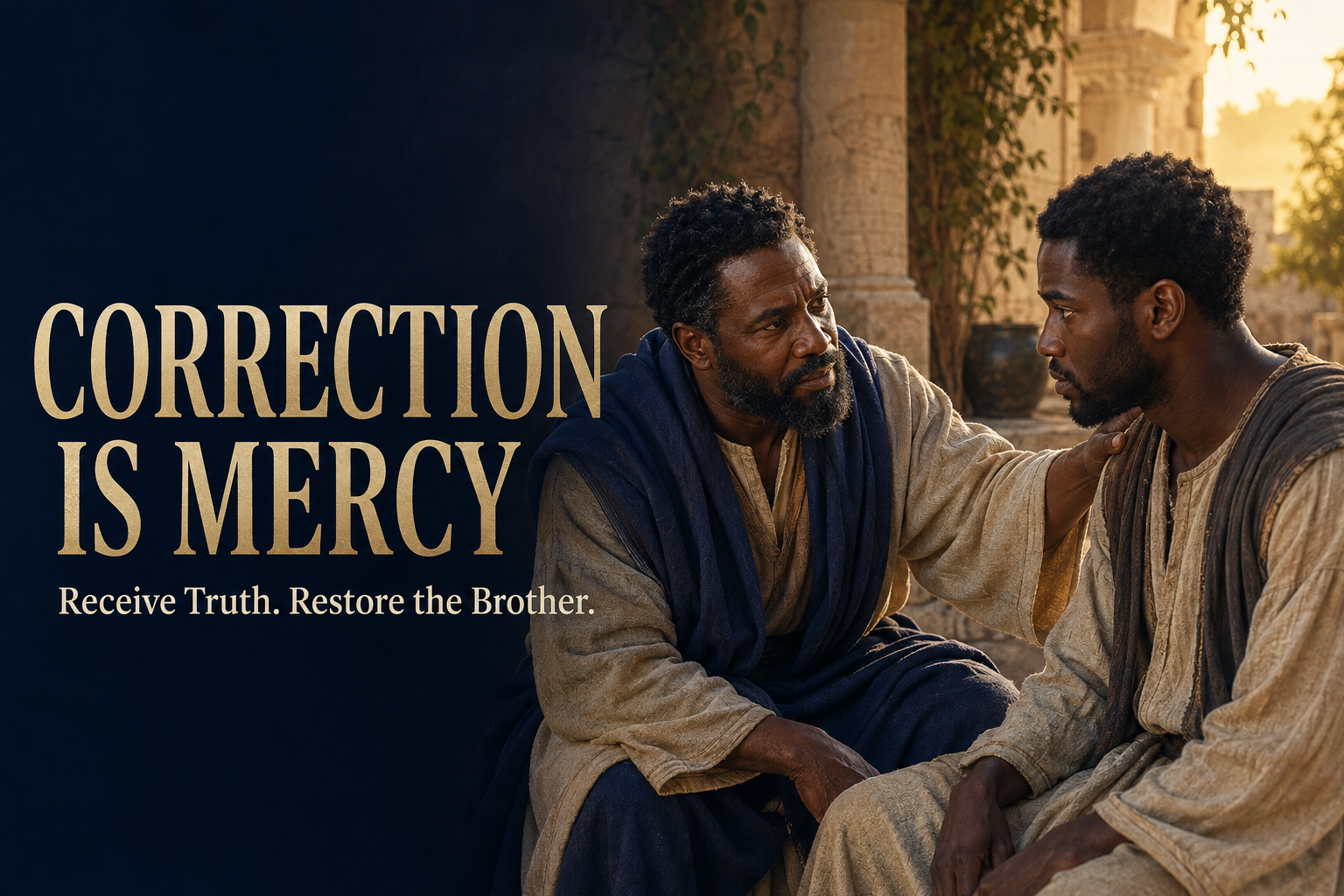
Righteous Correction: Give and Receive Rebuke
Righteous correction is mercy when it follows Scripture. Learn to receive rebuke with humility, give it in meekness, restore the repentant, and protect the household of belief.
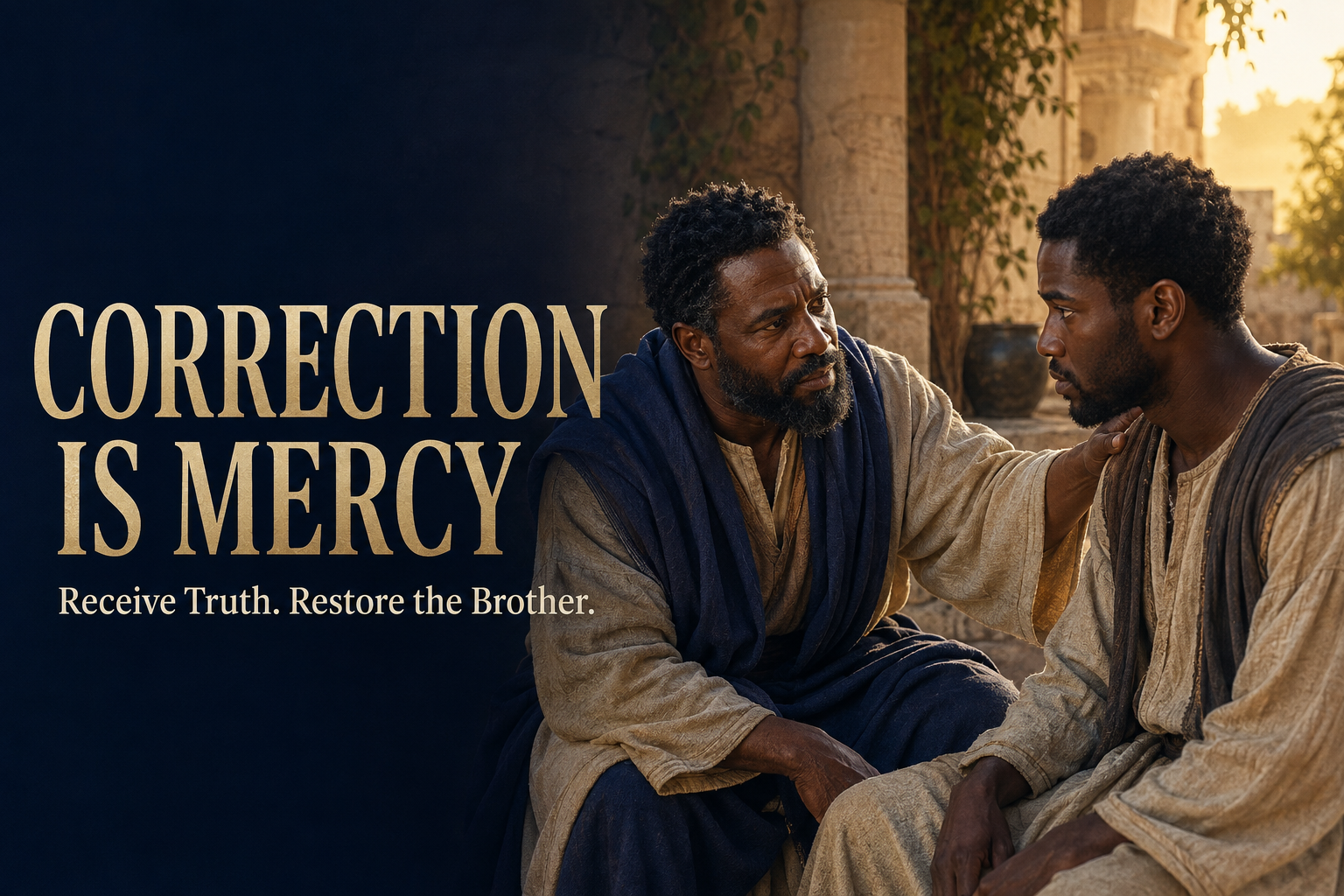
A people who cannot receive correction cannot remain on the narrow path. Correction is not rejection when it is governed by truth, humility, and love. It is one of the ways YAHUAH protects His people from deception, stubbornness, hidden sin, and destruction.
Yet correction is often mishandled. Some refuse every rebuke as an attack. Others use truth as a weapon, humiliating people instead of restoring them. Both errors oppose the pattern of YAHUSHA Ha’Mashiach.
Righteous correction requires two disciplines: the humility to receive truth and the maturity to deliver truth in the proper spirit.
Correction Is a Gift of Wisdom
Mishlei—Proverbs 15:31–32 declares:
“The ear that heareth the reproof of life abideth among the wise. He that refuseth instruction despiseth his own soul: but he that heareth reproof getteth understanding.”
Scripture calls righteous rebuke “the reproof of life.” It is not designed to destroy the hearer but to interrupt a path that leads toward harm. The wise do not evaluate correction only by how it feels. They examine whether it is true.
Mishlei—Proverbs 27:5–6 also teaches:
“Open rebuke is better than secret love. Faithful are the wounds of a friend; but the kisses of an enemy are deceitful.”
Silence can appear loving while allowing destruction to continue. Flattery can feel pleasant while strengthening pride. A faithful person may speak words that wound the ego but rescue the life.
Not every criticism is righteous, but neither is every uncomfortable word an attack. Discernment asks: Does this agree with Scripture? Is there evidence? Is the speaker seeking restoration? Is the Ruach Ha’Qudash exposing something I have resisted?
The Pattern Given by YAHUSHA
In Mattithyahu—Matthew 18:15–17, YAHUSHA establishes an orderly process. If a brother sins, the matter should first be addressed privately. If he listens, the brother has been gained. If he refuses, one or two witnesses are brought. Only after continued refusal is the matter brought before the assembly.
This pattern protects truth, dignity, witnesses, and the household of belief. It teaches us:
Begin privately rather than creating public shame.
Seek restoration rather than personal victory.
Establish serious matters with witnesses.
Do not use gossip as a substitute for direct conversation.
Do not ignore persistent, unrepentant rebellion.
Righteous correction does not begin with a public announcement, a social-media accusation, or a campaign to gather supporters. It begins with obedience, directness, and restraint.
Restore in a Spirit of Meekness
Galatians 6:1 instructs those who are spiritual to restore a person overtaken in a fault “in the spirit of meekness,” while considering themselves so that they are not also tempted.
The objective is restoration. Meekness does not mean weakness, vagueness, or fear of speaking plainly. It means strength submitted to YAHUAH. The corrector remembers that he also requires mercy, vigilance, and correction.
Before correcting someone, examine your own spirit:
Am I angry because YAHUAH’s Word was violated, or because my pride was wounded?
Have I verified the matter?
Am I willing to listen as well as speak?
Do I desire repentance and restoration, or embarrassment and defeat?
Have I first brought the matter before YAHUAH in palal?
Truth spoken through pride can still cause unnecessary damage. The message may be accurate while the delivery reveals bitterness, competition, impatience, or self-exaltation.
Conviction and Condemnation Are Not the Same
Righteous correction identifies the wrongdoing, calls for tashubah, and points toward obedience. Condemnation declares that a person is beyond mercy, permanently disqualified, or incapable of change.
Qorintiyim Sheniy—2 Corinthians 7:10–11 distinguishes sorrow according to YAHUAH from worldly sorrow. Sorrow according to YAHUAH produces tashubah, seriousness, cleansing, and renewed diligence. Worldly sorrow produces despair, self-pity, concealment, or death.
Healthy conviction says, “This must change, and YAHUAH has provided a path of obedience.” Condemnation says, “You are hopeless, so remain hidden.”
Do not confuse the pain of exposure with rejection. Sometimes the Ruach Ha’Qudash permits discomfort because the protected wound must be opened before it can be cleansed.
How to Receive Correction
Receiving correction well does not require accepting every accusation. It requires refusing pride long enough to examine the matter honestly.
Listen before defending yourself
Do not interrupt immediately, change the subject, attack the speaker’s weakness, or gather counter-accusations. A defensive reaction can prevent you from hearing the portion that is true.
Compare the correction with Scripture
Personality, preference, tradition, and control are not the same as the commandments of YAHUAH. Ask for the Scriptural basis and examine it carefully.
Seek confirmation without shopping for agreement
Wise counsel can clarify a matter. But repeatedly asking people until someone excuses your behavior is not counsel; it is resistance.
Confess specifically
When the correction is true, do not hide behind vague statements such as “I am sorry if you were offended.” Name the conduct, acknowledge the harm, and reject the agreement that sustained it.
Produce fruit worthy of tashubah
An apology without change is not restoration. Remove access points, repay what was taken, correct false reports, establish boundaries, seek accountability, and repair what can be repaired.
How to Give Correction
Address conduct, not imagined motives
Speak about what was said, done, taught, or permitted. Do not claim knowledge of a person’s heart that YAHUAH has not given you.
Be clear and Scriptural
Vague rebukes create confusion. Explain the concern plainly, provide the relevant Scriptural standard, and identify the needed response.
Choose the proper setting
Private sin should ordinarily receive private correction. Public teaching that misleads many may require public correction, but even then the purpose must remain truth and protection—not spectacle.
Allow the person to respond
Correction is not a speech delivered from an untouchable position. Listen for facts you may not know. Humility remains necessary on both sides.
Establish boundaries when tashubah is refused
Forgiveness does not require pretending that rebellion is safe. Persistent deception, abuse, manipulation, false teaching, or disorder may require witnesses, leadership involvement, removal from responsibility, restricted access, or separation.
Correction Within the Household
Parents and guardians must correct without provoking children to wrath. Ephesians 6:4 commands fathers to bring children up in discipline and instruction without provoking them.
Household correction should be consistent, proportionate, truthful, and free from humiliation. Do not punish a child for conduct that adults openly model. Do not correct in uncontrolled rage. Do not threaten what you will not carry out. Do not use Scripture to silence honest questions.
Children should learn that confession is safer than concealment, truth matters more than appearances, and correction is followed by instruction, forgiveness, and restored fellowship when tashubah is sincere.
Adults within the household must also remain correctable. A parent, husband, wife, elder, or teacher does not become exempt from accountability because of position.
When Correction Is Rejected
Some people repeatedly argue, manipulate, threaten, flatter, accuse, or disappear whenever correction comes. Titus 3:10–11 instructs that a divisive person may be rejected after proper warning. Mattithyahu—Matthew 7:6 also warns against continually placing what is set-apart before those determined to trample it.
You are not required to debate endlessly. After truth has been spoken clearly, witnesses have been established where needed, and an appropriate opportunity for tashubah has been given, boundaries may become necessary.
Do not chase someone into repentance. Continue in palal, remain free from bitterness, document serious matters when wisdom requires it, protect vulnerable people, and leave judgment with YAHUAH.
A Supporting Witness From the Apocrypha
The following witness comes from Sirach, an Apocryphal work. It is included as supporting wisdom, not as the foundation of this teaching. The Canon has already established the doctrine.
Sirach 20:1–3 teaches that there is a rebuke that is timely and that the person who acknowledges fault may be spared further harm. This agrees with the Canon’s emphasis on correction that leads to humility and change.
The value of rebuke is not measured by volume or harshness. Its righteous purpose is to awaken understanding and interrupt wrongdoing.
A Cautious Witness From the Pseudepigrapha
The Testament of Gad, a Pseudepigraphal work, urges a person to speak truth to a brother without hidden hatred and to forgive when repentance is shown. This source is not used to establish doctrine and must be weighed cautiously against the Canon.
Its witness echoes the already-established Scriptural pattern: correction should not become a covering for hatred, and forgiveness should meet sincere tashubah.
Personal Self-Examination
Set aside uninterrupted time and ask the Ruach Ha’Qudash to search you.
Do I become angry whenever someone questions my conduct?
Do I dismiss correction by focusing on the speaker’s imperfections?
Have several trustworthy people raised the same concern?
Do I confuse authority with immunity from accountability?
Have I used “discernment” to justify suspicion, cruelty, or public accusation?
Do I correct privately when the matter is private?
Am I protecting someone’s sin because I fear losing the relationship?
Have I apologized without changing the conduct?
What repair, boundary, confession, or restitution is now required?
Write your answers honestly. The purpose is not self-condemnation. The purpose is exposure, tashubah, wisdom, healing, and restored order.
A Practical Path Toward Restoration
Palal before speaking. Ask YAHUAH to expose pride, anger, fear, and incomplete information.
Establish the Scriptural standard. Separate clear commands from personal preferences.
Address the person directly. Use the order given by YAHUSHA and avoid gossip.
Listen carefully. Make room for facts, clarification, confession, and correction of your own assumptions.
Call for specific tashubah. Identify what must stop, what truth must replace it, and what repair is needed.
Restore the repentant. Do not keep using a confessed and forsaken matter as a weapon.
Protect the household when rebellion continues. Establish witnesses, accountability, and necessary boundaries.
Closing Exhortation
A people who reject correction will eventually call bondage freedom and deception truth. A people who misuse correction will create fear, concealment, and bitterness.
YAHUAH calls us to a better way: truth without cruelty, humility without compromise, mercy without disorder, and boundaries without hatred.
Receive the reproof of life. Give correction in meekness. Refuse gossip. Protect the vulnerable. Restore the repentant. Remain willing to be searched, instructed, and changed under the authority of YAHUSHA Ha’Mashiach.
Closing Palal
YAHUAH, our Aluah, search my heart and expose every place where pride, fear, bitterness, or rebellion has made me resistant to correction. Give me ears to receive the reproof of life and humility to examine every concern by Your Word.
Forgive me for the times I have defended what should have been confessed, attacked the messenger to avoid the message, or apologized without producing the fruit of tashubah.
Teach me also to correct others in truth, patience, courage, and meekness. Remove every desire to humiliate, control, retaliate, or exalt myself. Help me speak directly, listen carefully, protect what is set-apart, and seek restoration.
Ruach Ha’Qudash, govern my words, timing, motives, and boundaries. Give wisdom to the elders, parents, husbands, wives, teachers, and servants within the assembly. Protect the vulnerable from abuse, manipulation, false accusation, and concealed rebellion.
Where relationships have been damaged, lead us into honest confession, forgiveness, restitution, and righteous order. Where tashubah is refused, give us strength to establish boundaries without bitterness or fear.
Make me correctable, steadfast, and faithful. Let truth produce life within me and within the household of belief.
I ask these things in the name and authority of YAHUSHA Ha’Mashiach, Aman.