
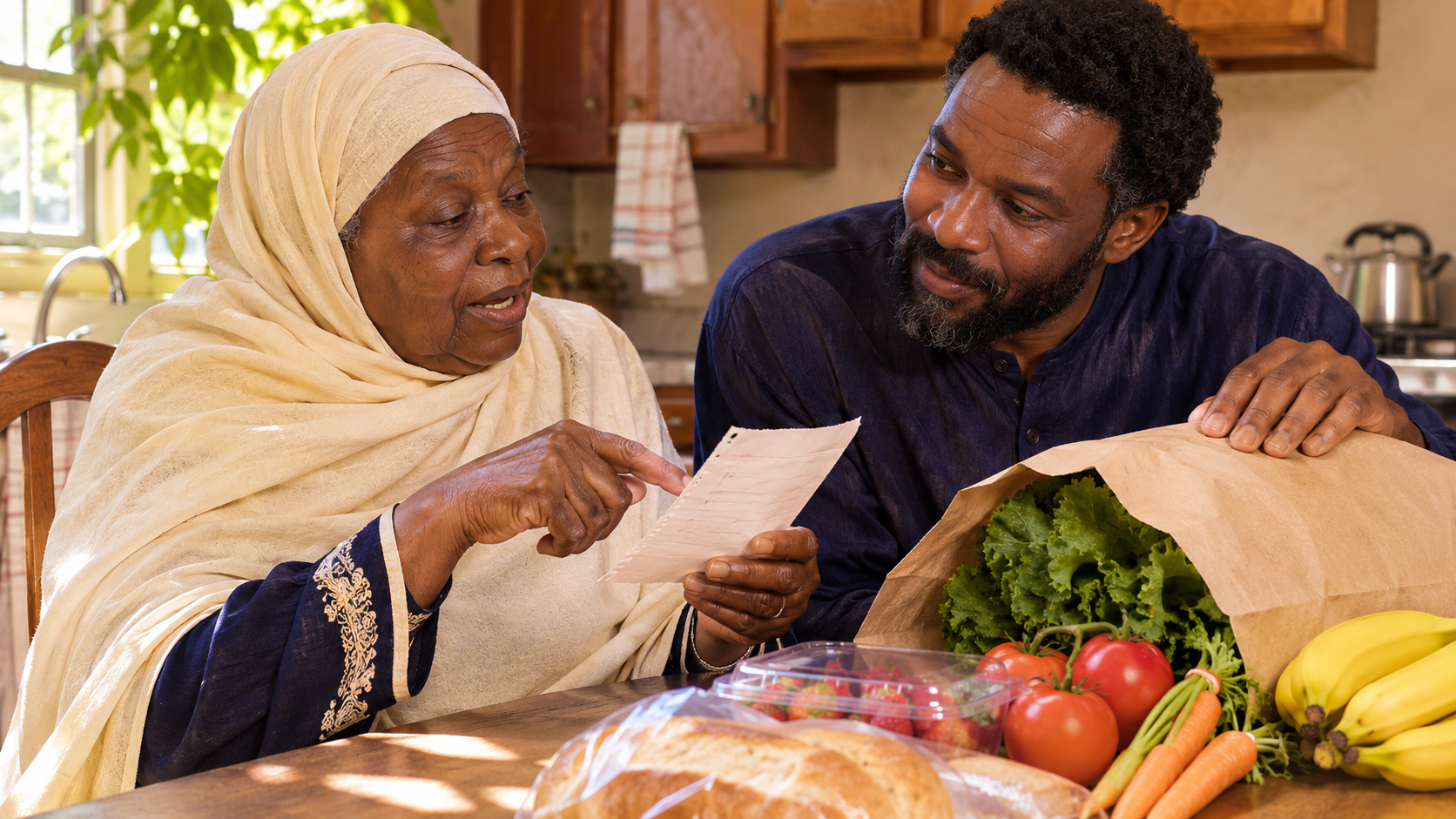
We know how to speak beautifully about people after they die.
We remember their sacrifices. We speak about the meals they prepared, the work they carried, and the years they gave. We gather photographs and tell everyone what they meant to us.
But while they are here, do we answer the call? Do we know whether there is food in the house? Do we speak with patience when a simple task takes longer than it used to?
Some of us are preparing words of honor for a funeral while withholding the care that is needed today.
YAHUAH has something to say about that.
The command to honor our parents must reach the season when their strength changes and our responsibilities change with it. Honoring aging parents means treating them with dignity and responding to their real needs through truthful, practical care under YAHUAH’s authority. It includes how we speak, what we provide, and how we arrange help when we cannot meet a need ourselves.
The command does not expire when their strength changes
The instruction given through Musha is plain:
“Honour thy father and thy mother”
— Shemoth (Exodus) 20:12, opening KJV excerpt
We often teach this command to children as though it concerns only childhood obedience. Yet YAHUSHA Ha’Mashiach applies it to the material help a parent could receive from an adult child.
In Mark 7:9–13, He confronts a religious tradition through which a person could declare resources a gift devoted to sacred use and avoid helping a father or mother. Religious language was being allowed to cancel a command.
That warning reaches us.
Do not claim every available resource for spiritual activity while refusing to examine a parent’s unmet necessities. Do not call neglect devotion because the neglect happens while you are busy with ministry.
A parent’s care may require arrangements beyond what you can personally provide. The passage does not prescribe one household arrangement for every family. It does confront using an outward religious claim to escape a responsibility YAHUAH has given.
Let the command search the excuse.
Do not despise the person whose pace has slowed
Mashaly gives this instruction:
“despise not thy mother when she is old.”
— Mashaly (Proverbs) 23:22, closing KJV excerpt
Despising someone does not always sound like open hatred.
It can sound like the sigh before they finish asking. The mocking imitation of their voice. The decision to speak about them as though they are absent while they sit beside you.
It can appear when you treat every preference as an inconvenience or assume needing assistance means they no longer have anything worth saying.
Listen to the way you speak.
Patience does not require pretending that every conversation is easy. It requires refusing to use your present strength as permission to humiliate someone whose strength has changed.
Sirach, a supporting witness from the Apocrypha, brings the matter close:
“My son, help thy father in his age”
“And if his understanding fail, have patience with him”
— Sirach 3:12–13, KJV Apocrypha excerpts
The passage addresses the person who still possesses strength and understanding. Those abilities are entrusted to you; they do not make contempt righteous.
Give time for an answer. Explain what you are proposing. Where a parent can make a decision, include them in that decision. Do not turn assistance into ownership.
Read Proverbs 23:22 and Sirach 3:12–13.
Let the family carry more than opinions
In the instruction concerning widows, Sha’ul tells children and descendants to learn first:
“to shew piety at home”
— 1 Timothy 5:4, KJV excerpt
Read 1 Timothy 5:3–8. Family responsibility belongs within the assembly’s consideration of care. A profession of belief does not excuse deliberately refusing provision.
This also confronts the relatives who have plenty to say about the care being given but remain unavailable to share it.
One person becomes the driver, the cook, the visitor, and the one who answers every urgent call. Others appear to criticize the arrangement or argue about decisions without offering dependable help.
If you have been absent, begin with an honest question: What am I able to carry consistently?
Distance may change the form of your help. Limited income may change what you can contribute. Your own dependents and health matter too. Tell the truth about those limits, then consider what remains within reach.
You might arrange a regular delivery, take an agreed turn visiting, help with household tasks, or give the primary caregiver time to rest. Offer something specific enough that the family can plan around it.
Care becomes steadier when responsibilities are understood and commitments are kept.
The Pseudepigraphal witness of Jubilees 35:12 portrays Ya’aqub’s care for his parents in practical terms:
“he brings us everything in its season always”
— Jubilees 35:12, R. H. Charles translation excerpt
Rabakah’s testimony describes provision brought willingly and honor expressed through continuing presence. Let that supporting witness reinforce the Canon’s call: family honor must become something a parent can actually receive.
Watch the Teaching
Called To Serve — Natsarym of YAHUSHA.
This ministry teaching on service strengthens the call to turn concern for aging parents into willing, practical care.
Honor must remain joined to truth
Some readers did not grow up with a safe parent.
You may have endured violence, sexual abuse, exploitation, or spiritual control. A command to honor must never be used to make you deny what happened or place someone vulnerable within reach of further harm.
Age does not turn abuse into righteousness. A title does not remove accountability.
You can refuse revenge, speak truthfully, and consider appropriate help without restoring unsafe access. Depending on the circumstances, care may need to be arranged through trustworthy relatives or responsible services rather than direct contact. Protecting a child is not an act of dishonor toward an adult.
Neither must you give someone unrestricted control of your home, resources, or conscience because they are your parent.
Bring the actual circumstances before YAHUAH. Seek counsel from people who will hear the truth and protect those affected. Honor cannot require participating in what YAHUAH calls unrighteous.
And to parents who have caused harm: make tashubah. Do not demand closeness while refusing to acknowledge why your children need distance. Confess the wrong without blaming the wounded person’s response. Accept the boundaries and accountability that truthful repair requires.
The Ruach Ha’Qudash leads us into truth. A family cannot heal around a lie everyone is required to protect.
Let honor become visible this week
Consider the parent or elder whose needs you have assumed someone else is meeting.
Do you know their circumstances, or only your explanation for remaining absent? Have you mistaken a strained relationship for permission to speak cruelly? Have you left another relative carrying work you could help share?
If neglect has been exposed, name it before YAHUAH and make tashubah. Then address the actual need.
Where contact is safe, ask a clear question and listen to the answer. What has become difficult? What assistance would be welcome? What has the person been reluctant to ask?
Where direct contact is unsafe, consider a responsible way to address necessary care while maintaining protection.
If your parent has died, this teaching is not an invitation to invent guilt over every unfinished conversation. Bring actual wrongs and unresolved sorrow before YAHUAH. Let what you have learned shape how you care for the living people still within your reach.
We are the Natsarym of YAHUSHA. Our care for elders should bear the fruit of the One we follow.
Let them be heard while they can still answer. Let help reach the house while it is needed. Let your present strength become a means of care.
Honor them while they are here.
Closing palal
YAHUAH OUR FATHER IN THE NAME AND AUTHORITY OF YAHUSHA HA’MASHIACH,
Search the way we have treated our parents and elders. Forgive us where we have answered weakness with contempt, hidden neglect behind religious activity, or left another person to carry responsibilities we could have shared.
Lead us into complete tashubah and practical repair. Teach us to listen patiently, provide honestly, and protect the dignity of those receiving care.
Strengthen caregivers who have become weary. Raise up trustworthy help and establish righteous order within families that have allowed confusion, resentment, or avoidance to govern their decisions.
Comfort those whose relationship with a parent carries deep wounds. Give them wisdom to act without vengeance and courage to maintain necessary protection. Bring those who have caused harm into truth and accountability.
By Your Ruach Ha’Qudash, form in us the compassion and obedience of YAHUSHA Ha’Mashiach. You are our Aluah in every season of life. Help us use the strength we have today in ways that honor You and serve those You have placed within our care, in the name and authority of YAHUSHA Ha’Mashiach, Aman,
