
Righteous Correction: Give and Receive Rebuke
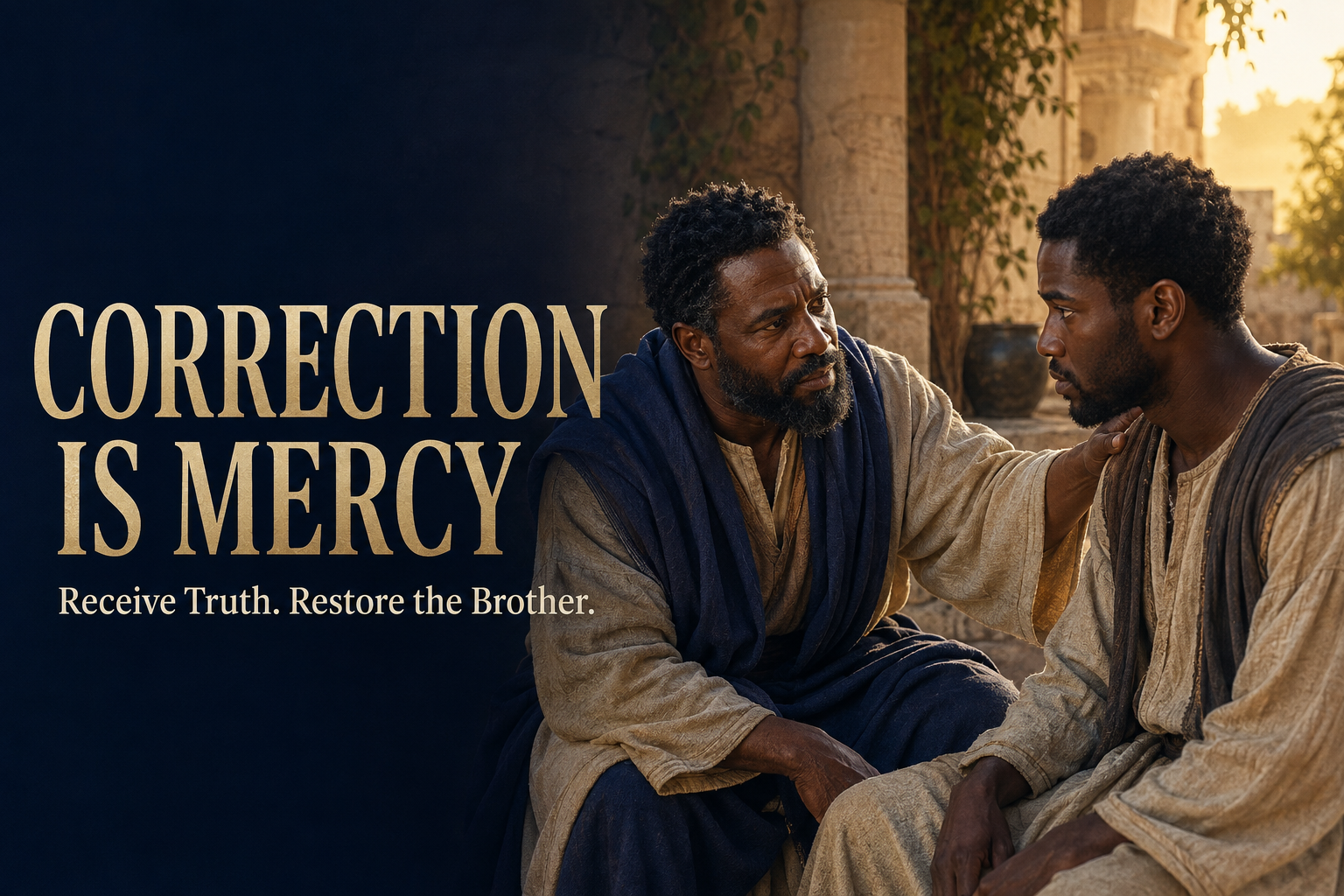
A people who cannot receive correction cannot remain on the narrow path. Correction is not rejection when it is governed by truth, humility, and love. It is one of the ways YAHUAH protects His people from deception, stubbornness, hidden sin, and destruction.
Yet correction is often mishandled. Some refuse every rebuke as an attack. Others use truth as a weapon, humiliating people instead of restoring them. Both errors oppose the pattern of YAHUSHA Ha’Mashiach.
Righteous correction requires two disciplines: the humility to receive truth and the maturity to deliver truth in the proper spirit.
Correction Is a Gift of Wisdom
Mishlei—Proverbs 15:31–32 declares:
“The ear that heareth the reproof of life abideth among the wise. He that refuseth instruction despiseth his own soul: but he that heareth reproof getteth understanding.”
Scripture calls righteous rebuke “the reproof of life.” It is not designed to destroy the hearer but to interrupt a path that leads toward harm. The wise do not evaluate correction only by how it feels. They examine whether it is true.
Mishlei—Proverbs 27:5–6 also teaches:
“Open rebuke is better than secret love. Faithful are the wounds of a friend; but the kisses of an enemy are deceitful.”
Silence can appear loving while allowing destruction to continue. Flattery can feel pleasant while strengthening pride. A faithful person may speak words that wound the ego but rescue the life.
Not every criticism is righteous, but neither is every uncomfortable word an attack. Discernment asks: Does this agree with Scripture? Is there evidence? Is the speaker seeking restoration? Is the Ruach Ha’Qudash exposing something I have resisted?
The Pattern Given by YAHUSHA
In Mattithyahu—Matthew 18:15–17, YAHUSHA establishes an orderly process. If a brother sins, the matter should first be addressed privately. If he listens, the brother has been gained. If he refuses, one or two witnesses are brought. Only after continued refusal is the matter brought before the assembly.
This pattern protects truth, dignity, witnesses, and the household of belief. It teaches us:
Begin privately rather than creating public shame.
Seek restoration rather than personal victory.
Establish serious matters with witnesses.
Do not use gossip as a substitute for direct conversation.
Do not ignore persistent, unrepentant rebellion.
Righteous correction does not begin with a public announcement, a social-media accusation, or a campaign to gather supporters. It begins with obedience, directness, and restraint.
Restore in a Spirit of Meekness
Galatians 6:1 instructs those who are spiritual to restore a person overtaken in a fault “in the spirit of meekness,” while considering themselves so that they are not also tempted.
The objective is restoration. Meekness does not mean weakness, vagueness, or fear of speaking plainly. It means strength submitted to YAHUAH. The corrector remembers that he also requires mercy, vigilance, and correction.
Before correcting someone, examine your own spirit:
Am I angry because YAHUAH’s Word was violated, or because my pride was wounded?
Have I verified the matter?
Am I willing to listen as well as speak?
Do I desire repentance and restoration, or embarrassment and defeat?
Have I first brought the matter before YAHUAH in palal?
Truth spoken through pride can still cause unnecessary damage. The message may be accurate while the delivery reveals bitterness, competition, impatience, or self-exaltation.
Conviction and Condemnation Are Not the Same
Righteous correction identifies the wrongdoing, calls for tashubah, and points toward obedience. Condemnation declares that a person is beyond mercy, permanently disqualified, or incapable of change.
Qorintiyim Sheniy—2 Corinthians 7:10–11 distinguishes sorrow according to YAHUAH from worldly sorrow. Sorrow according to YAHUAH produces tashubah, seriousness, cleansing, and renewed diligence. Worldly sorrow produces despair, self-pity, concealment, or death.
Healthy conviction says, “This must change, and YAHUAH has provided a path of obedience.” Condemnation says, “You are hopeless, so remain hidden.”
Do not confuse the pain of exposure with rejection. Sometimes the Ruach Ha’Qudash permits discomfort because the protected wound must be opened before it can be cleansed.
How to Receive Correction
Receiving correction well does not require accepting every accusation. It requires refusing pride long enough to examine the matter honestly.
Listen before defending yourself
Do not interrupt immediately, change the subject, attack the speaker’s weakness, or gather counter-accusations. A defensive reaction can prevent you from hearing the portion that is true.
Compare the correction with Scripture
Personality, preference, tradition, and control are not the same as the commandments of YAHUAH. Ask for the Scriptural basis and examine it carefully.
Seek confirmation without shopping for agreement
Wise counsel can clarify a matter. But repeatedly asking people until someone excuses your behavior is not counsel; it is resistance.
Confess specifically
When the correction is true, do not hide behind vague statements such as “I am sorry if you were offended.” Name the conduct, acknowledge the harm, and reject the agreement that sustained it.
Produce fruit worthy of tashubah
An apology without change is not restoration. Remove access points, repay what was taken, correct false reports, establish boundaries, seek accountability, and repair what can be repaired.
How to Give Correction
Address conduct, not imagined motives
Speak about what was said, done, taught, or permitted. Do not claim knowledge of a person’s heart that YAHUAH has not given you.
Be clear and Scriptural
Vague rebukes create confusion. Explain the concern plainly, provide the relevant Scriptural standard, and identify the needed response.
Choose the proper setting
Private sin should ordinarily receive private correction. Public teaching that misleads many may require public correction, but even then the purpose must remain truth and protection—not spectacle.
Allow the person to respond
Correction is not a speech delivered from an untouchable position. Listen for facts you may not know. Humility remains necessary on both sides.
Establish boundaries when tashubah is refused
Forgiveness does not require pretending that rebellion is safe. Persistent deception, abuse, manipulation, false teaching, or disorder may require witnesses, leadership involvement, removal from responsibility, restricted access, or separation.
Correction Within the Household
Parents and guardians must correct without provoking children to wrath. Ephesians 6:4 commands fathers to bring children up in discipline and instruction without provoking them.
Household correction should be consistent, proportionate, truthful, and free from humiliation. Do not punish a child for conduct that adults openly model. Do not correct in uncontrolled rage. Do not threaten what you will not carry out. Do not use Scripture to silence honest questions.
Children should learn that confession is safer than concealment, truth matters more than appearances, and correction is followed by instruction, forgiveness, and restored fellowship when tashubah is sincere.
Adults within the household must also remain correctable. A parent, husband, wife, elder, or teacher does not become exempt from accountability because of position.
When Correction Is Rejected
Some people repeatedly argue, manipulate, threaten, flatter, accuse, or disappear whenever correction comes. Titus 3:10–11 instructs that a divisive person may be rejected after proper warning. Mattithyahu—Matthew 7:6 also warns against continually placing what is set-apart before those determined to trample it.
You are not required to debate endlessly. After truth has been spoken clearly, witnesses have been established where needed, and an appropriate opportunity for tashubah has been given, boundaries may become necessary.
Do not chase someone into repentance. Continue in palal, remain free from bitterness, document serious matters when wisdom requires it, protect vulnerable people, and leave judgment with YAHUAH.
A Supporting Witness From the Apocrypha
The following witness comes from Sirach, an Apocryphal work. It is included as supporting wisdom, not as the foundation of this teaching. The Canon has already established the doctrine.
Sirach 20:1–3 teaches that there is a rebuke that is timely and that the person who acknowledges fault may be spared further harm. This agrees with the Canon’s emphasis on correction that leads to humility and change.
The value of rebuke is not measured by volume or harshness. Its righteous purpose is to awaken understanding and interrupt wrongdoing.
A Cautious Witness From the Pseudepigrapha
The Testament of Gad, a Pseudepigraphal work, urges a person to speak truth to a brother without hidden hatred and to forgive when repentance is shown. This source is not used to establish doctrine and must be weighed cautiously against the Canon.
Its witness echoes the already-established Scriptural pattern: correction should not become a covering for hatred, and forgiveness should meet sincere tashubah.
Personal Self-Examination
Set aside uninterrupted time and ask the Ruach Ha’Qudash to search you.
Do I become angry whenever someone questions my conduct?
Do I dismiss correction by focusing on the speaker’s imperfections?
Have several trustworthy people raised the same concern?
Do I confuse authority with immunity from accountability?
Have I used “discernment” to justify suspicion, cruelty, or public accusation?
Do I correct privately when the matter is private?
Am I protecting someone’s sin because I fear losing the relationship?
Have I apologized without changing the conduct?
What repair, boundary, confession, or restitution is now required?
Write your answers honestly. The purpose is not self-condemnation. The purpose is exposure, tashubah, wisdom, healing, and restored order.
A Practical Path Toward Restoration
Palal before speaking. Ask YAHUAH to expose pride, anger, fear, and incomplete information.
Establish the Scriptural standard. Separate clear commands from personal preferences.
Address the person directly. Use the order given by YAHUSHA and avoid gossip.
Listen carefully. Make room for facts, clarification, confession, and correction of your own assumptions.
Call for specific tashubah. Identify what must stop, what truth must replace it, and what repair is needed.
Restore the repentant. Do not keep using a confessed and forsaken matter as a weapon.
Protect the household when rebellion continues. Establish witnesses, accountability, and necessary boundaries.
Closing Exhortation
A people who reject correction will eventually call bondage freedom and deception truth. A people who misuse correction will create fear, concealment, and bitterness.
YAHUAH calls us to a better way: truth without cruelty, humility without compromise, mercy without disorder, and boundaries without hatred.
Receive the reproof of life. Give correction in meekness. Refuse gossip. Protect the vulnerable. Restore the repentant. Remain willing to be searched, instructed, and changed under the authority of YAHUSHA Ha’Mashiach.
Closing Palal
YAHUAH, our Aluah, search my heart and expose every place where pride, fear, bitterness, or rebellion has made me resistant to correction. Give me ears to receive the reproof of life and humility to examine every concern by Your Word.
Forgive me for the times I have defended what should have been confessed, attacked the messenger to avoid the message, or apologized without producing the fruit of tashubah.
Teach me also to correct others in truth, patience, courage, and meekness. Remove every desire to humiliate, control, retaliate, or exalt myself. Help me speak directly, listen carefully, protect what is set-apart, and seek restoration.
Ruach Ha’Qudash, govern my words, timing, motives, and boundaries. Give wisdom to the elders, parents, husbands, wives, teachers, and servants within the assembly. Protect the vulnerable from abuse, manipulation, false accusation, and concealed rebellion.
Where relationships have been damaged, lead us into honest confession, forgiveness, restitution, and righteous order. Where tashubah is refused, give us strength to establish boundaries without bitterness or fear.
Make me correctable, steadfast, and faithful. Let truth produce life within me and within the household of belief.
I ask these things in the name and authority of YAHUSHA Ha’Mashiach, Aman.
