

Endure the Wilderness
Learn how to endure spiritual wilderness seasons through Scripture, Amunah, obedience, palal, self-examination, and steadfast hope in YAHUAH through YAHUSHA.
There are seasons when YAHUAH’s direction once seemed clear, yet the path becomes dry, unfamiliar, and painfully quiet. Palal may feel unanswered. Provision may arrive only one day at a time. The people you expected to remain may withdraw, and the future you imagined may seem farther away than ever.
This is the wilderness.
The wilderness is not always evidence that you have missed YAHUAH. Sometimes it is the very place into which He leads His people to expose what is hidden, teach dependence, correct divided desires, and prepare them for what cannot be carried by an undisciplined heart.
The question is not only whether you will enter a wilderness season. The question is whether you will endure it without turning back.
YAHUAH Led Yashar’Al Into the Wilderness
After delivering Yashar’Al from Mitsrayim, YAHUAH did not immediately lead the people into ease. Debarim—Deuteronomy 8:2–3 explains that He led them through the wilderness to humble and test them, reveal what was in their hearts, and teach them that life does not depend on bread alone but on every word proceeding from YAHUAH.
The wilderness revealed what captivity had planted within them. Their bodies had departed Mitsrayim, but their appetites, fears, complaints, and habits still required cleansing.
Freedom from a place does not automatically remove the thinking formed there. A person can leave bondage physically while still craving its familiar comforts emotionally. YAHUAH used the wilderness to teach His people that deliverance must be followed by obedience, discipline, and renewed dependence upon Him.
“And thou shalt remember all the way which YAHUAH thy Aluah led thee these forty years in the wilderness, to humble thee, and to prove thee, to know what was in thine heart.” — Debarim—Deuteronomy 8:2
A Freed Person Can Still Desire Former Captivity
When hunger, thirst, delay, and uncertainty came, many began speaking as though Mitsrayim had been better. They remembered food while forgetting oppression. They remembered what was familiar while minimizing the bondage from which YAHUAH had delivered them.
This remains a danger during spiritual testing. When the new path becomes difficult, the former life can begin looking easier than it truly was. Old relationships, former habits, destructive pleasures, and familiar compromises may call to the mind because they once provided temporary relief.
Do not romanticize what YAHUAH brought you out of. The fact that captivity was familiar did not make it safe. The fact that sin comforted the flesh did not make it life-giving.
Turning back begins before the feet move. It begins when the heart starts agreeing with the lie that obedience costs more than bondage.
YAHUSHA Was Tested Without Compromise
Mattithyahu—Matthew 4 records that YAHUSHA was led by the Ruach into the wilderness and was tested after fasting forty days and nights. Hunger was real, but He did not use legitimate need as permission to disobey. Each temptation was answered with the written Word.
YAHUSHA did not prove His identity through spectacle, seize authority through compromise, or satisfy hunger outside the will of YAHUAH. He remained submitted.
The wilderness will often test the same areas:
Will you meet a legitimate need through an unrighteous method?
Will you demand proof from YAHUAH because you are tired of waiting?
Will you accept influence, relief, or advancement at the price of worship and obedience?
Need does not cancel righteousness. Delay does not authorize rebellion. Pressure does not change the Word.
When YAHUAH Feels Silent
Silence can expose what constant reassurance concealed. When feelings are strong, obedience may seem easy. When comfort disappears, the foundation becomes visible.
Amunah (Faith) is not pretending that the wilderness does not hurt. It is continuing to trust the character and Word of YAHUAH when circumstances do not explain His purpose.
Tehillim—Psalm 63 was written from a dry and thirsty land. Daud did not deny the dryness; he sought YAHUAH within it. He remembered, meditated, praised, and held fast.
“My soul followeth hard after thee: thy right hand upholdeth me.” — Tehillim—Psalm 63:8
When you cannot trace the whole path, obey the instruction already given. Do not abandon what YAHUAH made clear merely because He has not revealed what comes next.
Do Not Manufacture Your Own Light
Yashayahu—Isaiah 50:10–11 distinguishes between those who fear YAHUAH and walk through darkness while trusting His name, and those who kindle their own fire and walk by sparks of their own making.
Manufactured light is the false solution created because waiting feels unbearable. It may be an unwise relationship, a dishonest financial decision, premature ministry activity, divination, manipulation, self-promotion, or returning to something YAHUAH already commanded you to leave.
Humanly produced sparks may provide momentary visibility while leading away from the appointed path. Do not build a substitute answer because YAHUAH has not answered according to your timetable.
The Wilderness Exposes False Sources of Security
In seasons of abundance, a person may say YAHUAH is the source while quietly depending on income, reputation, relationships, routine, physical strength, or the approval of others. The wilderness reveals which support the heart truly trusted.
Exposure is mercy when it leads to tashubah. YAHUAH may allow an unstable support to shake so that His people stop treating created things as though they were the Creator.
Ask honestly: If this person leaves, will I leave obedience? If this opportunity closes, will I accuse YAHUAH? If recognition does not come, will I still serve? If provision arrives differently than expected, will I remain thankful?
Receive Daily Bread
In Shemoth—Exodus 16, manna was given according to daily need. The people could not control tomorrow by hoarding today’s portion. They had to gather, receive, and obey.
Wilderness endurance is often built through daily obedience rather than dramatic moments. YAHUAH may not show you the entire journey because He is teaching you to walk with Him today.
Receive today’s strength. Complete today’s assignment. Refuse today’s temptation. Speak today’s truth. Offer today’s palal. Tomorrow will require fresh dependence.
Let Patience Complete Its Work
Ya’aqob—James 1:2–4 teaches that the testing of Amunah produces patience, and patience must be allowed to complete its work so that the servant of YAHUAH becomes mature and lacking nothing.
Many want the promise without the formation required to carry it. Yet untested character can misuse answered palal, influence, provision, relationships, and responsibility.
The wilderness slows the flesh long enough for hidden motives to surface. It teaches restraint, endurance, gratitude, discernment, and obedience without applause.
Do not rush to escape the lesson. Ask YAHUAH to complete the work He intends to accomplish.
A Supporting Witness From the Apocrypha
Sirach 2:1–6, from the Apocrypha, counsels those who come to serve YAHUAH to prepare for testing, remain steady in adversity, cling to Him, and trust Him through changing circumstances. This is a supporting witness; the Canon has already established the teaching.
The passage reminds us that hardship should not automatically be interpreted as abandonment. Refining reveals what cannot be seen before the heat is applied.
A Cautious Witness From the Pseudepigrapha
First Enoch 91 presents a call to walk in righteousness and not allow the ways of wickedness to rule the heart. This Pseudepigraphal witness is not the foundation of doctrine and must be weighed against the Canon. Its value here is limited to its agreement with the Scriptural command to remain steadfast rather than joining the path of rebellion during pressure.
A Wilderness Self-Examination
Set aside uninterrupted time before YAHUAH and answer these questions honestly:
What has this season revealed about what I truly trust?
Have I begun idealizing a former bondage because obedience is difficult?
Am I using pain, loneliness, hunger, or delay to justify compromise?
What clear instruction have I neglected while asking for new direction?
Have I manufactured my own light through manipulation, haste, or an unrighteous relationship?
Am I complaining more than I am remembering YAHUAH’s former deliverance?
What appetite becomes loudest when I feel uncertain?
Where is the Ruach Ha’Qudash calling me to tashubah?
What daily act of obedience is directly before me?
Am I willing for patience to complete its work?
The purpose of this examination is not condemnation. It is exposure, correction, healing, and restored alignment under YAHUSHA Ha’Mashiach.
Seven Practices for Enduring the Wilderness
1. Remember what YAHUAH has already done
Write down former deliverances, answered palal, correction, provision, and protection. Memory strengthens gratitude and confronts the lie that YAHUAH has never been faithful.
2. Remain in the written Word
Do not build your response on emotion alone. Read, study, meditate, and speak the Word accurately. YAHUSHA answered testing with what was written.
3. Obey the last clear instruction
Do not demand a new assignment while neglecting the one already given. Faithfulness in the present prepares you for further direction.
4. Refuse substitutes
Do not return to forbidden relationships, substances, entertainment, divination, dishonest gain, or fleshly coping methods to escape discomfort.
5. Receive daily provision
Stop requiring today to carry the weight of the entire future. Ask for today’s bread, wisdom, strength, and discipline.
6. Remain connected to righteous fellowship
Isolation can magnify deception. Seek mature people who honor Scripture, speak truth, practice accountability, and will not encourage compromise.
7. Continue in palal, thanksgiving, and service
Do not allow waiting to make you spiritually idle. Palal with sincerity, give thanks, care for your household, serve where you can, and remain available to YAHUAH.
Closing Exhortation
The wilderness is not your master, and it does not have authority to rewrite what YAHUAH has spoken. It is a place of testing, not permission to turn back.
Do not trade lasting freedom for temporary relief. Do not call former bondage safety. Do not manufacture light because the night feels long. Do not abandon obedience because you cannot yet see the outcome.
YAHUAH can sustain you with daily bread, correct what captivity formed within you, strengthen your Amunah, and prepare you for the responsibility ahead. Remain humble. Remain teachable. Remain watchful. Continue walking.
The One who led you out is able to lead you through.
Closing Palal
YAHUAH, my Aluah, I come before You with humility. You know the dryness, uncertainty, delay, and weariness of this season. Search me and reveal every fear, complaint, appetite, false dependence, and hidden desire to turn back.
Forgive me for romanticizing what You delivered me from. Lead me into complete tashubah wherever I have compromised, complained, moved ahead of You, or manufactured my own light.
Strengthen my Amunah through the written Word. Teach me to receive daily bread without demanding control over tomorrow. Give me courage to obey the last clear instruction and patience to allow Your work within me to become complete.
Ruach Ha’Qudash, expose every deceptive voice and every substitute that offers relief outside the will of YAHUAH. Guard my mind, desires, relationships, and household. Help me resist temptation without using pain as permission to sin.
Teach me to remember Your former deliverance, remain thankful during testing, and serve faithfully while I wait. Remove the heart of captivity from me and establish discipline, humility, discernment, endurance, and set-apartness.
When I cannot see the full path, help me trust Your character. When I feel alone, remind me that Your presence is not measured by emotion. When I am weak, sustain me. When I am corrected, make me teachable. When the temptation to return becomes strong, turn my heart again toward freedom and obedience.
Prepare me to carry what You have appointed without pride, fear, haste, or compromise. Let this wilderness produce righteous fruit and bring honor to YAHUAH through my life.
I ask these things in the name and authority of YAHUSHA Ha’Mashiach, Aman.
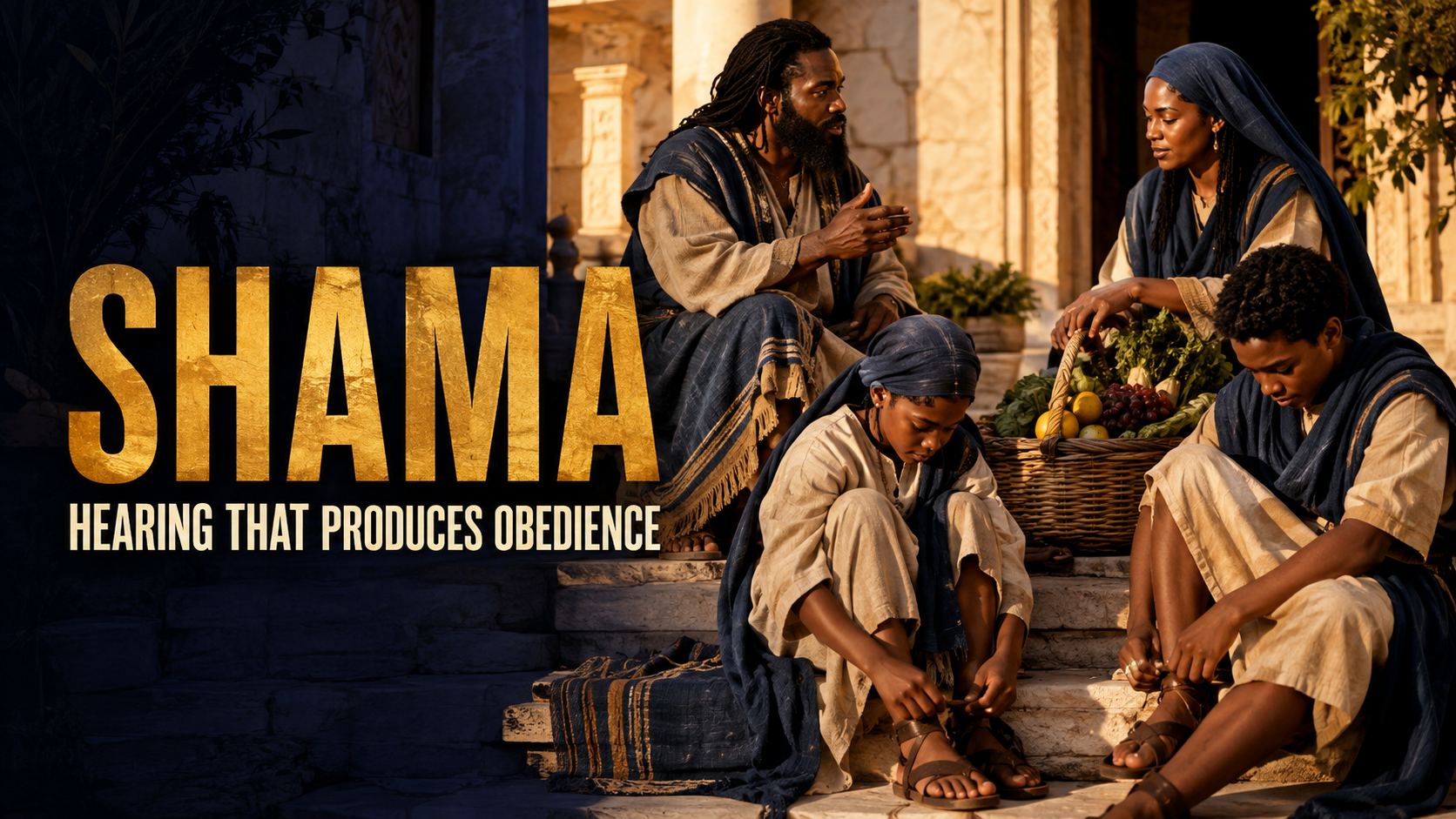
Shama: Hearing That Produces Obedience
Discover how Shama joins hearing with obedience, exposes empty profession, and establishes a faithful daily walk with YAHUAH through YAHUSHA Ha’Mashiach.
Many people hear Scripture without allowing it to govern their conduct. They listen to teachings, highlight passages, speak the Names, attend gatherings, and agree with truth—yet remain unchanged in the areas where obedience costs them comfort, access, pride, pleasure, or control.
Scripture does not present true hearing as the passive reception of sound. In the ancient Abary understanding, hearing is proven by the response it produces. Shama (Strong’s H8085) carries the sense of hearing attentively, understanding, giving heed, and obeying. When YAHUAH speaks, the righteous response is not merely, “I heard Him.” It is, “I will order my steps according to what I heard.”
This is urgent because familiarity with the Word can create a dangerous illusion. A person may know what YAHUAH requires and mistake that knowledge for submission. But truth that is continually heard and knowingly resisted does not strengthen the hearer. It increases accountability and gradually hardens the heart.
YAHUAH is calling His people beyond empty profession. He is calling us to Shama—to hear, receive, obey, and walk out His Dabar (Word) through YAHUSHA Ha’Mashiach.
Shama in the Paleo-Hebrew and Abary Worldview
Shama (Strong’s H8085) is commonly translated as hear, hearken, listen, obey, understand, or give heed. The word joins listening with responsible action. Its Scriptural usage confirms that hearing YAHUAH is not complete when the sound reaches the ear; hearing must reach the lab (heart), shape the will, and direct the walk.
This agrees with the active character of Abary language and culture. Scriptural truth is meant to be lived within covenant: in the household, at the gate, in judgment, in labor, in relationships, in worship, and in the instruction of children. The Dabar of YAHUAH is not information reserved for gatherings. It orders life.
Halak (Strong’s H1980)—to walk, go, or conduct oneself—helps us understand this pattern. Scripture frequently describes a person’s way of life as a walk. Therefore, the question is not only, “What have you heard?” It is also, “What path are your feet proving that you heard?”
In Abary culture, obedience was not meant to be isolated from the household. The head of the home was responsible for teaching. Parents were responsible for repeating the commands throughout daily life. Children were trained to remember the mighty acts and requirements of YAHUAH. Elders judged matters at the gates. The entire community was expected to distinguish the clean from the unclean and righteousness from rebellion.
Shama was therefore covenantal. One person’s refusal to obey could bring disorder into a household, an assembly, or the nation. In the same way, one person’s courageous obedience could preserve life, restore order, and establish a righteous pattern for generations.
Hear, O Yashar’Al
Debarim—Deuteronomy 6:4–7 declares:
“Hear, O Yashar’Al: YAHUAH our Aluah is one YAHUAH: and thou shalt love YAHUAH thy Aluah with all thine heart, and with all thy soul, and with all thy might. And these words, which I command thee this day, shall be in thine heart: and thou shalt teach them diligently unto thy children.”
The command begins with hearing, but it immediately moves into love, inward reception, diligent teaching, and daily practice. Shama is connected to the whole person: heart, Naphash (soul), strength, home, children, speech, and conduct.
The passage continues by commanding the people to speak of the Word when sitting in the house, walking by the way, lying down, and rising up. Obedience was not intended to be an occasional religious activity. It was the rhythm of covenant life.
Ask yourself honestly: Does the Word govern the ordinary parts of your day, or only the moments when you appear spiritual?
Obedience Is Better Than Sacrifice
Shemu’Al Rishon—1 Samuel 15 records that Sha’ul received a clear command but carried it out selectively. He preserved what YAHUAH had commanded him to destroy, then attempted to present the disobedience as an offering.
Shemu’Al confronted him:
“Hath YAHUAH as great delight in burnt offerings and sacrifices, as in obeying the voice of YAHUAH? Behold, to obey is better than sacrifice, and to hearken than the fat of rams.”
— Shemu’Al Rishon (1 Samuel) 15:22
Sha’ul heard the instruction, but he filtered it through fear of people, personal judgment, and self-interest. He obeyed the portion that suited him and altered the portion that cost him.
Selective obedience is still disobedience.
We repeat Sha’ul’s error when we offer palal while refusing correction, give money while practicing deception, speak the Names while mistreating our household, fast while preserving bitterness, attend gatherings while continuing sexual immorality, or perform visible service while hiding rebellion.
YAHUAH does not need religious activity to cover what He commanded us to confront.
Do Not Call YAHUSHA “Master” While Refusing His Words
Luqas—Luke 6:46 records YAHUSHA asking:
“And why call ye me, Master, Master, and do not the things which I say?”
This question exposes empty profession. The title “Master” declares authority. If YAHUSHA is truly our Master, His commands cannot remain optional suggestions.
YAHUSHA continues by describing two builders. One hears His sayings and does them. That person digs deep and builds upon a rock. When the flood comes, the house remains. The other hears and does not obey. That person builds without a foundation, and the house collapses under pressure.
Both builders heard. The difference was obedience.
Storms reveal foundations. Pressure exposes whether Scripture has become part of our conduct or remained inspirational language. A person does not build upon the rock by admiring the teaching. The foundation is established by doing what YAHUSHA commanded.
Knowledge Without Obedience Can Harden the Heart
Abarym—Hebrews 3:7–8 warns:
“Today if ye will hear his voice, harden not your hearts.”
Every encounter with truth produces a response. We either yield, delay, resist, justify, or obey. Continual resistance makes future obedience more difficult because the heart learns to silence conviction.
Hardening often begins quietly:
“I will deal with it later.”
“YAHUAH understands why I cannot obey this yet.”
“That command does not apply to my situation.”
“I already palal about it.”
“No one is perfect.”
“At least I am not doing what they are doing.”
“I know the Scripture.”
None of these statements replaces obedience.
Delay can become a form of refusal. If YAHUAH has already made the matter clear, repeatedly asking for another sign may be an attempt to avoid the answer already given.
Be Doers of the Word
Ya’aqob—James 1:22–25 commands:
“But be ye doers of the word, and not hearers only, deceiving your own selves.”
The passage compares a hearer who does not obey to someone who looks into a mirror, sees his condition, walks away, and immediately forgets what was revealed.
Scripture is a mirror. It exposes motives, agreements, wounds, habits, pride, fear, and disobedience. The purpose of that exposure is not information alone. It is correction, tashubah, cleansing, and transformation.
Self-deception occurs when a person repeatedly receives truth but assumes that agreement is the same as obedience. They may say “Aman,” share the message, correct someone else, or become emotional—while leaving their own conduct untouched.
The mature question after receiving truth is: What must change in me now?
Obedience Does Not Purchase Deliverance
Obedience must be understood in its proper order. We do not purchase deliverance by human effort. Deliverance comes through the mercy of YAHUAH and the redemptive work of YAHUSHA Ha’Mashiach. Yet those who have been called out of darkness are created to walk in righteous works.
Eph’siyim—Ephesians 2:8–10 teaches that we are delivered by favor through Amunah (Faith), not by works that allow a person to boast. The same passage immediately says that we are created in YAHUSHA Ha’Mashiach unto good works, which YAHUAH prepared for us to walk in.
Works do not replace Amunah. Obedience is the fruit of living Amunah.
We do not obey to force YAHUAH to love us. We obey because He has loved us, called us, corrected us, and made the path of life known through YAHUSHA.
YAHUSHA states in Yahuchanun—John 14:15:
“If ye love me, keep my commandments.”
Love that never submits becomes sentiment without covenant faithfulness.
Obedience Must Reach the Household
A household cannot be governed by two standards: one presented in public and another practiced in private.
Parents cannot teach children to honor YAHUAH while allowing uncontrolled entertainment, destructive speech, sexual immorality, deception, rage, or spiritual confusion to order the home. Children learn not only from instruction but from the patterns repeatedly practiced by adults.
Household Shama includes:
Reading and discussing Scripture consistently
Correcting without cruelty or hypocrisy
Establishing standards for media, speech, relationships, and conduct
Removing access points that repeatedly lead to sin
Teaching children why boundaries exist
Making tashubah openly when parents are wrong
Practicing palal as part of daily life
Showing mercy without excusing rebellion
Serving people in practical ways
Keeping promises and speaking truth
Do not demand from children an obedience they never see modeled.
Partial Obedience Often Hides Behind Fear
People sometimes know exactly what must be done but fear the consequences of obedience.
They fear losing a relationship, income, approval, access, status, comfort, or belonging. They may fear being misunderstood or accused of becoming extreme. Others fear confronting the disorder within themselves because obedience will require confession, restitution, separation, discipline, or change.
Mishlei—Proverbs 29:25 warns that the fear of man brings a snare, but trust in YAHUAH brings safety.
Fear asks, “What will happen to me if I obey?”
Amunah asks, “What happens to my Naphash and household if I continue resisting YAHUAH?”
Obedience may be costly. YAHUSHA never concealed that discipleship requires self-denial, endurance, and carrying the stake. But the cost of rebellion is greater than the cost of surrender.
When You Do Not Yet Understand
Obedience does not mean acting recklessly or following every human demand presented as spiritual authority. All teachings must be examined by Scripture. Test the claim, seek wise counsel, palal for discernment, and refuse manipulation.
But do not use the need for testing as an excuse when the written Word has already spoken clearly.
There is a difference between:
Waiting for Scriptural clarity and delaying a clear command
Seeking wise counsel and searching for someone who will approve rebellion
Counting the cost and negotiating whether you will obey
Being patient and protecting procrastination
Testing a teaching and resisting correction because it wounds pride
When a detail is genuinely unclear, obey what is already clear while continuing to seek understanding.
A Supporting Witness From the Apocrypha
The following witness comes from Sirach in the Apocrypha. It supports the teaching already established from the Canon and is not being used as its foundation.
Sirach 15:15–17 teaches that if a person desires to keep the commandments, faithfulness is possible, and that life and death are set before humanity. The passage emphasizes moral responsibility and the necessity of choosing the path that agrees with the commandments of YAHUAH.
This witness reinforces the Scriptural pattern: hearing presents a choice. We cannot continually blame our environment, history, emotions, or other people for a rebellion we are knowingly choosing to protect.
A Cautious Witness From the Pseudepigrapha
The following witness comes from Jubilees, a Pseudepigraphal work. It should be weighed cautiously against the Canon and is included only where it agrees with the Scriptural foundation already established.
Jubilees 1:20–23 presents Musha offering palal for the people, asking that YAHUAH create an upright spirit within them so they will not be led away from Him. The passage connects inward renewal with a people who return and obey.
This agrees with the Canon’s testimony that genuine obedience is not produced by outward performance alone. We need the Ruach Ha’Qudash to search the heart, expose rebellion, renew the mind, and strengthen us to walk according to truth.
A Personal Shama Examination
Set aside uninterrupted time. Ask the Ruach Ha’Qudash to show you where you have heard without obeying.
Regarding the Word
What command have I repeatedly studied but not practiced?
Do I read Scripture seeking transformation or only information?
Have I mistaken knowing ministry terminology for spiritual maturity?
Do I receive correction only when it agrees with me?
Regarding Conviction
What has YAHUAH already made clear that I continue delaying?
What justification do I repeat to quiet conviction?
Am I asking for additional confirmation because I dislike the answer?
Has repeated resistance made my heart less sensitive?
Regarding Relationships
Am I maintaining a relationship that continually pulls me into compromise?
Have I refused to apologize, make restitution, or establish a necessary boundary?
Do I fear losing people more than I fear disobeying YAHUAH?
Am I demanding obedience from others while excusing myself?
Regarding the Household
Is the Word visibly practiced in my home?
Are my private standards different from my public teaching?
What access point must be removed?
What righteous practice must be established?
Do the children see sincere tashubah when I am wrong?
Regarding Amunah
Do my decisions show that I trust YAHUAH when obedience is costly?
Have I called fear “wisdom” to avoid taking a righteous step?
Am I waiting upon YAHUAH—or refusing to move?
What would active Amunah require me to do today?
Write your answers. Name the specific act of obedience required. Give it a time and a practical first step.
A Practical Pattern for Obedience
1. Hear attentively
Slow down. Read the passage in context. Refuse distraction and ask what the Word actually requires.
2. Examine the heart
Identify the desire, fear, wound, pride, or agreement that resists the command.
3. Make tashubah
Confess the disobedience specifically. Do not hide behind vague language.
4. Remove the obstruction
Delete, cancel, separate, return, confess, block, report, repay, or establish the boundary Scripture requires.
5. Replace the former pattern
Build a righteous habit that supports continued obedience. An empty space easily invites the former pattern to return.
6. Seek accountability
Tell a mature and trustworthy person what you are changing. Ask them to value truth above your comfort.
7. Continue walking
One act of obedience begins a path; it does not complete the journey. Remain watchful and consistent after the emotion of conviction passes.
Closing Exhortation
YAHUAH is not merely seeking people who can repeat His Word. He is forming a people whose lives testify that they have heard Him.
Do not confuse exposure to truth with submission to truth. Do not offer visible service while protecting private rebellion. Do not call YAHUSHA “Master” while treating His commands as optional. Do not wait for perfect feelings before doing what is righteous.
Shama.
Hear attentively. Receive correction. Make tashubah. Obey the Dabar. Teach your household. Walk in what has been revealed.
The foundation is not established by what you intended to do. It is established when the Word of YAHUSHA becomes the order of your life.
Closing Palal
YAHUAH, our Aluah, I come before You with humility. Search my lab and reveal every place where I have heard Your Word but resisted obedience. Expose every excuse, delay, fear, desire, wound, relationship, and hidden agreement that has caused me to turn away from what You made clear.
Salach (Strong’s H5545)—forgive or pardon—me for calling You Master while refusing Your instruction. Salach me for offering words, palal, fasting, service, or outward appearance while protecting rebellion within my conduct.
Lead me into complete tashubah. Give me an upright spirit that receives correction without defensiveness. Strengthen my Amunah (Faith) so I will obey when the path is costly, misunderstood, lonely, or uncomfortable.
Ruach Ha’Qudash, renew my mind and bring the Dabar to remembrance. Teach me to distinguish Your instruction from human control, wise waiting from procrastination, and Scriptural testing from stubborn resistance.
Show me what must be confessed, restored, removed, returned, ended, established, or rebuilt. Give me courage to take the first righteous step without delay.
Bring my household into order. Help me teach through both instruction and example. Let the children and vulnerable people under my care see truth, mercy, discipline, humility, and genuine tashubah practiced consistently.
Do not allow repeated resistance to harden my heart. Make me quick to hear, slow to speak, willing to receive correction, and steadfast in obedience. Let my Halak (walk) bear witness that I have truly heard You.
Establish me in set-apartness, wisdom, truth, and enduring Amunah. May my life bear the righteous fruit of abiding in YAHUSHA Ha’Mashiach.
I ask these things in the name and authority of YAHUSHA Ha’Mashiach, Aman.

Forgiveness Without Bondage
Forgiveness is one of the clearest commands in Scripture—and one of the most frequently misunderstood. Some people have been told that forgiveness requires immediate reconciliation, restored trust, continued access, or silence about wrongdoing. Others have responded to deep injury by hardening their hearts, nurturing vengeance, or refusing every opportunity for righteous restoration.
Neither error reflects the full counsel of Scripture.
YAHUAH calls us to release vengeance, refuse bitterness, forgive from the heart, and place judgment into His hands. He also calls us to walk in wisdom, confront sin truthfully, examine fruit, establish righteous boundaries, and separate from people who persist in destructive conduct.
Forgiveness does not require you to pretend that evil was harmless. Mercy does not require the restoration of access before trustworthiness has been demonstrated. Reconciliation cannot be built upon denial, manipulation, or repeated injury.
This teaching is for those who need to forgive without returning to bondage—and for those who must examine whether pride, fear, pain, or bitterness has prevented genuine tashubah and righteous peace.
Forgiveness From a Paleo-Hebrew and Abry Perspective
From an Abry perspective, forgiveness is not merely an inward feeling between two isolated individuals. Abry life is covenantal. Conduct affects the household, the family line, the assembly, the land, and the honor of the Name of YAHUAH. Sin damages order; tashubah is a return to the right path; forgiveness releases the offense from being used as a weapon of vengeance; and restoration seeks Shalum—wholeness, soundness, peace, and righteous order.
The ancient Scriptural pattern joins mercy with truth and responsibility. When a person wronged another through theft, deception, fraud, or misuse of something entrusted to him, confession alone was not presented as the completion of the matter. Wayiqra—Leviticus 6:1–7 required the guilty person to restore what was taken and add restitution. Bemidbar—Numbers 5:5–7 likewise joined confession to repayment.
This reveals an important Abry principle: words of sorrow must be followed by actions that repair what can be repaired.
The Paleo-Hebrew worldview of Scripture is active rather than merely abstract. Tashubah is not simply thinking differently; it is turning and walking differently. Salach (Strong’s H5545)—to forgive or pardon—does not declare the injury imaginary. It releases the debt of personal vengeance while YAHUAH’s standards of truth, restitution, protection, and righteous judgment remain.
In Abry culture, the household is not disposable. Neither is it protected through secrecy. Bryt—covenant—creates responsibility. Elders, witnesses, heads of households, and the assembly were expected to judge matters truthfully, establish facts, restrain evil, and protect order. This is why Scriptural reconciliation involves more than emotion. It concerns restored conduct within covenant relationship.
Shalum is therefore not false quietness. Shalum is righteous wholeness. If silence protects violence, deception, exploitation, or continued rebellion, that silence is not Shalum. Righteous peace must be built upon Amat—truth—and fruit worthy of tashubah.
This cultural framework protects us from two errors. We must not use pain to justify hatred and vengeance. We must also not use forgiveness to excuse disorder, conceal injury, or force vulnerable people back into destructive access.
Forgiveness Begins With Surrendering Vengeance
Romiyim—Romans 12:17–19 instructs:
“Recompense to no man evil for evil. Provide things honest in the sight of all men. If it be possible, as much as lieth in you, live peaceably with all men. Dearly beloved, avenge not yourselves…but rather give place unto wrath: for it is written, Vengeance is mine; I will repay, saith YAHUAH.”
Forgiveness begins when we surrender the right to personally avenge ourselves. It is the decision to stop feeding hatred, rehearsing revenge, or planning how to make another person suffer.
This does not mean that consequences are unrighteous. It does not mean that crimes should be concealed, children left unprotected, evidence destroyed, or lawful accountability resisted. Scripture gives governing authorities a role in restraining wrongdoing, and it gives families and assemblies responsibility to protect the vulnerable and correct persistent sin.
Forgiveness addresses the condition of the heart. It says:
I will not become a vessel of hatred.
I will not repay evil with evil.
I will not allow this injury to govern my identity.
I will tell the truth without becoming consumed by revenge.
I will place final judgment into the hands of YAHUAH.
The injury may have been real. The consequences may remain. The relationship may never return to what it was. Yet your heart does not have to remain chained to the person who wounded you.
YAHUSHA Commands Forgiveness From the Heart
Mattithyahu—Matthew 6:14–15 teaches that if we forgive people their trespasses, our Father will forgive us, but if we refuse to forgive, we cannot expect our own trespasses to be forgiven.
Later, in Mattithyahu—Matthew 18:35, YAHUSHA warns against claiming mercy while refusing to extend mercy. The forgiveness He requires is not a performance for other people. It must reach the heart.
Heart forgiveness means we stop secretly desiring destruction, humiliation, or suffering for the offender. We refuse to nourish bitterness. We ask YAHUAH to cleanse the wound, correct our own reactions, and prevent another person’s sin from reproducing itself inside us.
This may happen through a process rather than a single emotional moment. A person can sincerely choose forgiveness while still feeling grief, anger, fear, or sorrow. Feelings do not always disappear when an obedient decision is made.
When the wound returns to mind, renew your surrender:
“YAHUAH, I release vengeance again. Show me whether this pain is revealing bitterness, unhealed grief, fear, or a boundary that still needs to be established.”
Forgiveness is not the denial of pain. It is refusing to make pain your master.
Forgiveness Is Not the Same as Reconciliation
Forgiveness and reconciliation are related, but they are not identical.
Forgiveness concerns what you release before YAHUAH. Reconciliation concerns the rebuilding of a relationship between people. A person can choose forgiveness even when the offender is absent, deceased, unreachable, unsafe, or unwilling to acknowledge the wrong.
Reconciliation requires truth. Healthy restoration ordinarily requires confession, tashubah, changed conduct, and the willingness of both parties to walk in righteousness.
Luqas—Luke 17:3–4 states:
“Take heed to yourselves: If thy brother trespass against thee, rebuke him; and if he repent, forgive him. And if he trespass against thee seven times in a day, and seven times in a day turn again to thee, saying, I repent; thou shalt forgive him.”
YAHUSHA includes correction, tashubah, and forgiveness in the same instruction. He does not command us to call rebellion righteous. He tells us to address the trespass and respond to genuine turning with mercy.
Forgiveness can be freely given. Reconciliation must be established in truth.
Trust Is Rebuilt by Fruit
Trust is not restored merely because someone says, “I am sorry.” Words matter, but Scripture repeatedly directs us to examine fruit.
YAHUSHA teaches in Mattithyahu—Matthew 7:16–20 that a tree is known by its fruit. The same principle applies when evaluating claimed change.
Fruit of tashubah may include:
Clearly naming the wrong without minimizing it
Refusing to blame the person who was harmed
Accepting correction and reasonable consequences
Ending access to the behavior, relationship, substance, or environment connected to the sin
Seeking accountability without demanding applause
Respecting boundaries without retaliation
Making restitution where possible
Demonstrating changed conduct consistently over time
Showing humility when trust is not immediately restored
False tashubah often sounds like:
“I said I was sorry, so you must move on.”
“You made me do it.”
“That happened a long time ago.”
“If you had forgiven me, you would trust me.”
“YAHUAH knows my heart,” while the destructive pattern continues.
“You are bitter,” whenever the harmed person establishes a boundary.
An apology that demands immediate access may be another form of manipulation. Genuine tashubah does not control the timetable of the person who was injured.
Boundaries Are Not Bitterness
Mishlei—Proverbs 22:3 declares:
“A prudent man foreseeth the evil, and hideth himself: but the simple pass on, and are punished.”
Wisdom recognizes danger and responds. A boundary is a clear limit that protects righteousness, safety, peace, stewardship, or household order.
Boundaries may include:
Ending private communication
Refusing unsupervised access to children
Separating finances
Blocking repeated harassment
Meeting only in public or with witnesses
Declining to discuss certain matters without accountability present
Removing a person from leadership or service
Reporting criminal behavior
Requiring counseling, restitution, or demonstrated change before reconsidering access
Ending a relationship that remains violent, sexually immoral, exploitative, deceptive, or spiritually destructive
A boundary becomes unrighteous when it is used to punish, control, humiliate, or avoid every form of correction. But a necessary boundary is not hatred merely because another person dislikes it.
Do not allow someone to weaponize forgiveness against your discernment.
YAHUSHA Loved Without Entrusting Himself to Everyone
Yahuchanun—John 2:23–25 records that many responded to the signs YAHUSHA performed, yet He did not entrust Himself to them because He knew what was in humanity.
YAHUSHA walked in perfect love, but He did not give the same access to everyone.
He ministered to crowds, taught disciples, selected twelve, and shared certain moments with a smaller inner circle. He withdrew from people who sought to seize or destroy Him before the appointed time. He answered some accusations and remained silent before others.
Love does not require equal access.
You can forgive a person and still refuse private meetings. You can desire their restoration and still decline partnership. You can palal for them and still protect your household. You can release hatred without reopening a door YAHUAH gave you wisdom to close.
Daud Forgave Sha’ul but Kept His Distance
The relationship between Daud and Sha’ul provides a powerful example.
Sha’ul repeatedly pursued Daud and sought his life. Daud refused to avenge himself even when he had opportunities to kill Sha’ul. In Shemu’Al Rishon—1 Samuel 24 and 26, Daud demonstrated restraint and left judgment to YAHUAH.
Yet Daud did not respond to Sha’ul’s emotional words by immediately returning to the palace and placing himself under the same dangerous access. He honored what was right without ignoring the pattern.
Daud’s conduct shows that mercy and distance can exist together.
He did not kill Sha’ul. He did not pretend Sha’ul was safe.
He refused vengeance. He maintained wisdom.
This is especially important when someone cycles through injury, emotional apology, temporary calm, and renewed harm. Tears are not always fruit. Promises are not always change. Time and conduct reveal what words cannot.
Peace Has a Scriptural Limit
Romiyim—Romans 12:18 says:
“If it be possible, as much as lieth in you, live peaceably with all men.”
The words “if it be possible” and “as much as lieth in you” matter.
You are responsible for your conduct. You are not responsible for forcing another person to become truthful, safe, humble, or peaceful.
Peace is not possible when one person requires continued deception. Reconciliation is not righteous when it demands silence about abuse. Fellowship cannot be healthy when correction produces threats, stalking, retaliation, or spiritual intimidation.
You may have done what lies within you by speaking truth calmly, offering an opportunity for correction, refusing vengeance, and establishing a boundary. If the other person rejects truth, your inability to manufacture reconciliation is not the same as unforgiveness.
When Separation Is Scriptural
Sha’ul teaches in Timotheus Sheniy—2 Timothy 3:1–5 that perilous times will be marked by pride, brutality, betrayal, uncontrolled conduct, and the appearance of righteousness without its power. The instruction ends by telling us to turn away from such people.
Titus 3:10–11 also instructs that a divisive person should be warned and, after repeated warning, rejected.
Scriptural separation may become necessary when a person:
Persists in violence or threats
Uses sexual sin or exploitation without tashubah
Continually deceives and manipulates
Corrupts children or vulnerable people
Rejects repeated correction
Uses spiritual language to control others
Creates division while refusing accountability
Demands secrecy to protect wrongdoing
Returns repeatedly to the same harm without meaningful fruit
Separation should not be treated lightly. It should be guided by Scripture, palal, wise counsel, and truthful examination. But remaining accessible to destruction is not proof of love.
Forgiveness Does Not Cancel Accountability
Qorintiyim Rishon—1 Corinthians 5 shows that serious, unrepentant sin within the assembly required action. Sha’ul did not tell the people to call tolerance “forgiveness.” He required the corrupting influence to be addressed.
Accountability can serve restoration when it exposes what secrecy protects.
Depending upon the situation, accountability may include:
Confession before those directly affected
Restitution
Removal from leadership
A structured period of separation
Professional counseling
Legal reporting
Financial repayment
Protection orders
Supervised contact
Long-term observation of fruit
Forgiveness releases personal vengeance. It does not erase every consequence.
Mishlei—Proverbs 28:13 teaches:
“He that covereth his sins shall not prosper: but whoso confesseth and forsaketh them shall have mercy.”
Mercy is joined to confession and forsaking. Concealment is not restoration.
Do Not Use “Discernment” to Protect Bitterness
Boundaries are necessary in some situations, but we must also examine whether pain has become a reason to refuse all mercy.
Bitterness can hide behind statements such as:
“I am just protecting my peace.”
“I cut everyone off.”
“No one deserves another opportunity.”
“I do not need to examine my part.”
“I will forgive when they suffer enough.”
“I want nothing good for them.”
Abarym—Hebrews 12:14–15 warns us to pursue peace and set-apartness and to watch carefully so that a root of bitterness does not spring up and defile many.
Bitterness does not remain contained. It affects speech, parenting, future relationships, judgment, health, and the ability to receive correction.
Ask yourself honestly:
Am I establishing a boundary, or am I trying to punish?
Have I released vengeance before YAHUAH?
Do I secretly rejoice when the person suffers?
Have I made my pain the center of every relationship?
Am I refusing correction because I was genuinely harmed in another area?
Have I exaggerated, gossiped, or recruited others into hatred?
Am I willing for YAHUAH to restore the person, even if I am not called to restore access?
You can maintain a boundary without feeding hatred. You can speak truth without slander. You can refuse access without desiring destruction.
Forgiving Yourself Is Not the Foundation
Modern language often tells people that they must “forgive themselves.” Scripture places the foundation elsewhere: confess sin, receive the mercy of YAHUAH through YAHUSHA Ha’Mashiach, make tashubah, and walk in renewed obedience.
If YAHUAH has forgiven what you have confessed and forsaken, continued self-condemnation does not make you more righteous. It may keep attention fixed upon yourself instead of the mercy, correction, and transforming authority of YAHUSHA.
Yahuchanun Rishon—1 John 1:9 teaches:
“If we confess our sins, he is faithful and just to forgive us our sins, and to cleanse us from all unrighteousness.”
Receive correction. Make restitution where possible. Accept consequences. Then stop using shame as a substitute for obedience.
The answer is not self-excusing. The answer is tashubah and Amunah (Faith) in the cleansing YAHUAH provides through YAHUSHA Ha’Mashiach.
Wisdom From Sirach
Sirach 28:1–7 warns against vengeance, commands forgiveness of a neighbor’s wrong, asks how a person can seek mercy while nourishing anger, and instructs the reader to remember the end of life, cease from enmity, and remain mindful of the commandments.
We cannot continually feed wrath while asking YAHUAH to cleanse us. Remembering the brevity of life helps expose how much energy hatred consumes.
Yet this call to release enmity does not command the vulnerable to return to unprotected danger. Forgiveness concerns the heart; wisdom still governs access.
A Witness From the Testament of Gad
Testament of Gad 6:3–8 urges people to remove the poison of hatred, address wrongdoing without deceit, forgive where there is confession and turning, avoid endless contention, and release vengeance even when a wrongdoer remains shameless.
This passage reinforces the same pattern: speak truth, refuse hatred, receive tashubah, and leave vengeance to YAHUAH.
A Self-Examination for Forgiveness and Boundaries
Set aside uninterrupted time. Ask the Ruach Ha’Qudash to expose bitterness, fear, false guilt, manipulation, and any boundary that must be strengthened or corrected.
Regarding the Injury
What happened, stated truthfully without exaggeration or minimization?
Is the harmful conduct continuing?
Are children or vulnerable people at risk?
Does lawful authority or professional support need to be involved?
Regarding Your Heart
Have I surrendered vengeance to YAHUAH?
Do I repeatedly imagine the person suffering?
Have I allowed the injury to become my identity?
Have I spoken truth, or have I crossed into gossip and slander?
Am I willing to palal for righteous conviction and genuine tashubah in the offender?
Regarding Reconciliation
Has the person clearly confessed the wrong?
Are they forsaking the destructive pattern?
Do they accept consequences without retaliation?
Is there consistent fruit over time?
Are they respecting boundaries?
Would restored access expose anyone to renewed harm?
Regarding Your Boundaries
Is this boundary protecting righteousness or punishing the person?
Is it clear, enforceable, and proportionate to the danger?
Have I sought wise, mature counsel?
Am I being pressured to restore access before fruit is present?
Do I need to strengthen, reduce, or clarify the boundary?
Regarding Your Own Tashubah
Did I respond with deception, revenge, manipulation, or uncontrolled anger?
Is there anything I must confess without taking responsibility for another person’s sin?
Have I used my injury to avoid examining my conduct?
What act of obedience is YAHUAH requiring from me now?
A Practical Path Forward
1. Tell the truth before YAHUAH
Name the injury honestly. Do not soften evil, and do not embellish it. Ask the Ruach Ha’Qudash to separate fact, fear, grief, and assumption.
2. Release personal vengeance
State clearly that you surrender repayment and final judgment to YAHUAH. Repeat this surrender when bitterness attempts to return.
3. Confess your own unrighteous responses
Being harmed does not make every response righteous. Confess hatred, retaliation, deceit, gossip, or pride without accepting false blame for what another person chose to do.
4. Establish the necessary boundary
Determine what access is safe and righteous. Write the boundary if clarity is needed. In dangerous situations, seek lawful protection and qualified support.
5. Observe fruit, not pressure
Do not rebuild trust because of tears, religious language, family pressure, loneliness, or urgency. Observe conduct over time.
6. Pursue reconciliation only in truth
Where genuine tashubah, safety, and righteous fruit are present, remain open to the leading of YAHUAH. Restoration may be gradual and structured.
7. Continue healing without reopening bondage
Fill the space with Scripture, palal, wise fellowship, useful work, rest, and service. Do not make monitoring the offender your new captivity.
Closing Exhortation
Forgiveness is not pretending. It is not silence. It is not immediate trust. It is not unrestricted access.
Forgiveness is releasing vengeance, refusing the poison of bitterness, and placing judgment into the hands of YAHUAH.
Boundaries are not automatically hatred. They can be acts of wisdom, stewardship, protection, and obedience.
Reconciliation is precious when it is built upon truth, tashubah, humility, safety, and righteous fruit. It becomes counterfeit when it is used to return people to secrecy, manipulation, or repeated harm.
Do not let pain make you vengeful. Do not let pressure make you unwise. Do not let false guilt reopen a gate that righteousness required you to close.
Forgive from the heart. Tell the truth. Observe the fruit. Protect the vulnerable. Remain open to genuine restoration, but never call bondage reconciliation.
YAHUAH can cleanse bitterness without erasing wisdom. Through YAHUSHA Ha’Mashiach, He can heal the wounded heart, correct the offender who will receive truth, and establish peace that does not require compromise.
Closing Palal
YAHUAH, our Aluah, I come before You in humility and truth. Search my heart and reveal every place where pain has become bitterness, fear has become bondage, or anger has become a desire for vengeance.
I confess every unrighteous response I have made to injury. Forgive me for hatred, retaliation, gossip, pride, manipulation, and every word spoken outside of Your order. Cleanse me without requiring me to deny what happened.
I release personal vengeance into Your hands. I refuse to repay evil with evil. Judge every matter in righteousness, expose what has been hidden, protect the vulnerable, and bring genuine conviction and tashubah where it can be received.
Ruach Ha’Qudash, give me wisdom to distinguish forgiveness from restored access, mercy from enabling, peace from silence, and reconciliation from renewed bondage.
Show me which boundaries must remain, which must be strengthened, and whether any boundary has been shaped by pride rather than wisdom. Give me courage to obey without fear and humility to receive correction.
Where reconciliation is righteous, establish it in truth, confession, changed fruit, and safety. Where separation is necessary, preserve my heart from hatred and help me walk forward without guilt.
Heal the places in me that still react from fear, rejection, betrayal, abuse, abandonment, or grief. Restore righteous order to my thoughts, relationships, and household. Do not allow another person’s sin to reproduce itself within me.
Teach me to forgive from the heart, speak truth without cruelty, protect without vengeance, and remain open to the restoration that comes from genuine tashubah.
I submit every wound, memory, relationship, consequence, and future decision to Your authority. Establish me in Amunah (Faith), wisdom, set-apartness, and the peace found in abiding in YAHUSHA Ha’Mashiach.
I ask these things in the name and authority of YAHUSHA Ha’Mashiach, Aman.
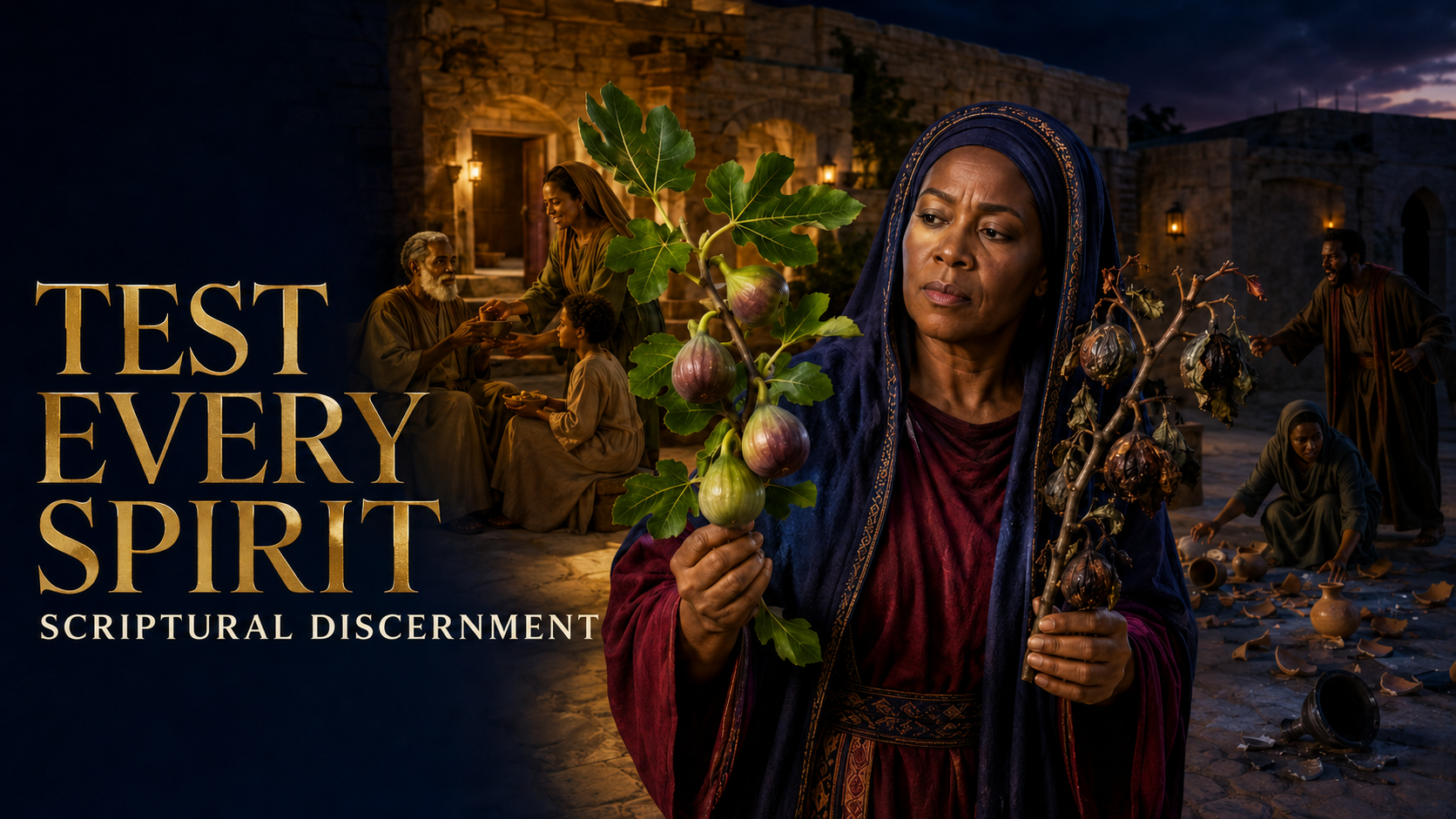
Test Every Spirit: Scriptural Discernment for the Last Days
Learn how to test spiritual claims, prophecy, dreams, tongues, and teaching through Scripture, righteous fruit, Amunah, and the Ruach Ha’Qudash.

We are living in a time when many voices claim spiritual authority. Teachings, prophecies, dreams, visions, deliverance practices, tongues, testimonies, social-media messages, and private revelations can reach thousands of people within moments.
Some messages are true. Some contain a mixture of truth and error. Others are driven by pride, fear, imagination, wounded emotions, financial ambition, manipulation, or deceiving spirits.
The answer is not to reject everything spiritual. Neither should we receive everything simply because it sounds powerful, uses restored names, quotes Scripture, produces emotion, or appears supernatural.
YAHUAH commands His people to test.
“Beloved, do not place your trust in every spirit, but test the spirits whether they are of YAHUAH, because many false prophets are gone out into the world.”
— Yahuchanun Rishon (1 John) 4:1
Discernment is not suspicion, fear, or fault-finding. Scriptural discernment is the disciplined ability to distinguish truth from error, righteousness from deception, and the leading of the Ruach Ha’Qudash from the impulses of the flesh or the influence of another spirit.
Do Not Accept Every Spiritual Claim
Yahuchanun did not tell the assembly to accept every spiritual manifestation. He warned that false prophets were already operating and commanded the assembly to examine the spirits behind what they heard.
This means sincerity is not enough.
A person may sincerely think a dream came from YAHUAH and still be mistaken. Someone may speak emotionally and still speak from personal desire. A teacher may use accurate terminology while mishandling Scripture. A prophecy may include several true observations yet lead people toward fear, dependency, rebellion, or misplaced trust.
YAHUSHA Ha’Mashiach warned:
“Beware of false prophets, which come to you in sheep’s clothing, but inwardly they are ravening wolves. Ye shall know them by their fruits.”
— Mattithyahu (Matthew) 7:15–16
The disguise may appear righteous. The fruit exposes what the appearance conceals.
A Sign Is Not Proof of Truth
Many people assume that a supernatural experience automatically proves that YAHUAH is speaking. Scripture does not support that conclusion.
Debarim (Deuteronomy) 13:1–4 warns that even if a predicted sign occurs, the message must be rejected when it directs people away from obedience to YAHUAH.
The sign is not the highest authority. The Dabar of YAHUAH is.
A dream coming true does not make every interpretation correct. An unexplained healing does not confirm every doctrine of the person involved. Emotional intensity does not establish truth. A large audience does not establish truth. Financial success does not establish truth. Accurate personal information does not prove that a speaker is led by the Ruach Ha’Qudash.
Ha’satan can present himself as an angel of light, and his ministers can present themselves as ministers of righteousness. See Qorintiyim Sheniy (2 Corinthians) 11:13–15.
Therefore, never allow amazement to silence examination.
The First Test: Does It Agree With the Written Word?
Yashayahu (Isaiah) 8:20 establishes a clear standard:
“To the Torah and to the testimony: if they speak not according to this word, it is because there is no light in them.”
The Ruach Ha’Qudash does not contradict the Word He inspired.
No dream, prophecy, vision, private revelation, spiritual leader, family tradition, cultural practice, or popular movement has authority to overturn what YAHUAH has already established.
Ask:
Does this teaching agree with the whole counsel of Scripture?
Is one isolated verse being used while its context is ignored?
Does the message require me to disobey a clear command?
Is the speaker adding requirements that Scripture does not establish?
Is a personal revelation being treated as equal to or greater than Scripture?
Am I being discouraged from examining the teaching for myself?
Is unfamiliar terminology being used to conceal weak doctrine?
The Bereans were described as noble because they received teaching with readiness while searching the Scriptures daily to determine whether the message was true. See Acts 17:11.
A mature teacher should not fear Scriptural examination.
The Second Test: What Does It Teach About YAHUSHA?
Yahuchanun Rishon (1 John) 4:2–3 directs attention to the confession of YAHUSHA Ha’Mashiach coming in the flesh.
A spiritual message must not diminish, replace, or distort YAHUSHA.
Be cautious when a teaching:
Makes the teacher the center rather than YAHUSHA
Treats YAHUSHA as merely one teacher among many
Denies His authority, mission, death upon the stake, or resurrection
Promises access to YAHUAH apart from YAHUSHA
Encourages dependence upon a prophet, teacher, or deliverance minister
Exalts secret knowledge above obedience
Uses YAHUSHA’s name while rejecting His commandments
Offers spiritual power without repentance and submission
The Ruach Ha’Qudash bears witness to YAHUSHA and leads people into truth, obedience, humility, and righteous fruit. He does not build personality cults.
The Third Test: Examine the Fruit
YAHUSHA said that false prophets would be known by their fruit.
Fruit is not charisma. It is not volume, vocabulary, appearance, popularity, or the ability to hold attention.
Galatians 5:22–23 identifies the fruit produced by the Ruach:
Love
Joy
Shalum
Patience
Gentleness
Goodness
Amunah (Faith)
Meekness
Self-control
Examine what repeatedly grows around a person or teaching.
Does it produce humility or pride? Does it produce obedience or excuses for sin? Does it produce Shalum or continual panic? Does it produce self-control or uncontrolled manifestations? Does it strengthen households or divide them unnecessarily? Does it lead people toward YAHUAH or make them dependent upon a personality? Does it welcome correction or punish honest questions? Does it cultivate love and truth, or gossip and accusation?
One mistake does not automatically make someone a false teacher. People can misunderstand, speak carelessly, or require correction. The greater question is what happens when error is exposed.
A person led by truth should be willing to examine, correct, and renounce error. Pride protects error because admitting the truth would threaten the image being maintained.
The Fourth Test: Examine Wisdom and Conduct
Ya’aqob (James) 3:13–17 distinguishes wisdom from above from earthly and destructive influence.
Wisdom from above is pure, peaceable, gentle, open to reason, full of mercy and good fruit, without partiality, and without hypocrisy.
False wisdom often produces:
Envy
Competition
Self-promotion
Confusion
Disorder
Harshness
Manipulation
Hypocrisy
Continual division
Fascination with secret knowledge
Contempt for correction
A message may contain true statements and still be delivered through an unrighteous spirit.
Truth should be spoken courageously, but cruelty is not courage. Correction may be firm, but humiliation is not the fruit of the Ruach Ha’Qudash. Exposure may sometimes be necessary, but accusation should never become entertainment.
Examine both the message and the manner.
The Fifth Test: Follow the Money, Power, and Access
False spiritual authority frequently seeks control.
Pay attention when someone demands:
Unquestioned loyalty
Continual financial giving under threats
Access to private information without accountability
Separation from every person who raises concerns
Obedience to personal instructions that exceed Scripture
Secrecy about teachings or practices
Permission to control marriages, households, finances, or major decisions
Honor that belongs to YAHUAH
Protection from all examination
Kepha Rishon (1 Peter) 5:2–3 teaches overseers not to serve for dishonest gain or rule as masters over those entrusted to them, but to lead by example.
Financial support for genuine ministry is Scriptural. Manipulation is not.
Giving should be willing, honest, and directed by wisdom—not extracted through fear, flattery, manufactured urgency, or promises that money will purchase spiritual favor.
The Sixth Test: Does It Produce Freedom or Dependency?
YAHUSHA brings people into truth, and truth produces freedom. See Yahuchanun (John) 8:31–32.
Healthy ministry equips people to:
Study Scripture
Palal for themselves
Test teachings
Grow in discernment
Walk in obedience
Accept responsibility
Develop righteous household order
Depend upon YAHUAH through YAHUSHA
Manipulative ministry keeps people spiritually dependent upon the minister.
It may suggest that only one person can hear YAHUAH correctly, perform deliverance, interpret dreams, identify enemies, or make decisions for the community.
There is a proper place for teachers, elders, counsel, and community. Yet no righteous leader should attempt to occupy the place of YAHUSHA or interfere with a person’s responsibility to study, palal, obey, and mature.
Testing Dreams and Visions
Scripture contains genuine dreams and visions given by YAHUAH. It also warns about false dreams.
Yirmeyahu (Jeremiah) 23 describes prophets speaking visions from their own hearts while claiming authority from YAHUAH.
When you receive a dream, do not immediately announce it as prophecy.
Write it down. Palal. Examine your emotions, recent experiences, fears, conversations, and desires. Compare the message with Scripture. Wait for clarity.
Ask:
Does the dream contradict Scripture?
Does it exalt me?
Does it feed fear or fascination?
Am I forcing every detail to have spiritual meaning?
Am I using the dream to accuse someone?
Am I trying to make a major decision from one dream alone?
Is there independent confirmation?
Would announcing it produce righteous fruit?
Some dreams may reflect stress, memory, grief, fear, physical conditions, or matters being processed by the mind. Not every vivid dream is a message from YAHUAH.
Humility is willing to say, “I had a dream, but I do not yet understand whether it carries spiritual meaning.”
Testing Prophecy
Prophecy must be judged.
“Let the prophets speak two or three, and let the other judge.”
— Qorintiyim Rishon (1 Corinthians) 14:29
This instruction contradicts the idea that questioning prophecy is automatically rebellion.
A prophecy should be rejected when it:
Contradicts Scripture
Directs worship away from YAHUAH
Exalts the prophet
Encourages sin
Produces control through fear
Assigns dates or guarantees without Scriptural warrant
Demands money to activate the word
Forbids examination
Repeatedly fails without honest accountability
Thessalonians Rishon (1 Thessalonians) 5:20–22 teaches us not to despise prophecy, but to prove all things, hold fast to what is good, and abstain from every appearance of evil.
The Scriptural response is neither blind acceptance nor automatic rejection. It is testing.
Testing Tongues and Spiritual Manifestations
The existence of false or fleshly manifestations does not erase the genuine work of the Ruach Ha’Qudash.
Scripture records genuine tongues. It also commands order, interpretation in the assembly, self-control, and the judging of spiritual activity.
Mocking every expression of tongues can cause people to reject a genuine gift. Blindly accepting every sound as the Ruach Ha’Qudash can also open the door to confusion and imitation.
Ask:
Is the manifestation consistent with Scriptural order?
Is the person conscious and capable of self-control?
Is the gathering being edified?
Is interpretation required and provided?
Is pressure being used to make people imitate sounds?
Is the manifestation producing righteousness and humility?
Is anyone using it to prove spiritual superiority?
Is confusion being renamed as freedom?
The Ruach Ha’Qudash does not need human performance. Genuine spiritual gifts should operate under Scriptural order and produce edification rather than pride or chaos.
Discernment Is Not Fear
Some people become so focused on deception that they begin seeing a false spirit behind every disagreement, mistake, illness, delay, personality difference, or hardship.
That is not mature discernment.
Fear produces obsession. Discernment produces clarity.
Fear makes immediate accusations. Discernment examines evidence.
Fear isolates. Discernment seeks wise counsel.
Fear reacts to appearances. Discernment examines fruit over time.
Fear demands certainty where YAHUAH has not yet provided it. Discernment is willing to wait.
Kepha Rishon (1 Peter) 5:8 calls us to be sober and watchful. Sobriety is not panic. It is a clear, disciplined mind.
Discernment Must Begin With Self-Examination
It is easier to examine another person’s spirit than to examine our own motives.
Before judging a message, ask why you want it to be true.
Do you want confirmation of a relationship? Do you want an enemy condemned? Do you want permission to avoid responsibility? Do you want to feel specially chosen? Do you want a quick answer instead of waiting upon YAHUAH? Do you want spiritual power without submitting to correction?
Personal desire can distort discernment.
Ya’aqob (James) 1:14–15 teaches that temptation can arise when a person is drawn away by personal desire. Not every deceptive influence begins outside us. Sometimes the heart embraces a message because it agrees with what the flesh already wants.
Avoid Slander Disguised as Discernment
Discernment does not give permission to make careless accusations.
Do not publicly label someone a false prophet, witch, demonized person, or servant of Ha’satan based upon suspicion, dislike, hearsay, one disagreement, or an unverified social-media post.
Scripture requires truth, witnesses, righteous judgment, and proper order.
When correction is needed:
Verify what was actually said or done.
Examine the context.
Compare it with Scripture.
Distinguish between error, immaturity, deception, and deliberate rebellion.
Approach the matter in the proper order.
Speak only what can be established.
Seek restoration when restoration is possible.
Establish boundaries when danger or unrepentant manipulation remains.
A person can be correct about an error and still handle the matter unrighteously.
A Supporting Witness From the Apocrypha
The following passage comes from Sirach in the Apocrypha. It is included as supporting wisdom, not as the foundation of this teaching. The Canon has already established the command to test spiritual claims.
Sirach 6:7–9 advises people not to trust a new friend hastily, but to allow the relationship to be tested because some remain only when circumstances are convenient. This principle supports patient observation rather than impulsive trust.
If ordinary relationships require testing, spiritual authority should not be given hastily.
Do not grant deep access to your household, finances, private struggles, or major decisions merely because someone appears spiritual. Trust should be developed through truth, consistency, righteous conduct, and tested fruit.
A Cautious Witness From the Pseudepigrapha
The following witness comes from the Testament of Asher, part of the Testaments of the Twelve Patriarchs. This work is Pseudepigraphal, has a complicated textual history, and must not be used to establish doctrine. It should be weighed cautiously against the Canon.
The opening chapter describes two paths—good and evil—and warns that evil can corrupt an action that outwardly appears good.
This echoes the canonical warning that outward appearance alone is insufficient. A seemingly righteous act may be corrupted by pride, envy, manipulation, or an unrighteous objective.
The Canon remains the authority. This witness is included only because its warning agrees with the Scriptural foundation already established.
A Scriptural Discernment Process
When confronted with a spiritual claim, use the following process.
1. Pause
Do not let urgency force immediate agreement. Manipulation often creates pressure to act before examining.
2. Palal
Ask YAHUAH for wisdom, clarity, correction, and protection from your own preferences.
3. Record the Exact Claim
Write down what was actually said. Do not rely only upon emotion or memory.
4. Search the Scriptures
Examine the immediate passage, its context, and the wider testimony of Scripture.
5. Examine the Fruit
Look at conduct, motives, patterns, accountability, and long-term results.
6. Seek Mature Counsel
Consult trustworthy people who value truth more than personalities.
7. Wait When Necessary
You are not required to form an immediate conclusion about everything.
8. Obey What Is Clear
Do not use uncertainty about one detail to avoid a command that Scripture has already made plain.
9. Reject What Is False
When error is established, renounce agreement with it and remove its influence.
10. Remain Humble
Be willing to correct your own conclusion when stronger Scriptural evidence becomes clear.
Personal Self-Examination
Set aside uninterrupted time and ask the Ruach Ha’Qudash to search your heart.
Regarding Teaching
Do I examine teachings in context?
Do I accept claims because the speaker is popular?
Am I impressed by vocabulary more than righteous fruit?
Have I accepted something merely because it agrees with my existing opinion?
Regarding Prophecy
Have I allowed a prophecy to control a major decision without testing it?
Am I afraid to question someone who claims spiritual authority?
Have failed predictions been honestly acknowledged?
Is fear being used to maintain my loyalty?
Regarding Dreams and Visions
Do I treat every vivid dream as revelation?
Have I used a dream to accuse another person?
Am I willing to wait before announcing an interpretation?
Does the interpretation agree with Scripture?
Regarding Relationships
Have I trusted someone too quickly because they appeared spiritual?
Have I disclosed private matters before character was tested?
Am I ignoring manipulation because I fear rejection or isolation?
Does this relationship strengthen my obedience to YAHUAH?
Regarding Yourself
Do I welcome correction?
Am I secretly attracted to power, recognition, or special knowledge?
Have I confused emotional intensity with the Ruach Ha’Qudash?
Do my words and decisions produce righteous fruit?
Am I using “discernment” to justify suspicion, gossip, or pride?
Closing Exhortation
YAHUAH does not call His people to be gullible. Neither does He call us to become fearful, suspicious, and consumed with darkness.
He calls us to sobriety, wisdom, truth, and obedience.
Test the spirit. Examine the teaching. Observe the fruit. Search the Scriptures. Palal for wisdom. Receive correction. Reject manipulation. Hold fast to what is good.
Do not surrender your discernment to a personality. Do not mistake signs for truth. Do not call confusion the Ruach Ha’Qudash. Do not allow fear to make you accuse people carelessly.
Abide in YAHUSHA Ha’Mashiach, remain rooted in the Word, and allow the Ruach Ha’Qudash to produce a life that can recognize truth because it is already walking in truth.
Closing Palal
YAHUAH, our Aluah, I come before You in humility. Search my heart and reveal every place where fear, pride, personal desire, pain, flattery, or spiritual ambition has distorted my discernment.
Forgive me for accepting teachings, prophecies, dreams, relationships, and spiritual claims without testing them according to Your Word. Forgive me where I have rejected truth because it confronted my desires. Forgive me where suspicion, gossip, or accusation has disguised itself as discernment.
Teach me to recognize the voice and fruit of the Ruach Ha’Qudash. Establish me firmly in Scripture. Give me patience to wait, courage to question, humility to receive correction, and strength to reject manipulation.
Guard my household from false teaching, fear-driven prophecy, spiritual control, counterfeit manifestations, and dependence upon personalities. Help us welcome the genuine work of Your Ruach without embracing confusion or performance.
Give me wisdom to distinguish error from immaturity, weakness from rebellion, and sincere misunderstanding from deliberate deception. Let my correction be truthful, orderly, compassionate, and free from pride.
I submit my thoughts, emotions, spiritual experiences, relationships, and decisions to Your authority. Let every lie be exposed and every unrighteous agreement be broken. Lead me into tashubah wherever I have departed from truth.
May I hold fast to what is good, reject what is evil, and bear the righteous fruit of abiding in YAHUSHA Ha’Mashiach.
I ask these things in the name and authority of YAHUSHA Ha’Mashiach, Aman.
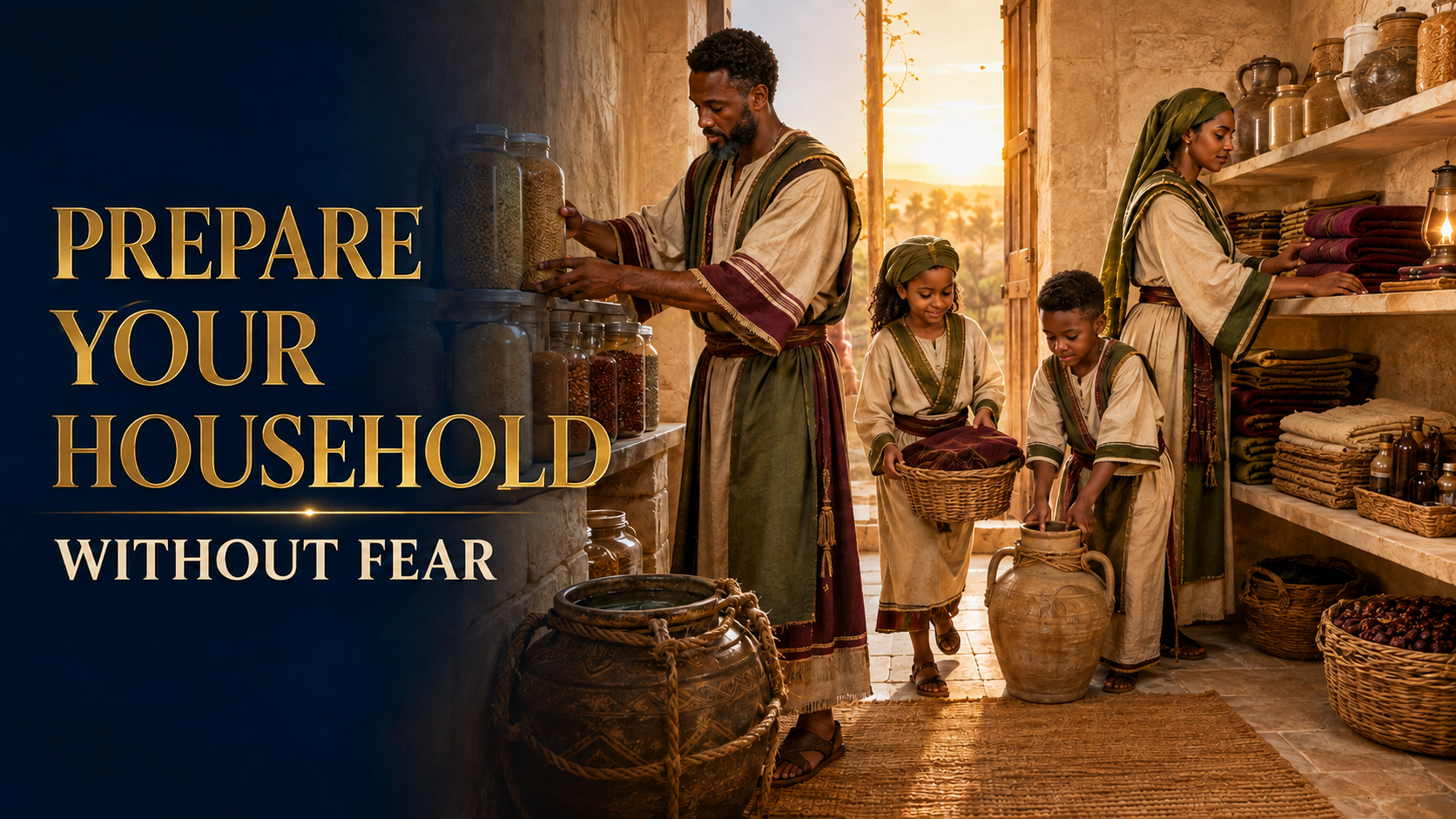
Prepare Your Household Without Fear: Scriptural Readiness for the Times Ahead
Learn how to prepare your household with wisdom, Shalum, practical readiness, and trust in YAHUAH—without fear, panic, hoarding, or conspiracy thinking.
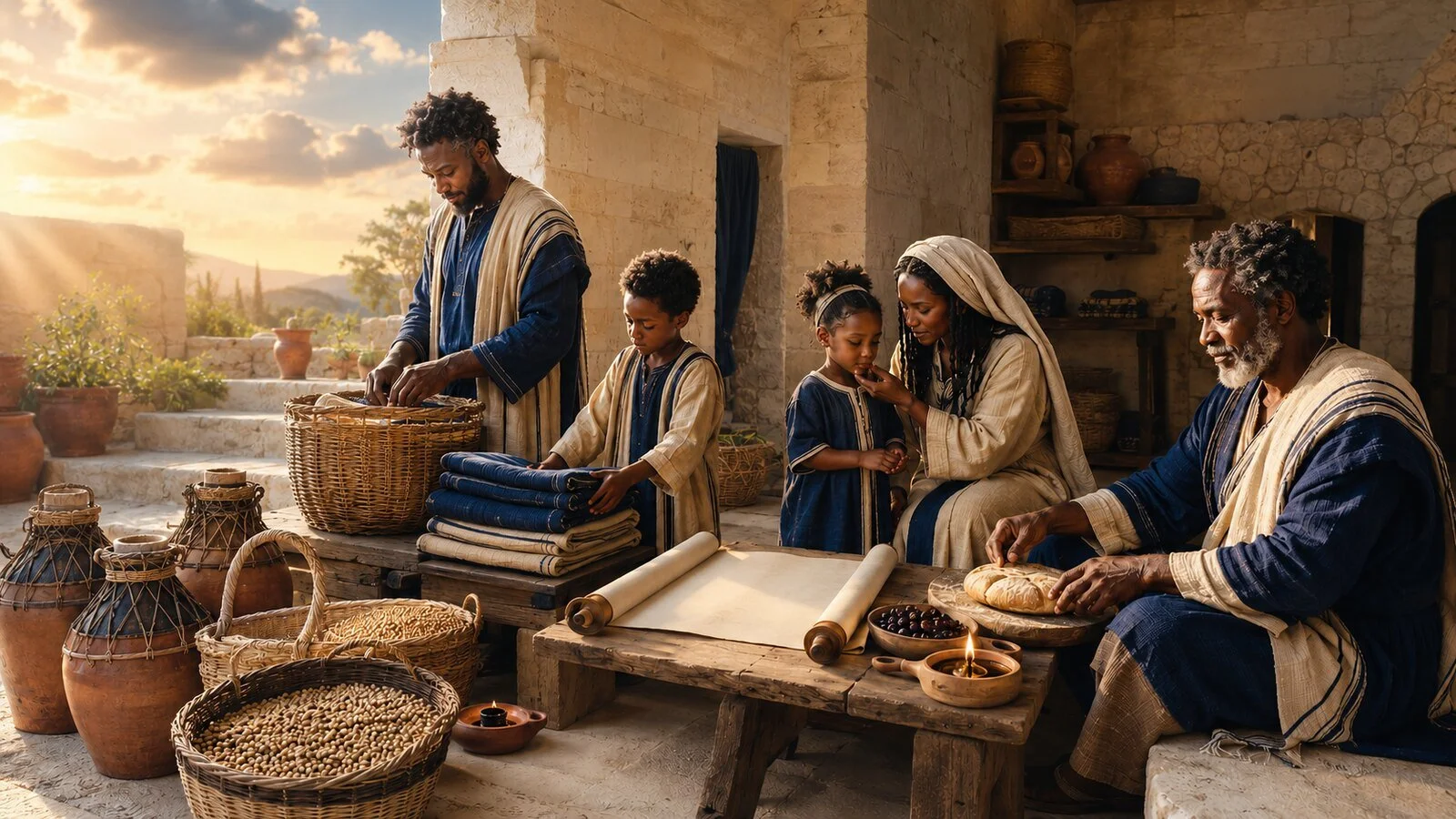
Readiness Is Not Fear
Readiness is not fear. It is faithful stewardship.
Scripture does not teach the household of YAHUAH to live in panic, hoard supplies, or become consumed with predicting every possible crisis. It calls us to watch, discern, prepare wisely, care for those entrusted to us, and remain established in Shalum.
“A prudent man foreseeth the evil, and hideth himself: but the simple pass on, and are punished.” — Mishlei (Proverbs) 22:3
The goal is not to build a life that no hardship can touch. The goal is to become a household that can continue obeying YAHUAH when circumstances become difficult. Preparation cannot replace faith, and faith is not an excuse for disorder, denial, or neglect.
“For YAHUAH hath not given us the spirit of fear; but of power, and of love, and of a sound mind.” — Timotheus Sheniy (2 Timothy) 1:7
A sound mind prepares without panic. It counts the cost, recognizes real needs, sets priorities, and refuses to let fear become its master.
Yahusaph (Joseph): Wisdom During the Years of Plenty
Bere’shiyth (Genesis) 41 records that Pharaoh received a warning through dreams: seven years of abundance would be followed by seven years of severe famine. Through the wisdom YAHUAH gave him, Yahusaph explained the matter and advised that a discerning overseer gather a portion of the harvest during the plentiful years.
“Let them gather all the food of those good years that come, and lay up grain under the hand of Pharaoh, and let them keep food in the cities.” — Bere’shiyth (Genesis) 41:35
Yahusaph did not respond with hysteria. He did not spread confusion or encourage selfishness. He developed an orderly plan while resources were available. His preparation later preserved many lives.
This account teaches several enduring principles:
Pay attention when YAHUAH reveals the need for wisdom and preparation.
Use seasons of abundance responsibly instead of consuming everything immediately.
Create order before pressure exposes disorder.
Prepare to preserve life, not to exalt yourself over people who have less.
Recognize that provision ultimately comes from YAHUAH, even when human planning is involved.
Preparation becomes unrighteous when it is driven by greed, secrecy, exploitation, or the belief that supplies are our deliverer. Yahusaph’s example is not permission to hoard. It is a witness of foresight, disciplined stewardship, and service.
Learn From the Ant
“Go to the ant, thou sluggard; consider her ways, and be wise: which having no guide, overseer, or ruler, provideth her meat in the summer, and gathereth her food in the harvest.” — Mishlei (Proverbs) 6:6–8
The ant prepares during the proper season. It does not wait until the need becomes urgent. This is a rebuke to procrastination, careless consumption, and the assumption that someone else will always rescue us from consequences we could have addressed.
“There is treasure to be desired and oil in the dwelling of the wise; but a foolish man spendeth it up.” — Mishlei (Proverbs) 21:20
Wise preparation begins with how we handle what is already in our hands. Before purchasing more, examine waste, disorganization, unnecessary spending, neglected skills, and supplies that expire because they are never rotated.
Do Not Let Preparation Become an Idol
YAHUSHA Ha’Mashiach taught us not to become consumed with anxious thought about food, drink, and clothing. Mattithyahu (Matthew) 6:25–34 does not forbid responsible work or planning. It forbids anxious devotion to material survival as though YAHUAH does not see our needs.
“But seek ye first the Kingdom of YAHUAH, and his righteousness; and all these things shall be added unto you.” — Mattithyahu (Matthew) 6:33
A pantry can be full while the heart is spiritually empty. A household can own emergency equipment while lacking repentance, unity, discipline, forgiveness, and the ability to hear correction. Material supplies cannot repair a rebellious home.
Prepare what is practical, but examine what you trust. If losing your supplies would cause you to believe all hope is gone, the supplies may have taken a place they were never meant to occupy.
Build the Household on the Rock
YAHUSHA compared the obedient hearer of His words to a wise man who built his house upon a rock. Rain fell, floods came, and winds struck the house, but it did not fall because it had a firm foundation. The disobedient hearer built on sand, and pressure revealed the weakness of the foundation. See Mattithyahu (Matthew) 7:24–27.
Before discussing food, water, or household plans, examine the spiritual foundation:
Is the Word read and obeyed inside the home?
Is palal practiced only during emergencies, or is it part of daily life?
Are hidden sins being protected?
Can family members communicate honestly without manipulation, rage, or contempt?
Are children being taught why the household follows YAHUAH?
Is forgiveness practiced while righteous boundaries are maintained?
Is the household willing to receive correction from the Word?
Debarim (Deuteronomy) 6:6–7 commands YAHUAH’s words to remain in the heart and to be taught diligently to the children throughout daily life. Spiritual readiness is not a last-minute activity. It is a household culture established through continued obedience.
A Practical Household Readiness Plan
Preparation should match the actual needs, health conditions, location, resources, and responsibilities of your household. Begin calmly. Do not enter debt trying to imitate another family’s plan. Build in stages and use what you store.
1. Water
Store a reasonable supply of safe drinking water for every person in the household. Consider additional water for cooking, basic hygiene, infants, elders, animals, and anyone with medical needs. Learn how to store it safely, rotate it, and purify water when necessary.
2. Food
Choose nourishing foods your household already eats and can prepare. Include shelf-stable staples, protein sources, simple meals, and foods appropriate for allergies or health conditions. Label dates, rotate older items forward, and avoid accumulating food that no one knows how to use.
3. Health and First Aid
Maintain a basic first-aid supply, necessary prescriptions, copies of important medical information, and items required by infants, elders, or disabled family members. Learn basic first aid rather than assuming supplies alone create readiness. Medical emergencies still require qualified professional care when it is available.
4. Light, Communication, and Power
Keep dependable lights, appropriate batteries or safe charging options, and a plan for receiving trustworthy information during an outage. Write essential contact numbers on paper. Technology can fail, and important information should not exist only inside a locked phone.
5. Sanitation and Household Care
Prepare basic hygiene, sanitation, cleaning, and waste-management supplies. Disorder and poor sanitation can turn a manageable disruption into a health danger.
6. Documents and Responsibilities
Organize copies of identification, insurance information, medical details, emergency contacts, and other essential household records in a secure and accessible place. Every responsible adult should know where necessary information is kept.
7. Skills
Learn to cook from basic ingredients, preserve food safely, make simple repairs, administer first aid, grow useful plants where possible, manage money, and communicate calmly under pressure. Skills remain valuable even when stored goods are depleted.
8. A Family Plan
Discuss what the household will do during a fire, severe weather event, power outage, evacuation, communication failure, or temporary shortage. Choose meeting points and contacts. Practice age-appropriate plans with children without frightening them.
Prepare in Stages, Not in Panic
A peaceful plan can begin with one week of essentials, then grow toward two weeks and longer as YAHUAH provides. Buy a little at a time. Rotate everything. Review the plan regularly.
Assess: Write down the genuine needs of every household member.
Prioritize: Begin with water, food, health, light, sanitation, and communication.
Budget: Set a reasonable amount without neglecting current obligations.
Build: Add useful items gradually instead of panic-buying.
Learn: Develop the skills needed to use what you have.
Practice: Walk through plans so confusion is reduced during an emergency.
Review: Replace expired items and adjust for changing household needs.
Share: Keep generosity inside the plan.
Preparation Must Include the Vulnerable
Scriptural readiness is not built around the strongest person alone. It remembers children, pregnant women, elders, disabled family members, those taking medication, and neighbors without adequate support.
“Bear ye one another’s burdens, and so fulfil the Torah of YAHUSHA.” — Galatians 6:2
Ask who may need transportation, food, medicine, communication help, or a safe place. Preparation that has no room for mercy has misunderstood the purpose of provision.
Reject Hoarding and Exploitation
There is a difference between storing wisely and hoarding fearfully. Wise storage is measured, usable, and responsible. Hoarding consumes excessively, deprives others, and often grows from the belief that we alone must save ourselves.
Yashayahu (Isaiah) 58:6–10 connects true fasting with loosening wicked burdens, feeding the hungry, bringing the poor into the house, and covering the naked. Acts 2:44–45 and Acts 4:32–35 show believers sharing so that needs were addressed among them.
Do not prepare to boast over the unprepared. Do not exploit shortages. Do not use fear to sell, manipulate, or control. Ask YAHUAH how your household can remain generous while also practicing responsible stewardship.
Watch, Palal, and Remain Sober
YAHUSHA warned His followers not to let their hearts become weighed down with excess, drunkenness, and the cares of this life. He commanded them to watch and palal. See Luqas (Luke) 21:34–36.
Watching is not endless consumption of alarming content. Constant exposure to rumors, predictions, and frightening reports can produce anxiety without producing wisdom. Test information. Verify what can be verified. Refuse conspiracy thinking. Do not make major household decisions because a stranger online speaks with confidence.
Palal brings the plan before YAHUAH. Fasting helps expose fear, appetite, unbelief, and dependence on comfort. The Ruach Ha’Qudash gives discernment, but His leading will not contradict the written Word.
A Supporting Witness From the Apocrypha
The following passage comes from Sirach, an Apocryphal work. It is included as supporting wisdom, not as the foundation of this teaching. The Canon has already established the principles of foresight, stewardship, trust, and mercy.
“The chief thing for life is water, and bread, and clothing, and an house to cover shame.” — Sirach 29:21
This witness keeps preparation grounded in essentials. Begin with what preserves life and protects the household. Do not allow fear-driven buying to distract from water, food, clothing, shelter, health, and orderly care.
A Cautious Witness From the Pseudepigrapha
Jubilees is a Pseudepigraphal work and must be weighed cautiously against the Canon. It is not being used to establish doctrine.
Jubilees 39–40 retells events surrounding Yahusaph’s affliction, elevation, and responsibility in Egypt. Its usefulness here is limited to an echo of the account already established in Bere’shiyth (Genesis) 39–41: YAHUAH can preserve, instruct, and position a faithful servant to act wisely during coming hardship.
The Canon remains the authority. This extra-canonical witness is included only because it agrees with the Scriptural foundation already presented.
Household Self-Examination
Set aside time with the adults responsible for your household. Ask the Ruach Ha’Qudash to expose fear, denial, waste, selfishness, and disorder.
Spiritual Foundation
Are we living in tashubah and obedience, or merely discussing preparedness?
Is our confidence in YAHUAH or in what we can store?
Do we have a regular practice of Scripture, palal, and fasting?
Are hidden sin, bitterness, or division weakening the household?
Practical Stewardship
What would become urgent if power, water, transportation, or income were interrupted?
Do we understand the medical, dietary, and mobility needs of every household member?
Are our important records organized?
What are we wasting that could be managed more wisely?
Which useful skill should we learn next?
Community and Mercy
Who around us may need help?
Have we planned only for ourselves?
Can we share without putting our own dependents at unnecessary risk?
Are we connected to trustworthy people who value truth, responsibility, and real fellowship?
Fear and Discernment
Is our plan based on verified needs or online fear?
Are we compulsively consuming alarming content?
Have we made purchases or decisions without palal, counsel, and clear judgment?
Can we discuss uncertainty without frightening the children?
A Thirty-Day Beginning
Week One: Complete the household assessment. Organize contact information, health needs, documents, and an emergency plan.
Week Two: Establish a basic supply of water, food, first aid, light, sanitation, and necessary household items. Use a written inventory.
Week Three: Learn or practice one essential skill. Review safety plans with the household in a calm, age-appropriate way.
Week Four: Examine the spiritual atmosphere of the home. Establish a consistent time for Scripture and palal, address unresolved conflict, identify someone who may need support, and review the plan without fear.
At the end of thirty days, continue gradually. Preparedness is a pattern of stewardship, not a single shopping trip.
Closing Exhortation: Prepare in Peace, Stand in Truth
Do not prepare because fear has mastered your heart. Prepare because wisdom listens, love accepts responsibility, and obedience establishes order.
Store what is useful. Learn what is practical. Remove waste. Teach the children. Care for the vulnerable. Build trustworthy community. Keep your hands open to those in need. Most importantly, seek YAHUAH through YAHUSHA Ha’Mashiach and remain attentive to the Ruach Ha’Qudash.
The future may contain difficulties we cannot predict, but uncertainty does not remove our calling. We are still commanded to walk in truth, practice righteousness, love one another, and remain faithful.
A prepared household is not one that believes it can control every outcome. It is one that has established enough spiritual and practical order to keep obeying when pressure comes.
Closing Palal
YAHUAH, our Aluah, we come before You in humility. Search our hearts and expose every place where fear, pride, denial, waste, greed, or confusion has directed our decisions.
Forgive us for careless stewardship and for trusting in possessions more than in You. Lead us into tashubah wherever our households are spiritually or practically out of order.
Give us wisdom to prepare without panic, discipline to use seasons of provision responsibly, and discernment to separate truth from rumor. Teach us to hear Your instruction and obey without delay.
Strengthen the heads of households to lead with humility, courage, patience, and truth. Give families unity. Protect children from fear. Help us remember elders, disabled people, the poor, and every vulnerable person You place within our reach.
Show us what to store, what to repair, what to learn, what to release, and where we must establish better order. Keep us from hoarding, exploiting need, or making material preparation an idol.
Ruach Ha’Qudash, govern our thoughts and fill our homes with Shalum. Teach us to watch without panic, fast without performance, give without pride, and palal without empty repetition.
Establish our households upon the words of YAHUSHA Ha’Mashiach. Whether the season brings abundance or difficulty, let us remain obedient, generous, sober, and steadfast.
We place our lives, families, provisions, plans, and future in Your hands. May every act of preparation serve life, righteousness, mercy, and the work of the ministry.
We ask these things in the name and authority of YAHUSHA Ha’Mashiach, Aman.

Guard the Gates of Your Life and Household
Guard your heart, senses, relationships, and household from spiritual compromise through Scripture, self-examination, tashubah, and disciplined boundaries.
A city without guarded gates is vulnerable even when its walls appear strong. In the same way, a person may speak about righteousness, attend gatherings, read Scripture, and still leave unguarded entrances through which temptation, confusion, compromise, and bondage repeatedly enter.
The gates of your life include what you watch, hear, speak, desire, entertain, purchase, practice, and permit inside your household. Every open gate does not immediately look dangerous. Some compromises arrive disguised as entertainment, curiosity, friendship, opportunity, relief, or personal freedom. Yet whatever repeatedly enters the mind can influence the heart, and whatever takes root in the heart eventually affects conduct.
Guarding your gates is not about living in fear. It is about exercising wisdom, discernment, and set-apartness under the authority of YAHUSHA Ha’Mashiach.
Guard Your Heart With Diligence
Mishlei—Proverbs 4:23 declares:
“Keep thy heart with all diligence; for out of it are the issues of life.”
The heart is more than the seat of emotion. It is where desires, intentions, beliefs, agreements, and decisions are formed. This is why Scripture tells us to guard it diligently—not casually, occasionally, or only after something goes wrong.
What enters through the eyes and ears can become a thought. A thought that is continually entertained can become an agreement. An agreement can develop into a habit. A habit that is protected, justified, and repeatedly practiced can become a stronghold.
The enemy does not always begin by demanding complete rebellion. He often begins by encouraging small compromises:
“It is only entertainment.”
“Everyone does it.”
“You can stop whenever you want.”
“No one knows.”
“It is not hurting anyone.”
“YAHUAH understands.”
“You deserve this.”
These statements are designed to quiet conviction. But the Ruach Ha’Qudash does not lead us to make peace with what YAHUAH has commanded us to forsake.
From Temptation to Agreement and Bondage
Ya’aqob—James 1:14–15 teaches that a person is tempted when drawn away by personal desire. When that desire is embraced and conceived, it produces sin; when sin matures, it brings forth death.
Temptation itself is not the same as agreement. An unwanted thought, image, urge, or suggestion may appear without your invitation. The decisive question is what you do with it.
Do you reject it immediately, or do you entertain it?
Do you expose it before YAHUAH, or do you hide it?
Do you bring it into obedience to YAHUSHA, or do you imagine how it might be fulfilled?
The progression often looks like this:
Temptation presents an invitation.
Curiosity causes the person to linger.
The imagination begins rehearsing the desire.
Agreement removes the internal boundary.
Repetition establishes a pattern.
Secrecy protects the pattern.
Justification hardens the heart.
Bondage begins controlling decisions.
This progression can affect lust, pornography, bitterness, unforgiveness, substance dependency, uncontrolled eating, gossip, covetousness, pride, rage, divination, destructive relationships, or the compulsive pursuit of entertainment.
Bondage rarely announces itself at the beginning. It first presents itself as something manageable.
The Gate of the Eyes
Tehillim—Psalm 101:3 states:
“I will set no wicked thing before mine eyes.”
Your eyes are not passive. What you repeatedly watch can influence your imagination, normalize rebellion, awaken former appetites, and weaken your resistance to sin.
Ask yourself:
What do I watch when no one else is present?
What images remain in my mind after I close the screen?
Does my entertainment make sin appear humorous, desirable, powerful, or normal?
Am I watching content that I would immediately hide if YAHUSHA visibly entered the room?
Does what I watch strengthen obedience or slowly silence conviction?
Something does not have to be openly occult to be spiritually harmful. Content built around sexual immorality, humiliation, vengeance, greed, cruelty, rebellion, and fascination with darkness can still train the mind away from set-apartness.
Guarding your eyes may require deleting applications, canceling subscriptions, removing saved material, changing passwords, blocking websites, or stepping away from certain forms of entertainment.
That is not legalism. It is wisdom when an access point repeatedly leads you into compromise.
The Gate of the Ears
Words carry instruction, influence, atmosphere, and agreement. Music, conversations, teachings, gossip, ridicule, and repeated accusations can shape how a person thinks.
Be careful about voices that constantly feed fear, lust, pride, anger, confusion, or rebellion. Not every person who uses Scriptural language is teaching truth. Not every emotional message is coming from the Ruach Ha’Qudash.
Examine what you hear:
Does it agree with the written Word?
Does it direct attention toward YAHUAH and obedience?
Does it produce righteous fruit?
Does it encourage humility and self-examination?
Does it manipulate through fear, flattery, secrecy, or unquestioned loyalty?
Does it cause you to despise correction?
The voice you repeatedly receive can eventually become the voice directing your decisions.
The Gate of the Mouth
The mouth can baruk (bless), confess truth, offer palal (prayer), encourage the weary, and proclaim the Word. It can also spread accusation, gossip, bitterness, deception, curses, and division.
YAHUSHA taught that the mouth speaks from the abundance of the heart. Therefore, repeated destructive speech is not merely a speaking problem; it exposes something requiring attention within the heart.
Pay attention when your speech becomes:
Constantly negative
Accusing
Dishonest
Proud or self-exalting
Filled with gossip
Cruel toward family
Driven by uncontrolled anger
Careless about other people’s private matters
Before speaking, ask:
Is it true?
Is it necessary?
Is it righteous?
Is it being spoken in the correct spirit?
Am I seeking restoration, or am I trying to wound someone?
Would I say this if the person were standing before me?
Guarding the mouth does not mean remaining silent about wrongdoing. It means addressing truth without becoming a vessel of bitterness, slander, or revenge.
The Gate of Relationships
Relationships can strengthen obedience or continually weaken it. Compassion does not require unrestricted access. Forgiveness does not mean abandoning discernment. Loving someone does not mean joining them in rebellion or allowing them to disturb the order of your household.
Examine your closest associations:
Do these relationships encourage obedience to YAHUAH?
Am I pressured to compromise my convictions?
Do I continually return to destructive behavior after spending time with certain people?
Is the relationship built on secrecy, lust, manipulation, fear, or dependency?
Am I ignoring warning signs because I fear being alone?
Have I called an unhealthy attachment “love” because I do not want to release it?
Some relationships require correction and stronger boundaries. Others may require complete separation. Seek YAHUAH through palal and fasting. Compare every decision with Scripture and do not allow loneliness to lead you back into bondage.
The Gate of the Household
Tehillim—Psalm 101:2–4 presents a household standard of integrity. The writer commits to walking within his house with a complete heart, refusing to set wickedness before his eyes, and rejecting crookedness.
Your household should not have one standard in public and another standard in private.
Guarding the household includes examining:
Entertainment
Music
Internet access
Social media use
Books and games
Relationships entering the home
Conversations around children
Financial practices
Hidden addictions
Unforgiveness among family members
Objects connected to former spiritual practices
The absence of Scripture, palal, and righteous instruction
Parents and guardians must not surrender the spiritual formation of their children to algorithms, celebrities, schools, entertainment companies, or social media personalities.
Debarim—Deuteronomy 6:6–7 commands YAHUAH’s words to remain in the heart and to be taught diligently to the children throughout daily life.
Scripture instruction should not be limited to a weekly gathering. The household should contain regular opportunities for reading, questions, correction, palal, encouragement, and honest conversation.
An Empty House Is Still Vulnerable
YAHUSHA warned in Mattithyahu—Matthew 12:43–45 about an unclean spirit leaving a person and later returning to find the house empty, swept, and arranged. The condition became worse because the house was cleaned but remained unoccupied.
Removal is not enough.
If you remove corrupt entertainment, replace it with Scripture, useful work, righteous fellowship, and rest that restores you.
If you end a destructive relationship, fill the empty space with palal, healing, wise community, and renewed purpose.
If you stop feeding an addiction, establish new habits and accountability.
If you renounce a false belief, replace it with the truth of the Word.
Deliverance without discipleship leaves a dangerous emptiness. The objective is not merely to remove darkness but to submit every area of life to YAHUSHA Ha’Mashiach and be filled and governed by the Ruach Ha’Qudash.
Destroying Strongholds
Qorintiyim Sheniy—2 Corinthians 10:4–5 teaches that the weapons of our warfare are mighty through YAHUAH for pulling down strongholds and bringing thoughts into obedience.
A stronghold is sustained by repeated agreement with a lie. Therefore, tearing down a stronghold requires more than emotional resistance. The lie must be identified, rejected, and replaced with truth.
Examples include:
“I will never change.”
“This is simply who I am.”
“I need this sin to cope.”
“No one will love me if I establish boundaries.”
“My past has permanently disqualified me.”
“I cannot forgive.”
“I cannot control my thoughts.”
“YAHUAH will not receive me after what I have done.”
These statements must be confronted with the Word.
You are responsible for rejecting thoughts that oppose YAHUAH, but you are not required to overcome them through human strength alone. Bring them before YAHUAH. Confess where you have agreed with deception. Ask the Ruach Ha’Qudash to expose roots, wounds, pride, fear, and hidden desires.
Strongholds are destroyed through truth, tashubah, obedience, disciplined boundaries, palal, fasting, forgiveness, and continued submission to YAHUSHA.
Do Not Guard Your Gates Through Fear
Kepha Rishon—1 Peter 5:8–9 warns us to remain sober and watchful because the adversary seeks someone to devour. The passage also commands us to resist him while remaining steadfast in belief.
Watchfulness is not panic.
A guarded life is not a fearful life. It is a life in which access is governed by truth. Fear causes people to see a threat in everything. Discernment carefully examines fruit, conduct, agreement with Scripture, and the leading of the Ruach Ha’Qudash.
Do not become consumed with searching for demons behind every hardship. Do not blame every sinful choice on an outside spirit. Ya’aqob makes clear that personal desire also plays a role in temptation.
Spiritual opposition is real, but personal responsibility is also real.
We must resist the adversary while also confessing our own agreements, appetites, choices, and disobedience.
A Supporting Witness From the Apocrypha
The following witness comes from the Apocrypha and is included as supporting wisdom—not as the foundation of this teaching. The Canon has already established the doctrine.
Sirach 21:1–2 warns the person who has sinned not to continue, but to seek forgiveness and flee from sin as from a serpent.
This comparison is important. A wise person does not pet a serpent, sleep beside it, or test how close it can come without biting. The instruction is to flee.
Likewise, do not continually approach what has already bitten your life.
Do not revisit the profile.
Do not reopen the conversation.
Do not return to the website.
Do not keep the object “just in case.”
Do not maintain secret access to the substance.
Do not call temptation harmless because you have not yet acted upon it.
Tashubah includes turning away, not merely feeling sorrow.
A Cautious Witness From the Pseudepigrapha
The following passage comes from 1 Enoch, a Pseudepigraphal work. It is not being used to establish doctrine and should be weighed cautiously against the Canon.
First Enoch 94:3–5 urges the righteous not to draw near paths of wickedness and death, but to choose righteousness, peace, and an upright life.
The passage echoes the already-established Scriptural instruction: do not merely admire righteousness—choose its path. Do not merely condemn wickedness—refuse to draw near it.
The Canon remains the authority. This extra-canonical witness is included only because its warning agrees with the Scriptural foundation already presented.
A Personal Gate Examination
Set aside uninterrupted time and ask the Ruach Ha’Qudash to search you. Do not rush through these questions.
Eyes
What am I watching that weakens conviction?
What visual material continues returning to my imagination?
What should be deleted, blocked, canceled, or removed?
Ears
Which voices are shaping my beliefs?
Am I receiving gossip, fear, confusion, or false teaching?
Do I compare teachings with Scripture?
Mouth
Have I been gossiping, accusing, deceiving, or speaking from bitterness?
Do my words bring healing, truth, and correction—or unnecessary injury?
Whom do I need to approach for forgiveness?
Desires
What appetite do I secretly believe I cannot live without?
What do I reach for when I feel rejected, lonely, angry, anxious, or exhausted?
Have I used pleasure to avoid healing and obedience?
Relationships
Which relationships repeatedly lead me into compromise?
Where have I confused forgiveness with unrestricted access?
What boundaries have I delayed establishing?
Household
What has been permitted inside my home that opposes set-apartness?
Are my private standards different from my public standards?
Are the children being intentionally taught the Word?
Does the atmosphere of the home support palal, truth, peace, and righteous order?
Agreement
What lie have I repeatedly believed?
When did I begin agreeing with it?
What Scripture directly confronts it?
What act of obedience must follow my confession?
Write the answers honestly. The purpose is not condemnation. The purpose is exposure, tashubah, healing, deliverance, and restored order.
A Practical Plan for Closing the Gates
1. Confess the compromise
Name the behavior and the agreement before YAHUAH. Avoid vague language. Confession brings hidden matters into the light.
2. Renounce the lie
Identify the belief that allowed the behavior to remain. Reject that agreement in the authority of YAHUSHA Ha’Mashiach.
3. Remove the access point
Delete, discard, block, cancel, separate, or establish the necessary boundary. Do not ask YAHUAH to close a gate you insist on leaving physically accessible.
4. Replace what was removed
Fill the space with Scripture, palal, fasting, righteous fellowship, useful service, physical care, rest, and constructive work.
5. Establish accountability
Choose a mature and trustworthy person who values truth more than appearances. Secrecy strengthens bondage; honest accountability interrupts it.
6. Restore household order
Create clear standards for media, relationships, speech, study, palal, finances, and conduct. Apply those standards consistently and with humility.
7. Remain watchful
One emotional moment does not replace continued obedience. Guard the gate after the immediate pressure passes. Freedom must be maintained through truth and disciplined submission.
Closing Exhortation
YAHUAH is not calling His people to decorate their gates while leaving them open to destruction. He is calling us to watch, discern, refuse compromise, and establish righteous order.
Do not wait until a hidden pattern destroys your peace, marriage, family, health, finances, or ability to hear correction.
Do not protect what YAHUAH is exposing.
Do not preserve access to what you have asked Him to remove.
Do not mistake conviction for rejection. Conviction is an invitation to tashubah.
Through YAHUSHA Ha’Mashiach, there is mercy, cleansing, deliverance, restoration, and strength to walk differently. Close the gate. Remove the agreement. Replace the lie with truth. Establish order in your household and continue walking in obedience.
Closing Palal
YAHUAH, our Aluah, I come before You in humility and truth. Search my heart and reveal every gate I have left unguarded. Expose every agreement with fear, lust, pride, bitterness, deception, unforgiveness, addiction, rebellion, and spiritual compromise.
I confess that I have not always guarded my eyes, ears, mouth, desires, relationships, and household with diligence. I ask You to forgive me and lead me into complete tashubah.
In the authority of YAHUSHA Ha’Mashiach, I renounce every lie I have believed and every agreement I have made with darkness. I reject every pattern that opposes Your Word. Give me courage to remove every access point, establish necessary boundaries, and obey without delay.
Ruach Ha’Qudash, fill every area that has been emptied. Renew my mind through the Word. Strengthen me when temptation returns. Teach me to recognize what is unclean before it takes root. Restore righteous order, peace, truth, and discipline within my household.
Give me wisdom to guard without fear, correct without cruelty, forgive without surrendering discernment, and love without participating in rebellion.
Protect the children and vulnerable members of my household. Help us create an atmosphere where Your Word is honored, palal is practiced, truth can be spoken, and correction produces restoration.
I submit my mind, body, desires, relationships, possessions, communication, and home to Your authority. Let every stronghold be torn down and every thought be brought into obedience to YAHUSHA.
Establish me in set-apartness. Teach me to remain watchful, humble, and steadfast. May my life and household bring honor to YAHUAH and bear the righteous fruit of abiding in YAHUSHA.
I ask these things in the name and authority of YAHUSHA Ha’Mashiach, Aman.

STUDY THE WORD: SEARCH, MEDITATE, TEST, AND OBEY
Study YAHUAH’s Dabar through reading, context, comparison, testing, meditation, and obedience, supported by Canon, Apocrypha, Pseudepigrapha, and an audio Bible playlist.

A blank parchment scroll, oil lamp, and reed pen prepared for disciplined Scripture study
“Open Thou mine eyes, that I may behold wondrous things out of Thy Torah.” — Psalm 119:18
To study the Word is to seek the mind, commands, character, promises, warnings, and redemptive purpose of YAHUAH. The Scriptural term Dabar can communicate a word, matter, command, or declared message. YAHUAH’s Dabar is not given merely to inform us; it is given to govern our understanding and transform our walk.
Scripture study is a covenant responsibility. We read to know YAHUAH, recognize YAHUSHA, discern truth from error, order our lives rightly, and teach the next generation faithfully.
BEGIN WITH REVERENCE AND HUNGER
Psalm 119 models the posture of a true student: delight, longing, meditation, obedience, correction, and dependence on YAHUAH. The psalmist asks for opened eyes (verse 18), meditates on the Torah throughout the day (verse 97), and describes the Dabar as a lamp to the feet and light to the path (verse 105). Proverbs 2:1–6 commands us to receive words, treasure commands, cry out for understanding, and seek wisdom as hidden treasure.
THE CANONICAL WITNESS
1. Read repeatedly and meditate
Deuteronomy 6:6–9 commands YAHUAH’s words to remain in the heart and be taught diligently throughout daily life. Yahusha/Joshua 1:8 directs the leader to meditate in the Book of the Torah day and night so that he may observe and do what is written. Scriptural meditation fills the mind with the Dabar and brings life into agreement with it.
2. Read in context and compare witnesses
A verse must be understood within its paragraph, book, historical setting, audience, and covenant setting. Yashayahu/Isaiah 28:10 describes instruction as precept upon precept and line upon line. Deuteronomy 19:15 establishes the principle of two or three witnesses. Sound doctrine must not depend on an isolated phrase while ignoring the surrounding testimony.
3. Search for YAHUSHA
YAHUSHA said the Scriptures testify of Him (Yahuchanun/John 5:39). After His resurrection, He explained from Musha/Moses and the Prophets the things concerning Himself (Luke 24:25–27, 44–47). We must recognize that unified witness without forcing a meaning into the text or ignoring what YAHUAH has truly revealed.
4. Test every teaching
The Bereans received the message eagerly but searched the Scriptures daily to determine whether it was true (Acts 17:11). First Thessalonians 5:21 commands us to test all things and hold fast to what is good. First Yahuchanun/John 4:1 warns us to test the spirits. A confident teacher, familiar tradition, viral video, or ancient book is never beyond examination.
5. Ask for wisdom and obey
Yahuchanun/John 16:13 teaches that the Ruach of truth guides into truth. Ya’aqub/James 1:5 tells the one who lacks wisdom to ask YAHUAH. The Ruach Ha’Qudash does not contradict YAHUAH’s Dabar; He opens understanding and empowers obedience. Ya’aqub/James 1:22–25 warns against hearing without doing, and YAHUSHA said those who hear the Dabar and keep it are blessed (Luke 11:28).
THE APOCRYPHA WITNESS
Sirach 6:18–37 urges the student to pursue wisdom, accept discipline, listen carefully, remain near the wise, and meditate continually on YAHUAH’s commands. The learner plows, sows, waits, and eventually receives fruit. Wisdom of Solomon 6:12–16 likewise describes wisdom as available to those who genuinely seek her with diligence.
Second Esdras 14:44–48 describes written books being preserved and entrusted for public instruction and deeper wisdom. These witnesses emphasize disciplined learning, preservation, and responsible transmission rather than careless reading or instant conclusions.
THE PSEUDEPIGRAPHA WITNESS
First Enoch 82:1–3 presents Enoch writing instruction and entrusting books to future generations, urging them to hear and learn wisdom. This supports the responsibility to preserve, study, and transmit truth carefully.
Pseudepigraphal writings must not be accepted merely because they are ancient. They must be weighed against the Torah, the Prophets, the established Canon, and the testimony of YAHUSHA. Where a writing agrees, it may reinforce a Scriptural principle; where it conflicts, the established witness remains the standard.
A SEVEN-STEP METHOD FOR SCRIPTURE STUDY
Palal before reading. Ask YAHUAH for clean motives, understanding, correction, and protection from pride (Psalm 119:18; Ya’aqub/James 1:5).
Read the complete passage. Read the whole chapter and, when possible, the whole book before building doctrine from one verse.
Identify the setting. Ask who wrote, to whom, when, why, and under what covenant or historical circumstances.
Observe before interpreting. Note repeated words, commands, promises, warnings, contrasts, causes, and results before deciding what the text means.
Compare witnesses. Begin with Torah, Prophets, Writings, and the testimony of YAHUSHA and the emissaries. Then examine supporting Apocrypha and Pseudepigrapha without allowing them to overrule the established witness.
Test the conclusion. Ask whether the interpretation agrees with YAHUAH’s character, commands, covenant purpose, and the life and words of YAHUSHA.
Obey and teach humbly. Write one action the passage requires. Distinguish what Scripture states clearly from inference or personal understanding.
LISTEN TO THE SCRIPTURES
Hearing Scripture repeatedly can strengthen comprehension, memory, and meditation. Use the audio playlist alongside careful reading. Pause, take notes, verify each passage in context, and revisit difficult sections.
Audio Bible playlist: https://www.youtube.com/playlist?list=PLf6KDioesMO1UYVeilFKJgUu1u8JypmuK
GUARD AGAINST COMMON ERRORS
Do not build doctrine from one isolated verse.
Do not confuse a teacher’s confidence with Scriptural proof.
Do not use word studies without context. A possible definition is not automatically the intended meaning in every passage.
Do not treat every ancient writing as equal authority. Age alone does not establish truth.
Do not separate knowledge from obedience. Unapplied truth becomes a witness against the hearer.
PALAL FOR UNDERSTANDING
YAHUAH, open my eyes to behold truth in Your Dabar. Purify my motives and remove pride, fear, tradition, and personal desire wherever they distort my understanding. Give me patience to read carefully, discipline to compare witnesses, humility to be corrected, and courage to obey.
Guide me by Your Ruach Ha’Qudash. Teach me to recognize YAHUSHA throughout the Scriptural witness without adding what is not written or ignoring what You have revealed. Guard me from deception and from speaking beyond what I understand.
Let the Dabar renew my mind, govern my choices, and bear righteous fruit. Make me a faithful student and responsible teacher of the next generation. I ask this in the name and authority of YAHUSHA Ha’Mashiach. Aman.
BEGIN YOUR STUDY
Read Psalm 119, Deuteronomy 6:1–9, Yahusha/Joshua 1:1–9, Proverbs 2, Luke 24:13–49, Yahuchanun/John 5:30–47, Acts 17:10–12, Ya’aqub/James 1:19–27, Sirach 6:18–37, Wisdom of Solomon 6:12–20, Second Esdras 14:37–48, and First Enoch 82:1–3.
Read slowly. Test carefully. Obey faithfully. Teach humbly.
GROW IN YAHUSHA: ABIDE, OBEY, AND BEAR RIGHTEOUS FRUIT
Grow in YAHUSHA through abiding, obedience, renewed thinking, endurance, and righteous fruit, with aligned witnesses from Canon, Apocrypha, and Pseudepigrapha.

A mature olive tree with deep roots and new fruit beside a stream at dawn
“Abide in Me, and I in you.” — Yahuchanun/John 15:4
Growth in YAHUSHA is not measured by how much religious language we know, how often we appear spiritual, or how quickly we collect information. Scriptural growth is formation: the life, mind, character, obedience, and fruit of YAHUSHA becoming visible in us. We begin by returning to YAHUAH, but we must then learn to remain, mature, endure correction, and bear fruit.
YAHUSHA does not call us to visit Him only in crisis. He calls us to abide. To abide means to remain, dwell, continue, and refuse to separate from the Source of life.
YAHUSHA IS THE SOURCE OF GROWTH
In Yahuchanun/John 15:1–10, YAHUSHA identifies Himself as the true vine and teaches that a branch cannot bear fruit by itself. “Without Me ye can do nothing” (verse 5). A branch does not strain to create life; it remains connected and receives life. In the same way, spiritual maturity cannot be manufactured by human effort alone. We must remain in YAHUSHA, let His words remain in us, and submit to the pruning of YAHUAH.
Pruning is not rejection. YAHUAH removes what drains, distracts, corrupts, or prevents fruitfulness. Some seasons feel like loss because old attachments, false identities, and unproductive habits are being cut away. Hebrews 12:10–11 explains that discipline is for our profit so that we may share in set-apartness and later yield the peaceable fruit of righteousness.
THE CANONICAL WITNESS
1. Be rooted and established
Colossians 2:6–7 instructs those who have received YAHUSHA Ha’Mashiach to continue walking in Him—rooted, built up, established in faith, and overflowing with thanksgiving. Roots grow before fruit appears. Hidden consistency in palal, Scripture, obedience, and integrity prepares visible fruit.
2. Add diligence to faith
Second Kepha/Peter 1:5–10 teaches a deliberate progression: add virtue to faith, knowledge to virtue, self-control to knowledge, patience to self-control, reverence to patience, brotherly kindness to reverence, and love to brotherly kindness. These qualities keep a believer from becoming barren and unfruitful. Growth requires intention; we cooperate with what YAHUAH supplies.
3. Renew the mind
Romans 12:1–2 calls us to present our bodies as a living offering and refuse conformity to this world. Transformation comes through renewing the mind so that we can discern what is good and acceptable before YAHUAH. Old thinking produces old patterns. The Dabar exposes lies, corrects desires, and teaches us to choose what agrees with YAHUAH.
4. Endure testing
Ya’aqub/James 1:2–4 teaches that the testing of faith produces patience, and patience must complete its work so that we become mature and lacking nothing. Trials reveal where roots are shallow, where trust is divided, and where character needs strengthening. Endurance is not pretending that pain is easy; it is remaining faithful while YAHUAH develops steadfastness.
5. Walk by the Ruach
Galatians 5:16–25 contrasts the works of the flesh with the fruit of the Ruach: love, joy, peace, patience, kindness, goodness, faithfulness, gentleness, and self-control. Fruit grows as fleshly desires are denied and the believer keeps in step with the Ruach Ha’Qudash. Gifts may draw attention, but fruit reveals character.
THE APOCRYPHA WITNESS
Sirach 2:1–6 warns that anyone who comes to serve YAHUAH must prepare for testing. The heart must be made right, the person must remain steadfast, cleave to YAHUAH, and accept the refining process with patience. Gold is tested in fire; a life offered to YAHUAH is tested in adversity. This agrees with Ya’aqub/James 1 and Hebrews 12: mature faith is proven through endurance.
Sirach 6:18–37 compares the pursuit of wisdom to planting and cultivation. It calls the learner to accept discipline, remain near the wise, meditate on YAHUAH’s commands, and seek understanding continually. Wisdom grows through humble, repeated attention—not through pride or haste.
THE PSEUDEPIGRAPHA WITNESS
Psalms of Solomon 3:5–8 portrays the righteous person as one who may stumble but does not remain fallen. He watches for deliverance, searches his house, removes wrongdoing, and corrects the failure. This is a valuable picture of growth: maturity is not sinless self-confidence; it is increasing honesty, quicker correction, deeper dependence on YAHUAH, and a refusal to make peace with sin.
This witness must be tested by the Torah, the Prophets, and the testimony of YAHUSHA. It agrees with Proverbs 24:16—the righteous may fall seven times and rise again—and First Yahuchanun/John 2:1, which calls us away from sin while directing us to our Advocate when we fail.
SEVEN PRACTICES THAT CULTIVATE GROWTH
Abide daily. Begin the day with surrendered palal, Scripture, and stillness before YAHUAH (Psalm 5:3; Yahuchanun/John 15:7).
Obey what you already understand. Greater information without obedience produces self-deception (Ya’aqub/James 1:22–25).
Guard your inputs. Protect what enters through your eyes, ears, relationships, and imagination (Proverbs 4:23–27; Psalm 101:3).
Practice fasting and self-control. Train the flesh to submit rather than rule (Matthew 6:16–18; First Corinthians 9:24–27).
Receive correction without hardening. A wise person loves correction because it protects life (Proverbs 9:8–9; 12:1).
Serve in love. Maturity turns outward through mercy, generosity, truth, and care for others (Galatians 5:13; First Yahuchanun/John 3:16–18).
Examine your fruit. Ask what your repeated choices are producing in your home, relationships, speech, stewardship, and private life (Matthew 7:16–20; Second Corinthians 13:5).
A SCRIPTURAL GROWTH EXAMINATION
Am I more obedient to YAHUAH than I was six months ago?
Do I repent and correct wrong more quickly?
Is my private life becoming as honest as my public words?
Is the fruit of the Ruach becoming more visible under pressure?
Do my study and palal lead to action, or only to information?
Am I becoming more loving without compromising truth?
What is YAHUAH pruning from my life in this season?
PALAL FOR SPIRITUAL GROWTH
YAHUAH, my Aluah, thank You for calling me to life in YAHUSHA Ha’Mashiach. Root me deeply in truth. Remove pride, distraction, double-mindedness, and every habit that keeps me spiritually immature. Teach me to abide when I feel strong and when I feel weak.
Prune what does not bear righteous fruit. Renew my mind through Your Dabar. Strengthen me to obey promptly, endure testing faithfully, receive correction humbly, and love without hypocrisy. Let the fruit of Your Ruach become evident in my speech, choices, relationships, and private life.
Keep me from comparing my growth with others. Make me faithful to the work You are doing in me. Complete what You have begun, and let my life bring esteem to You. I ask this in the name and authority of YAHUSHA Ha’Mashiach. Aman.
CONTINUE IN THE WALK
Read Yahuchanun/John 15:1–17, Romans 12, Galatians 5:13–26, Colossians 3:1–17, Second Kepha/Peter 1:3–11, Ya’aqub/James 1, Sirach 2:1–11, Sirach 6:18–37, and Psalms of Solomon 3:1–8.
Do not chase the appearance of maturity. Abide in YAHUSHA, submit to the process, and let YAHUAH produce fruit that remains.

RETURN TO YAHUAH: THE SCRIPTURAL PATH OF TASHUBAH
Return to YAHUAH through genuine tashubah: confess and forsake sin, turn through YAHUSHA Ha’Mashiach, bear righteous fruit, and pray a complete palal of return supported by Canon, Apocrypha, and Pseudepigrapha.

A person leaving broken chains behind and walking an ancient path from darkness into golden light
“Return unto Me, and I will return unto you, saith YAHUAH of hosts.” — Malachi 3:7
Returning to YAHUAH is not a moment of emotion, a religious performance, or merely saying that we are sorry. Scripture presents return as a complete turning of the heart, mind, conduct, and allegiance. The ancient Scriptural word Shub means to turn back, return, restore, or reverse direction. Tashubah is the response of a person who hears YAHUAH’s correction, forsakes the path of rebellion, and comes back to covenant obedience through YAHUSHA Ha’Mashiach.
YAHUAH does not call us to hide in shame. He calls us to come into the light, confess truthfully, receive cleansing, and walk in a changed direction. His invitation is urgent, but it is also filled with compassion: “Seek ye YAHUAH while He may be found” (Yashayahu/Isaiah 55:6–7).
RETURN BEGINS WITH TRUTH
Before a person can return, that person must first agree with YAHUAH about sin. Daud prayed that YAHUAH desired truth in the inward parts (Psalm 51:6). Qaynah/Lamentations 3:40 instructs us to examine our ways, test them, and turn again to YAHUAH. The lost son began his journey home when he “came to himself,” recognized what he had become, and arose to return to his father (Luke 15:17–20).
Conviction is not the same as condemnation. Conviction reveals what must change and directs us toward restoration. Condemnation tells us to hide and remain bound. YAHUAH’s correction is an act of mercy when it leads us to confession, surrender, and obedience.
THE CANONICAL WITNESS
1. Confess and forsake sin
Proverbs 28:13 teaches that the one who conceals transgression will not prosper, but the one who confesses and forsakes it will obtain mercy. First Yahuchanun/John 1:9 declares that when we confess our sins, YAHUAH is faithful and just to forgive and cleanse us from unrighteousness. Confession names the wrong; forsaking leaves it behind.
2. Turn with the whole heart
Joel 2:12–13 calls us to return to YAHUAH with all the heart—with fasting, weeping, and mourning—while warning us not to substitute an outward display for an inwardly broken and surrendered heart. YAHUAH is gracious, compassionate, patient, and abundant in mercy. Yashayahu/Isaiah 55:7 likewise commands the wicked to forsake his way and the unrighteous person his thoughts, then return to YAHUAH, who abundantly pardons.
3. Be converted and restored
Acts 3:19 joins repentance with conversion: turn so that sins may be blotted out and seasons of refreshing may come from the presence of YAHUAH. Yehezqel/Ezekiel 18:30–32 calls the people to turn from transgression, make a new heart and a new spirit, and live. True return is therefore not passive regret; it is a decisive change of direction that becomes visible in life.
4. Return through YAHUSHA Ha’Mashiach
YAHUSHA said, “I am the way, the truth, and the life” (Yahuchanun/John 14:6). Acts 4:12 testifies that salvation is found in no other name, and Hebrews 7:25 declares that He is able to save completely those who come to YAHUAH through Him. We do not return by our own merit. We return through the blood, authority, mediation, and finished work of YAHUSHA Ha’Mashiach.
THE APOCRYPHA WITNESS
Sirach 17:24–29 teaches that YAHUAH grants a way of return to those who repent: they must turn back, forsake sins, pray before His face, and turn away from iniquity. Baruch 4:28 adds a searching instruction: just as the people once set their minds to wander from YAHUAH, when they return they must seek Him with even greater diligence. These witnesses agree with the Canon—return is heartfelt, prayerful, and proven by leaving iniquity.
THE PSEUDEPIGRAPHA WITNESS
Jubilees 1:20–25 records a plea for YAHUAH to create an upright spirit, circumcise the heart, and keep His people from turning away. Psalms of Solomon 3:5–8 describes the righteous person as one who may stumble but watches for deliverance, searches his house, and removes the wrong. These writings reinforce a Scriptural pattern: the returning heart asks YAHUAH for inward transformation and then takes responsibility for cleansing its walk.
These witnesses are not used to replace the Torah, the Prophets, or the testimony of YAHUSHA. They are read in submission to the established Scriptural witness and tested by it.
FRUIT WORTHY OF TASHUBAH
Yahuchanun the Immerser commanded people to bring forth fruit worthy of repentance (Matthew 3:8; Luke 3:8–14). Sha’ul later preached that people should repent, turn to YAHUAH, and do works fitting for repentance (Acts 26:20). Fruit does not purchase forgiveness; fruit reveals that the turning is real.
Make wrongs right where possible. Restore what was taken, confess harm honestly, and seek peace without manipulating the injured person (Luke 19:8–9; Matthew 5:23–24).
Remove access to the old path. End agreements, habits, relationships, media, and environments that continually lead back into rebellion (Romans 13:12–14).
Renew the mind with the Dabar. Replace lies with Scripture and bring thoughts under the authority of YAHUSHA (Romans 12:2; 2 Corinthians 10:5).
Walk in obedience. Love for YAHUAH is demonstrated by keeping His commands, not by words alone (Deuteronomy 10:12–13; Yahuchanun/John 14:15).
Remain watchful. Returning is a doorway into a new walk, not permission to revisit bondage (Matthew 12:43–45; 1 Corinthians 10:12–13).
PALAL FOR RETURNING TO YAHUAH BA'HASHAM YAHUSHA
YAHUAH, my Aluah, I come before You in humility and truth. I acknowledge that I have sinned in thought, word, desire, and deed. I have followed ways that did not honor You, and I have trusted my own understanding instead of Your Dabar. I will not hide, excuse, rename, or defend my transgression.
I confess my sins before You. I turn away from every known act of rebellion, every agreement with darkness, every idol, every corrupt attachment, and every habit that has drawn my heart away from You. Show me what I have not yet recognized, and give me courage to obey when You reveal it.
YAHUAH, cleanse me and restore me through the blood of YAHUSHA Ha’Mashiach. I believe that YAHUSHA died for sin, was raised, and lives as the Way by which I return to You. Let every accusation, bondage, and unlawful claim be broken under His authority.
Create in me a clean heart and renew a steadfast spirit within me. Place Your Ruach Ha’Qudash upon me. Teach me to love what You love, hate what You hate, forgive as I have been forgiven, and walk in Your commands. Give me power to make righteous choices when temptation comes.
Where I have harmed others, show me how to make amends with wisdom and integrity. Where I have opened doors to sin, show me how to close them completely. Restore disciplined palal, fasting, study, obedience, and fellowship with the righteous. Guard me from returning to the path from which You have delivered me.
I surrender my plans, relationships, possessions, body, mind, and future to You. Lead me in the ancient path of righteousness. Let my life bear fruit worthy of tashubah, so that others may see Your mercy and esteem You.
Thank You for receiving the broken and contrite heart. Thank You for calling me out of darkness and back into covenant faithfulness. I return to You, YAHUAH, in the name and authority of YAHUSHA Ha’Mashiach. Aman.
BEGIN THE RETURN TODAY
Set aside undistracted time and ask YAHUAH to search your heart (Psalm 139:23–24).
Write down what must be confessed, forsaken, restored, or removed.
Read Psalm 51, Joel 2:12–17, Yashayahu/Isaiah 55:6–9, Yehezqel/Ezekiel 18:21–32, Luke 15:11–24, Acts 3:19–21, Sirach 17:24–29, and Jubilees 1:20–25.
Pray the palal above slowly and truthfully; do not rush past conviction.
Take one concrete act of obedience today and continue walking it out.
YAHUAH is not calling you merely to feel different. He is calling you to turn, return, and live.
EVIDENCE: YAHUAH IS YAHUSHA
Examine the Scriptural evidence that YAHUAH is YAHUSHA through prophecy, creation, worship, the pierced One, and the Alaph–Tau witness.
A Linguistic, Prophetic, Cosmic, and Complete Scriptural Breakdown
This comprehensive record compiles ancient linguistic data, restored canonical text, and hidden scriptural testimonies. It provides absolute proof that YAHUSHA (the Messiah) is the physical, saving manifestation of YAHUAH (the Father), who personally invaded the material world to legally redeem humanity from the Fall of Adam and Chuah (Eve) and completely shatter the spiritual stranglehold of the fallen Watchers.
1. THE ORIGIN STORY: THE COSMIC DEBT AND SPIRITUAL WARFARE
To understand why YAHUAH had to manifest in the flesh as YAHUSHA, one must understand the depth of the legal and cosmic trap humanity was thrown into.
The Breach of Adam and Chuah: When Adam and Chuah transgressed the commandment in the Garden, they legally forfeited human dominion over the earth to the kingdom of darkness. They brought a spiritual death sentence upon all human bloodlines. Because a perfect man broke the covenant, a perfect, sinless man had to legally pay the debt. Since all human descendants inherited the corrupted nature of the Fall, no created man could qualify. YAHUAH Himself had to supply the sinless flesh to execute the redemption.
The Incursion of the Fallen Watchers: As documented in Genesis 6, the Book of Enoch, and the Book of Jubilees, two hundred high-ranking angelic beings (Watchers) rebelled against YAHUAH. They descended onto Mount Hermon, took human women as wives, and engineered the hybrid Nephilim (giants). These fallen entities completely corrupted the human DNA pool and taught mankind forbidden occult arts, witchcraft, astrology, warfare, and idol worship—effectively trapping humanity under a layer of inescapable demonic oppression.
The Absolute Greater Power: The fallen Watchers established themselves as rulers, principalities, and false deities over the nations of the earth. Humanity possessed absolutely zero leverage or power to break these high-level angelic chains. To break this cosmic matrix, YAHUAH—whose uncreated power is infinitely superior to all angelic hosts combined—had to personally stage a divine rescue mission. He disguised His glory in a human body (YAHUSHA), walked straight into the enemy's territory, paid the legal death-debt on the tree, and completely stripped the Watchers and their demonic offspring of their authority.
2. THE ANCIENT PALEO-HEBREW LINGUISTIC PROOF
The primary evidence is preserved directly inside the ancient Paleo-Hebrew pictographic language. YAHUSHA declared that He came directly in His Father's name (John 5:43). When looking at the original pictographs, the truth becomes structurally undeniable.
The Father: YAHUAH (יהוה)
Spelled with the four ancient characters Yod-Hay-Uau-Hay. Reading these pictographs from right to left reveals a hidden prophetic seal regarding the salvation of mankind:
Yod (י): Pictograph of a hand or arm. Meaning: Hand, Work, Deed, or Power.
Hay (ה): Pictograph of a man with arms raised. Meaning: Behold, Reveal, or Breath.
Uau / Vav (ו): Pictograph of an iron nail or wooden peg. Meaning: Nail, Hook, Secure, or Join.
Hay (ה): Pictograph of a man with arms raised. Meaning: Behold, Reveal, or Breath.
The Prophetic Meaning: When read sequentially, the very name YAHUAH literally translates to:
"Behold the Hand, Behold the Nail."
Thousands of years before the Messiah walked the earth, the Father's personal name explicitly prophesied the exact physical method of His own self-sacrifice to undo the fall of Adam and Chuah.
The Son: YAHUSHA (יהושע)
Spelled with five ancient characters Yod-Hay-Uau-Shin-Ayin.
YAHU (יהו): The first three exact letters of the Father's name (YAHUAH), demonstrating the inheritance of the identical identity.
SHAH / YASHA (ושע): The Hebrew root words containing Shin (Tooth/Destroy/Press) and Ayin (Eye/See/Watch). This root explicitly means "to save, deliver, rescue, or bring salvation."
The Absolute Translation: YAHUSHA literally translates to:
"YAHUAH SAVES" or "YAHUAH IS SALVATION."
He is not a secondary, junior, or separate cosmic entity. He is YAHUAH Himself performing the mechanical act of rescuing His creation from the hands of the fallen entities.
3. THE WITNESS OF THE GOSPEL OF NICODEMUS (ACTS OF PILATE)
The ancient Gospel of Nicodemus, highly revered by the earliest assemblies, provides an eyewitness account of what happened in the spiritual realm during the "Harrowing of Hell" right after YAHUSHA gave up His breath on the tree. The rulers of Sheol (the underworld) explicitly recognize Him as YAHUAH because of His vastly superior power.
Sheol Trembles Under His Might (Nicodemus 22:6-7):
"Then Hades, receiving Satan the prince, with great indignation said unto him... 'Is not this YAHUSHA... who by the power of His word hath set at liberty those that were bound by thee?' ... I know now that He is Almighty YAHUAH who could perform such things, who is mighty in His dominion, and mighty in His human nature, who is the Savior of mankind."
Shattering the Gates of the Watchers (Nicodemus 21:1-3):
"And while they were thus speaking, there came a voice like thunder, saying: 'Lift up your gates, O ye princes; and be ye lift up, ye everlasting doors, and the King of Glory shall come in.'"
(Note: This event is the literal fulfillment of Psalm 24:7-10. Scripture states clearly that the King of Glory who shatters the adversarial gates is YAHUAH of Hosts—proving YAHUSHA's true identity in the grave.)
4. THE WITNESS OF THE APOCRYPHA
The books removed from modern mainstream bibles contain devastatingly clear proof of YAHUAH's physical incarnation.
Baruch 3:35-37:
"This is our YAHUAH, and there shall none other be accounted of in comparison of Him. He hath found out all the way of knowledge, and hath given it unto Jacob His servant, and to Israel His beloved. Afterward did He shew Himself upon earth, and conversed with men."
(The Evidence: This text leaves no room for ambiguity. It outright declares that the absolute Creator, YAHUAH, would personally appear on earth and walk among human beings.)
Wisdom of Solomon 18:15:
"Thine Almighty Word leaped down from heaven out of Thy royal throne, as a fierce man of war into the midst of a land of destruction."
(The Evidence: YAHUSHA is universally identified as the "Word made flesh" [John 1:14]. This verse links that exact "Word" to the title "Man of War"—the exact identical title given exclusively to YAHUAH in Exodus 15:3.)
5. THE WITNESS OF THE PSEUDEPIGRAPHA
The ancient records kept by the patriarchs detail the judgment of the Watchers and confirm the singular identity of the Savior.
The Book of Enoch (1 Enoch 48:10):
"For they have denied the YAHUAH of Spirits and His Hamashiach. The name of the YAHUAH of Spirits be blessed."
(The Evidence: Throughout the Book of Enoch, the "Son of Man" executes final judgment over the Watchers, sitting on the throne of ultimate glory. Enoch explicitly reveals that to deny His Hamashiach is to deny YAHUAH of Spirits because they operate out of one singular divine authority and essence.)
The Book of Jasher (22:50):
"And Abraham said, Because YAHUAH is the true Elohiym, He created us, and He is the Savior, and beside Him there is no other deliverer."
(The Evidence: If YAHUAH is the absolute only deliverer and savior available to mankind, then YAHUSHA must logically be the physical manifestation of YAHUAH. If He were a separate savior, it would break the monotheistic truth established in Jasher.)
6. MAXIMUM CANONICAL SCRIPTURE EVIDENCE
When the pagan titles (Lord, God, Christ) are stripped away and the true set-apart Hebrew names are restored, the standard biblical canon overwhelmingly confirms this dynamic:
Isaiah 43:11: "I, even I, am YAHUAH; and beside Me there is no savior."
(If there is zero savior besides YAHUAH, then the savior YAHUSHA must be YAHUAH manifest.)
Zechariah 12:10: "And I [YAHUAH] will pour upon the house of David... the spirit of grace and of supplications: and they shall look upon ME whom they have pierced."
(The Speaker is YAHUAH, yet He explicitly says that HE is the one who would be pierced on the stake.)
Philippians 2:10-11: "That at the name of YAHUSHA every knee should bow, of things in heaven, and things in earth, and things under the earth; And that every tongue should confess that YAHUSHA HAMASHIACH is YAHUAH, to the glory of the Father."
(The underlying Greek text used "Kurios" to hide the name YAHUAH. When restored, it confirms that every entity—including the fallen Watchers—must bow to YAHUSHA because He possesses the ultimate name and authority of YAHUAH.)
John 8:24: "I said therefore unto you, that ye shall die in your sins: for if ye believe not that I AM HE, ye shall die in your sins."
(YAHUSHA uses the absolute divine title "I AM"—the identical title YAHUAH used to identify Himself to Moses at the burning bush in Exodus 3:14.)
John 10:30: "I and my Father are ONE."
Colossians 2:9: "For in Him [YAHUSHA] dwelleth all the fulness of the Godhead bodily."
1 Timothy 3:16: "And without controversy great is the mystery of godliness: YAHUAH was manifest in the flesh, justified in the Spirit, seen of angels, preached unto the Gentiles, believed on in the world, received up into glory."
Revelation 1:8: "I am Alpha and Omega, the beginning and the ending, saith YAHUAH, which is, and which was, and which is to come, the Almighty."
(The One who was pierced speaks in Revelation and directly claims the ultimate title of YAHUAH the Almighty.)
7. THE EVIDENCE OF THE ALEPH-TAU (את) CROSS-WITNESS
The ultimate textual signature validating that YAHUAH is YAHUSHA is hidden inside the direct Hebrew text of both the Old Testament and the Book of Revelation.
The Hidden Sign in Genesis 1:1: In the original Hebrew text of the very first verse of scripture, there is an untranslated word located directly between the words "Aluah" and "the heavens." That word is the Aleph-Tau (את)—the first and last letters of the Hebrew alphabet. The verse reads: "Bereshit bara Aluah את ha'shamayim v'את ha'aretz." The ancient pictographs represent the Aleph (Strength/Ox Head) and the Tau (a Sign/). This signifies that the "Strength of the Sign" or the "Alaph and Tau" was the direct Architect of creation.
The Reveal in Revelation 1:11 & 22:13: In the New Testament, YAHUSHA explicitly identifies Himself by this exact title, declaring: "I am Alpha (Alaph) and Omega (Tau), the first and the last." Because He was speaking Hebrew/Aramaic to John on the Isle of Patmos, He literally said, "I am the Alaph and the Tau."
The Direct Link: By claiming the hidden signature of Genesis 1:1, YAHUSHA leaves no doubt that He is YAHUAH—the primordial uncreated Beginning and End who spanned across time, stood present at the creation of the world, and personally stepped down into it to redeem humanity.

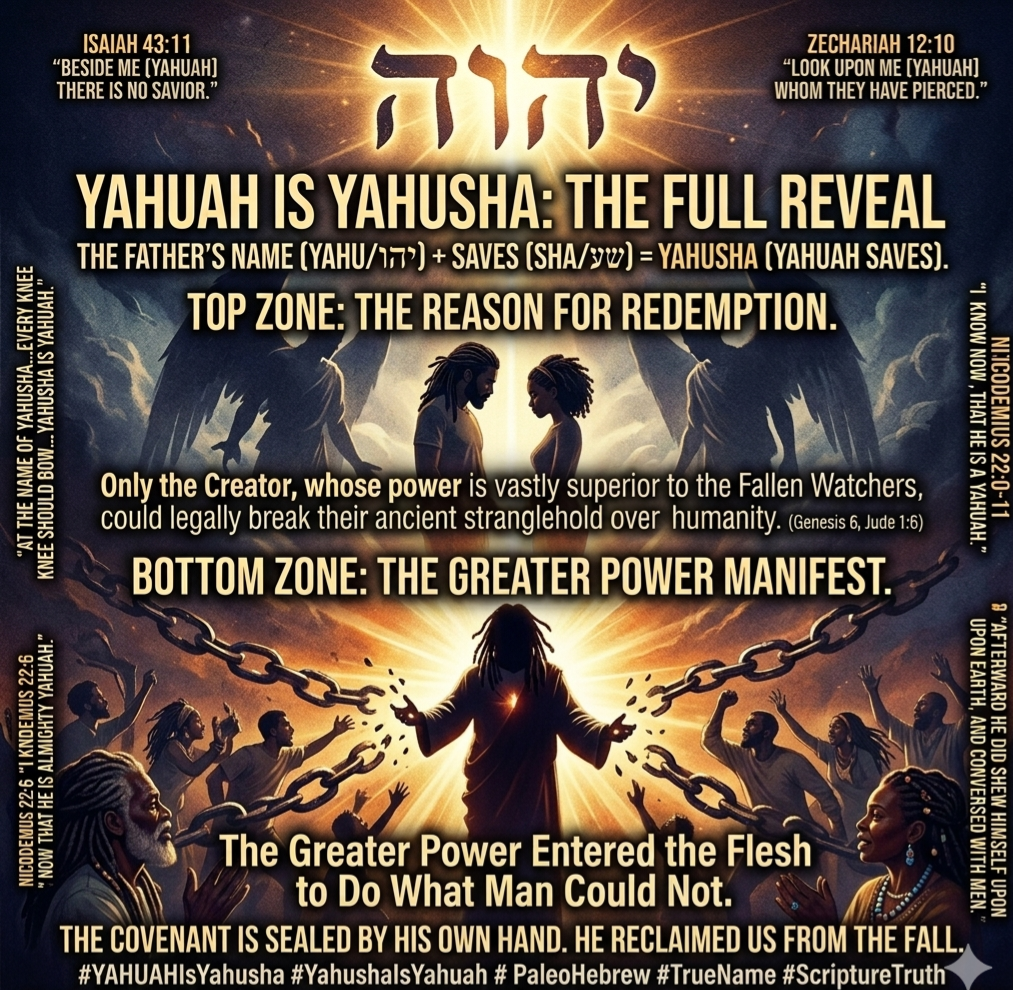

We Breathe YAHUAH 𐤉𐤄𐤅𐤄
Examining the beautiful fact that we breathe the Most High's name YAHUAH how awesome is that?
There was a moment when Musha asked Aluah what his name is. Aluah was gracious enough to answer, and the name he gave is recorded in the original Hebrew as YAHUAH (𐤉𐤄𐤅𐤄).
The letters YHUH represent breathing sounds, or aspirated consonants. When pronounced without intervening vowels, it actually sounds like breathing.
YH (inhale): UH (exhale).
So a baby’s first cry, his first breath, speaks the name of YAHUAH.
A deep sigh calls His name – or a groan or gasp that is too heavy for mere words.
Even an atheist would speak His name, unaware that their very breath is giving constant acknowledgment to YAHUAH.
Likewise, a person leaves this earth with their last breath, when YAHUAH’s name is no longer filling their lungs.
So when I can’t utter anything else, is my cry calling out His name?
Being alive means I speak His name constantly.
So, is it heard the loudest when I’m the quietest?
In sadness, we breathe heavy sighs.
In joy, our lungs feel almost like they will burst.
In fear we hold our breath and have to be told to breathe slowly to help us calm down.
When we’re about to do something hard, we take a deep breath to find our courage.
When I think about it, breathing is giving Him praise—even in the hardest moments.
YAHUAH chose to give Himself a name that we can’t help but speak every moment we’re alive.
All of us, always, everywhere.
Waking, sleeping, and breathing with the name of YAHUAH on our lips. May we honor YAHUAH with the entirety of our temples and make every breath count.


Should We Say HalaluYAH or No?
An analysis and break down whether or not we should say HALALUYAH.
It's come to my attention that many have stopped wanting to say HALALUYAH OR HALALUYAHUAH because they are saying that is Satan's name helel.
The first scripture that came to mind is this...
Be not righteous over much; neither make yourself over wise: why should you destroy yourself? Qoheleth (Ecclesiastes) 7:16
First and foremost YAHUAH named all His malakym (angels and host,) (Psalms 147:4, Enoch 43:1) all his malakym original names are characterstics or functions in YAHUAH ALUAH.
Example
Raph'AL (ALUAH HEALS)
Miyka'Al (Who is like ALUAH)
Gabri'Al (ALUAH is my strength)
So in the matter of Helel
12 “How you have fallen from the shamayim, O Hĕlĕl, son of the morning! You have been cut down to the ground, you who laid low the gentiles! YESHAYAHU (Isaiah) 14:12
In Hebrew it reads Helel Ben Shachar which would translate to Shining One son of the dawn/daybreak (or the time just before sunrise).
We know the function of Ha'satan before the fall was to shine and display the kabud of YAHUAH he was the Most beautiful malak but if you read further in YAshaYAHU you see...
For you have said in your heart, I will ascend into heaven, I will exalt my throne above the stars of Al: I will sit also upon the Mount of the assembly, in the sides of the north: I will ascend above the heights of the clouds; I will be like Al Alyun. Yesha'yahu (Isaiah) 14:13-14
Pride entered his heart and Ha'satan took his function to shine and boast in the Kabud of Aluah to himself. So instead of bringing praise to YAHUAH he now wants the praise unto himself and boast in himself.
The Hebrew (abryt) tongue is a two edge (Hebrews 4:12) sword so halal can also mean to be foolish. Each hebrew word has multiple functions you can choose the life or death of that function. Satan chose death to be foolish in thinking He can esteem himself above the Most High.
Back to the matter at Hand should would we say HALLALUYAH
The answer is a resounding YES!!!
HALAL is used in the Scriptures over 165 times in 140 verses
I will call on Yahuah, who is worthy to be Halal: so shall I be saved from my enemies. Shemu'el Sheniy (2 Samuel) 22:4
And he appointed certain of the Leviyiym to minister before the Ark of Yahuah, and to record, and to thank and halal Yahuah Aluah of Yashar'Al: Divrei Hayamiym Ri'shon (1 Chronicles) 16:4
For great is Yahuah, and (halal) greatly to be (halal) praised: he also is to be feared above all elohiym. For all the elohai of the people are idols: but Yahuah made the heavens. Divrei Hayamiym Ri'shon (1 Chronicles) 16:25-26
The enemy does a great job to try and get people to not praise (halal) YAHUAH but we must be steadfast and diligent... YAHUAH says it best
I am Yahuah: that is my name: and my glory will I not give to another, neither my praise (halal) to graven images. Yesha'yahu (Isaiah) 42:8
Baruk be Yahuah Aluah of Yashar'Al from everlasting to everlasting: and let all the people say: Amein (So be it). HallaluYAH. Tehilliym (Psalms) 106:48
In the sham of YAHUSHA may this bring edification to those who need it may every lie of the enemy be dismantled in YAHUSHA'S qudash sham. It is so HALLALUYAH HALLALUYAH HALLALUYAH

Hebrew Stongs 1966. Helel
Hebrew Strongs 1984. Halal
